

Stable myopia
When refraction is stable and the planned ablation is safe for the individual cornea.
PRK is surface laser vision correction without a corneal flap. After epithelium removal, an excimer laser reshapes the cornea, and the surface heals under medical supervision.
When refraction is stable and the planned ablation is safe for the individual cornea.
When type and magnitude are within the treatment range of the excimer platform.
Flap avoidance can be relevant after complete healing.
PRK may be considered when the surgeon judges a surface approach more appropriate.
Surface ablation avoids a LASIK flap, but candidacy depends on the full diagnostic profile.
Both are surface procedures but differ in epithelial removal and the operative protocol.
PRK is elective refractive surgery and does not treat cataract, glaucoma, keratoconus, retinal disease or other causes of visual loss. Because the epithelium must regenerate after surface ablation, the first postoperative days are usually less comfortable than after flap-based or lenticule-extraction procedures. Pain or burning, tearing, photophobia, fluctuating vision, dryness, glare and halos may occur.
A specific surface-ablation risk is subepithelial corneal haze; risk depends on treatment magnitude, healing response and other factors.
Increasing pain, marked redness, discharge or worsening vision requires prompt medical review rather than waiting for a scheduled visit.
Comprehensive refractive diagnostics are required before PRK. The surgeon evaluates visual acuity and refraction, refractive stability, corneal thickness and geometry, topography or tomography, epithelium and tear film, pupil, crystalline lens and retina. Contact lenses may temporarily alter corneal shape, so the discontinuation interval depends on lens type and must be confirmed by KazRIED.
Only the tests and day-of-surgery restrictions included in the institute’s current protocol should be used.
PRK is elective refractive surgery and does not treat cataract, glaucoma, keratoconus, retinal disease or other causes of visual loss.
Book a consultation
Refraction, visual stability, topography or tomography, pachymetry, ocular surface, crystalline lens and retina.
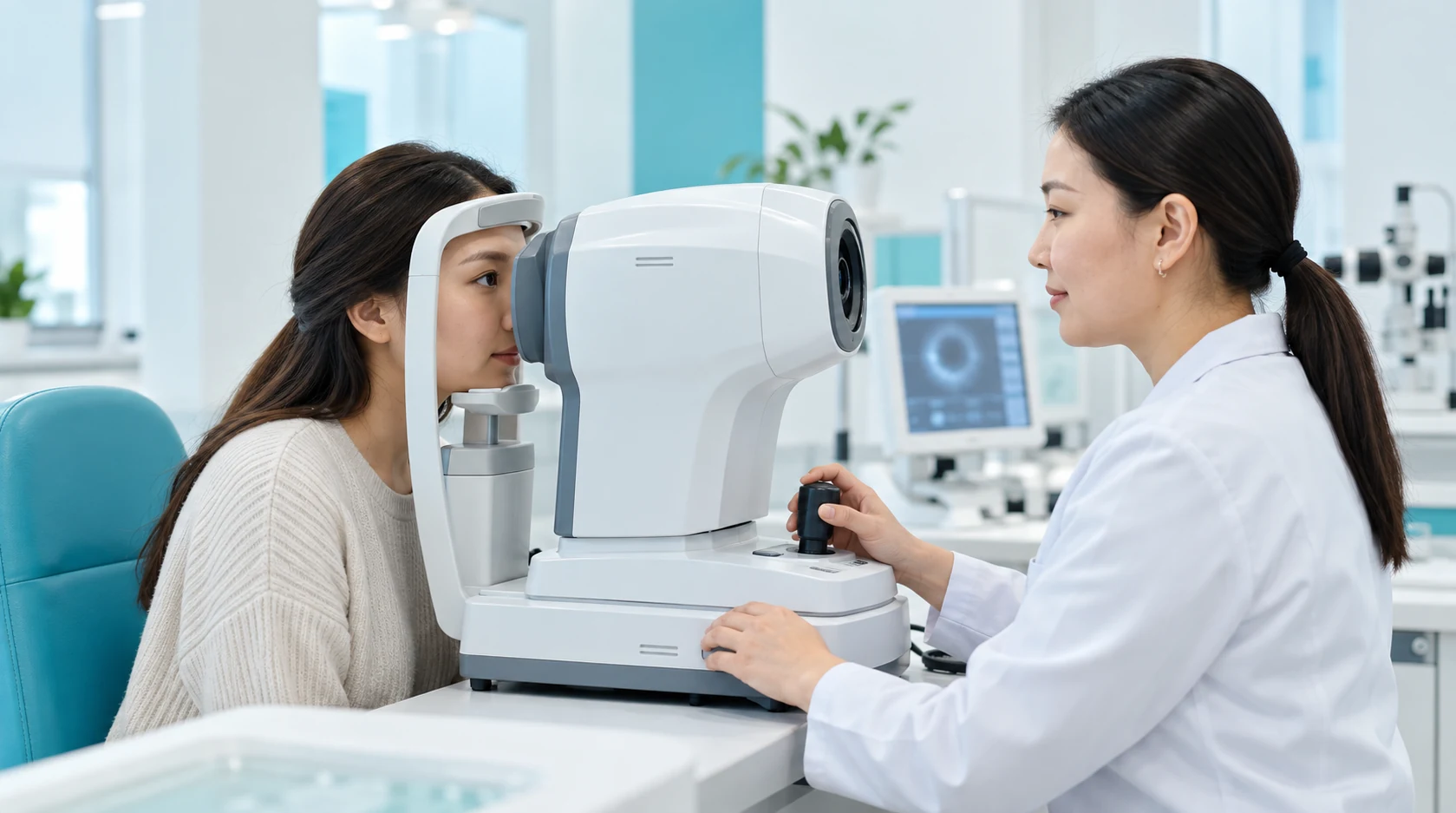
Plan checks, topical anaesthesia and lid-speculum placement according to protocol.

The central epithelium is removed in a separate step using the surgeon's selected technique.
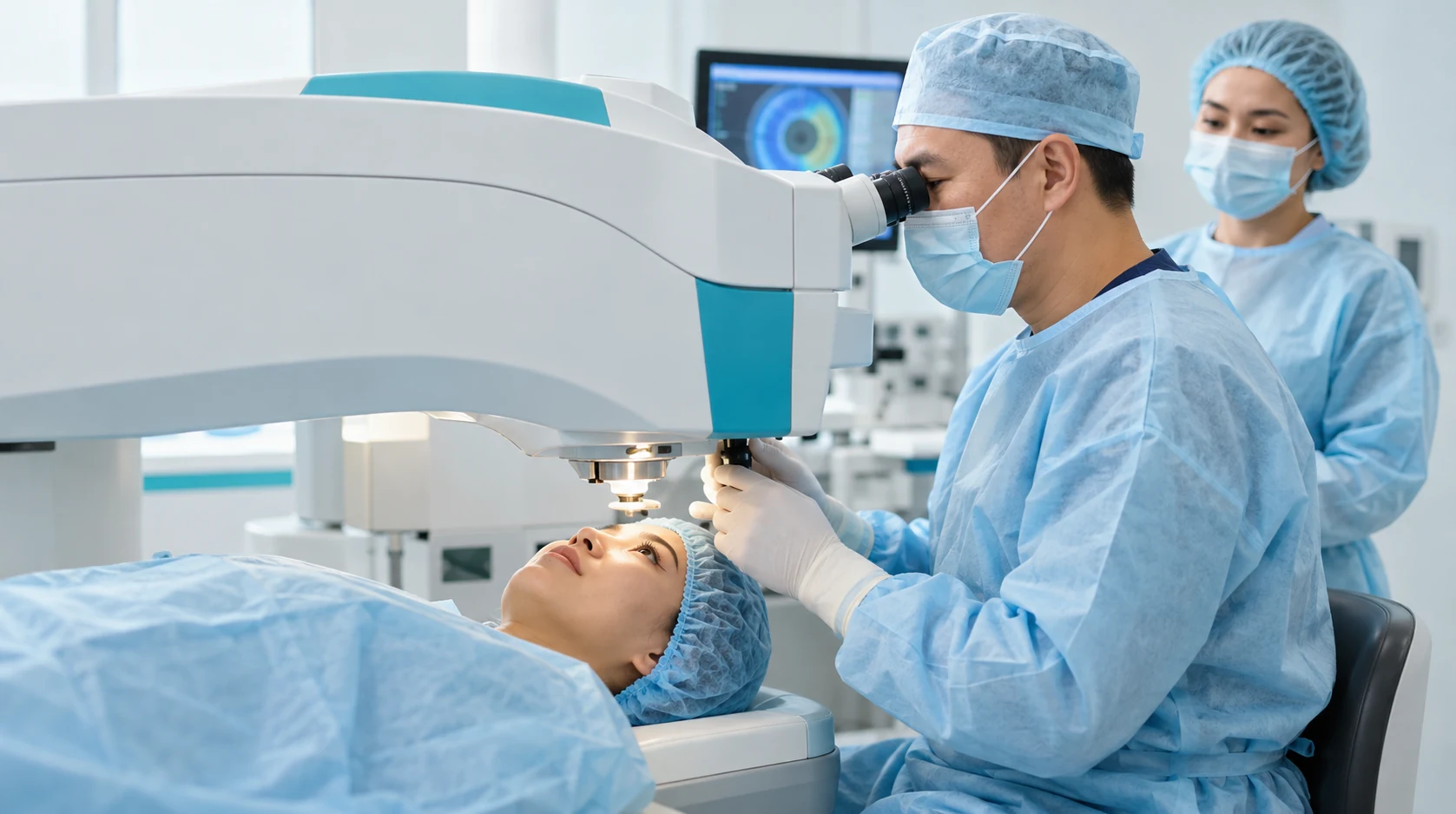
The laser reshapes the stroma according to the calculated correction programme.
A therapeutic contact lens is usually placed during epithelial healing.
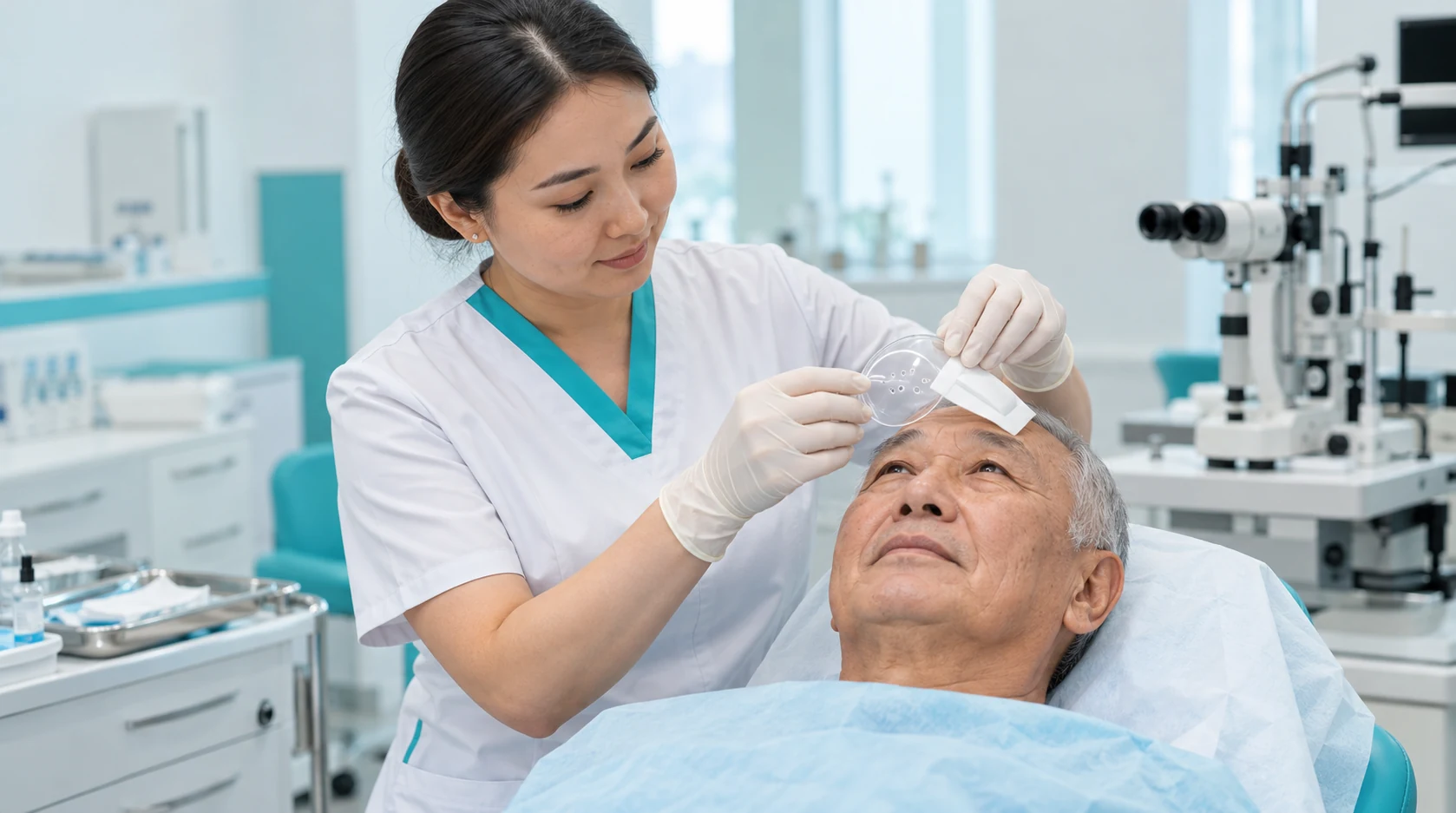
The doctor monitors epithelial healing, cornea and visual acuity and adjusts prescriptions when needed.

Correction is performed at the corneal surface without creating a deep flap.
The technique creates no flap, avoiding risks specifically associated with flap displacement.
Long-standing PRK experience helps the doctor explain expected recovery and follow-up requirements.
Laser correction can reduce the need for glasses or contact lenses when clinically appropriate.
Book laser vision correction diagnostics at KazRIED. A refractive surgeon will assess your cornea and refraction, explain whether PRK is suitable, and compare it with TransPRK, Femto LASIK, LASIK, ReLEx SMILE or CLEAR according to safety and recovery considerations.
A team of experienced doctors across specialties.

Candidate of Medical Sciences; Highest-category ophthalmologist
Highest-category ophthalmologist

Highest-category ophthalmologist
Photorefractive keratectomy (PRK) is a form of surface excimer laser refractive surgery.
First, the central corneal epithelium is removed using the surgeon’s chosen method to expose the superficial stroma.
The excimer laser then removes a microscopic amount of tissue according to a calculated profile, changing the curvature of the cornea.
After ablation, a bandage contact lens is usually placed on the eye to protect the surface while the epithelium heals.
No corneal flap is created, unlike in LASIK or Femto LASIK.
The main difference is how the epithelium is treated. In TransPRK, the epithelial and refractive stages are performed with an excimer laser in a transepithelial mode. In conventional PRK, the epithelium is removed in a separate step.
PRK and TransPRK are separate services with different fees.
Diagnostics confirm PRK suitability – the surgeon finalizes the ablation profile, postoperative regimen and follow-up visits.
Classic PRK is not optimal but TransPRK is suitable – the epithelial-step difference and separate price are explained.
Surface correction is not optimal but Femto LASIK is suitable – a flap-based method is selected according to corneal parameters.
Lenticule extraction is suitable – ReLEx SMILE or CLEAR is discussed as a separate technology.
Refraction is unstable or active ocular-surface disease is present – surgery is postponed, treatment is provided and the eye is reassessed.
Suspicious tomography, keratoconus, cataract or retinal disease is identified – diagnosis and treatment of the primary problem take priority.
PTK, code 219: Phototherapeutic keratectomy; not a PRK price.
PRK remains a distinct treatment method despite the emergence of newer technologies. It is selected according to the eye’s anatomy and risk profile.
The absence of a corneal flap may be an advantage in certain situations. However, surface healing requires a longer recovery period and careful adherence to postoperative instructions.
Patients should understand in advance that vision may not be perfect the day after PRK.
The early recovery period involves epithelial healing. The final outcome is assessed after the corneal surface and refraction have stabilized.
This recovery process is a biological characteristic of surface ablation and does not, by itself, indicate inadequate medical care.
Related information: diagnostic assessment before laser vision correction, contact lenses.
Kazakhstan’s first specialized ophthalmology institute, operating since 1933.
Modern diagnostics and surgery using world-class equipment.
Leading ophthalmologists in Kazakhstan, scientists and experienced surgeons.
More than 30,000 operations and around 270,000 consultations annually.


Kazakhstan’s first specialized ophthalmology institute, operating since 1933.
Modern diagnostics and surgery using world-class equipment.
Leading ophthalmologists in Kazakhstan, scientists and experienced surgeons.
More than 30,000 operations and around 270,000 consultations annually.
Kazakhstan’s first specialized ophthalmology institute, operating since 1933.
Modern diagnostics and surgery using world-class equipment.
Leading ophthalmologists in Kazakhstan, scientists and experienced surgeons.
More than 30,000 operations and around 270,000 consultations annually.


