
Lens wear schedule
recurrent redness, itching or burning of the eyelid margin;
Blepharitis care starts with identifying the cause of eyelid-margin inflammation. Eyelid hygiene may form the foundation of treatment, with medicines and additional procedures selected according to examination findings.
recurrent redness, itching or burning of the eyelid margin;
crusting, scales or cylindrical sleeves at the lash roots;
foreign-body sensation, unstable vision and dryness when MGD is suspected;
recurrent chalazia or styes when the meibomian glands and eyelid margin need assessment;
suspected Demodex-associated blepharitis; chronic blepharitis with poor response to previous treatment;
children and adults with lid-margin inflammation after an in-person eye examination.
Book an ophthalmology examination for recurrent redness, itching or burning of the lid margins, morning crusting or sticky lashes, foreign-body sensation or persistent irritation.
Do not self-start antibiotics, steroid eye drops or antiparasitic treatment before the examination. They are not required for every form and may alter the clinical picture.
Blepharitis refers to inflammatory disease of the eyelid margin. Anterior blepharitis mainly affects the lash line, skin and lash follicles. Posterior blepharitis involves the meibomian glands, which contribute the lipid layer of the tear film. The two patterns often overlap, so similar symptoms can require different treatment.
allergy or intolerance to prescribed medicines;
pregnancy, breastfeeding, pediatric age or systemic disease that changes medication choice;
systemic antibiotics are used only for selected indications with attention to contraindications and interactions.
contact lenses, makeup or skin-care products that aggravate irritation or interfere with therapy.
unconfirmed Demodex is not a basis for aggressive antiparasitic treatment;
antibiotics are not required for every patient with blepharitis;
steroid drops and ointments require ophthalmic supervision;
Bring a list of eye drops, cosmetics and systemic medicines you use. Bring previous Demodex or culture results if available.
Severe pain, photophobia, loss of vision, marked unilateral swelling or rapidly worsening symptoms warrant faster assessment.
severe pain or photophobia;
reduced vision;
marked unilateral swelling or rapid deterioration;
signs of corneal involvement;
persistent focal lash loss, scarring or a unilateral lesion that does not respond to treatment.
The treatment regimen is selected taking into account allergies and drug intolerances, pregnancy, lactation, age, and coexisting conditions; contact lenses, cosmetics, and skin care products that increase irritation or interfere with treatment may need to be temporarily discontinued.
Book a consultation
The doctor reviews duration, morning worsening, recurrences, lenses, skin conditions, allergies and previous medicines.

Skin, lid margins, lashes, meibomian openings, conjunctiva and cornea are assessed.
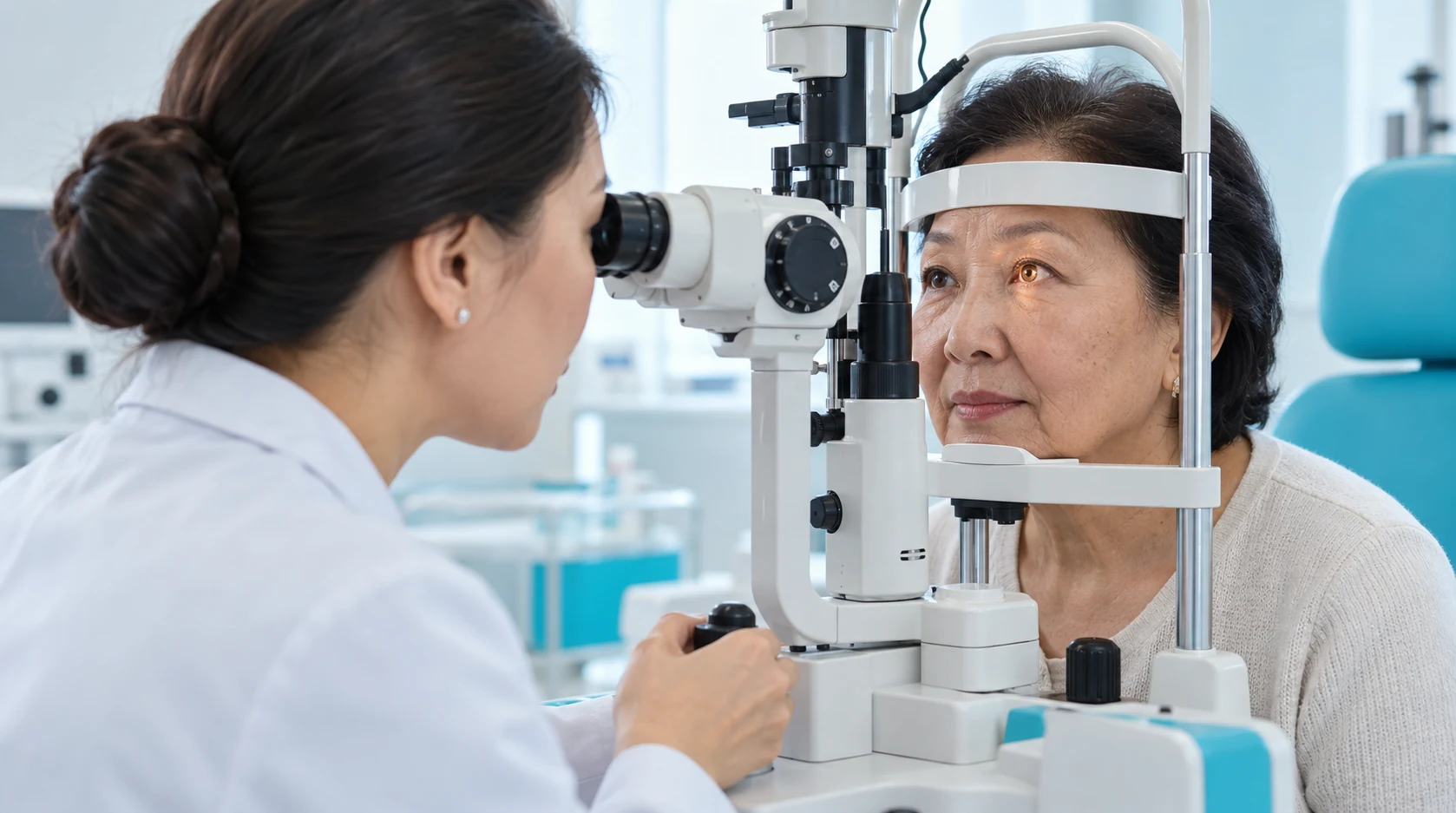
The slit lamp reveals scales, crusts, redness, gland dysfunction and ocular-surface condition.
Demodex testing, discharge examination, dry-eye assessment or other tests are performed when indicated.
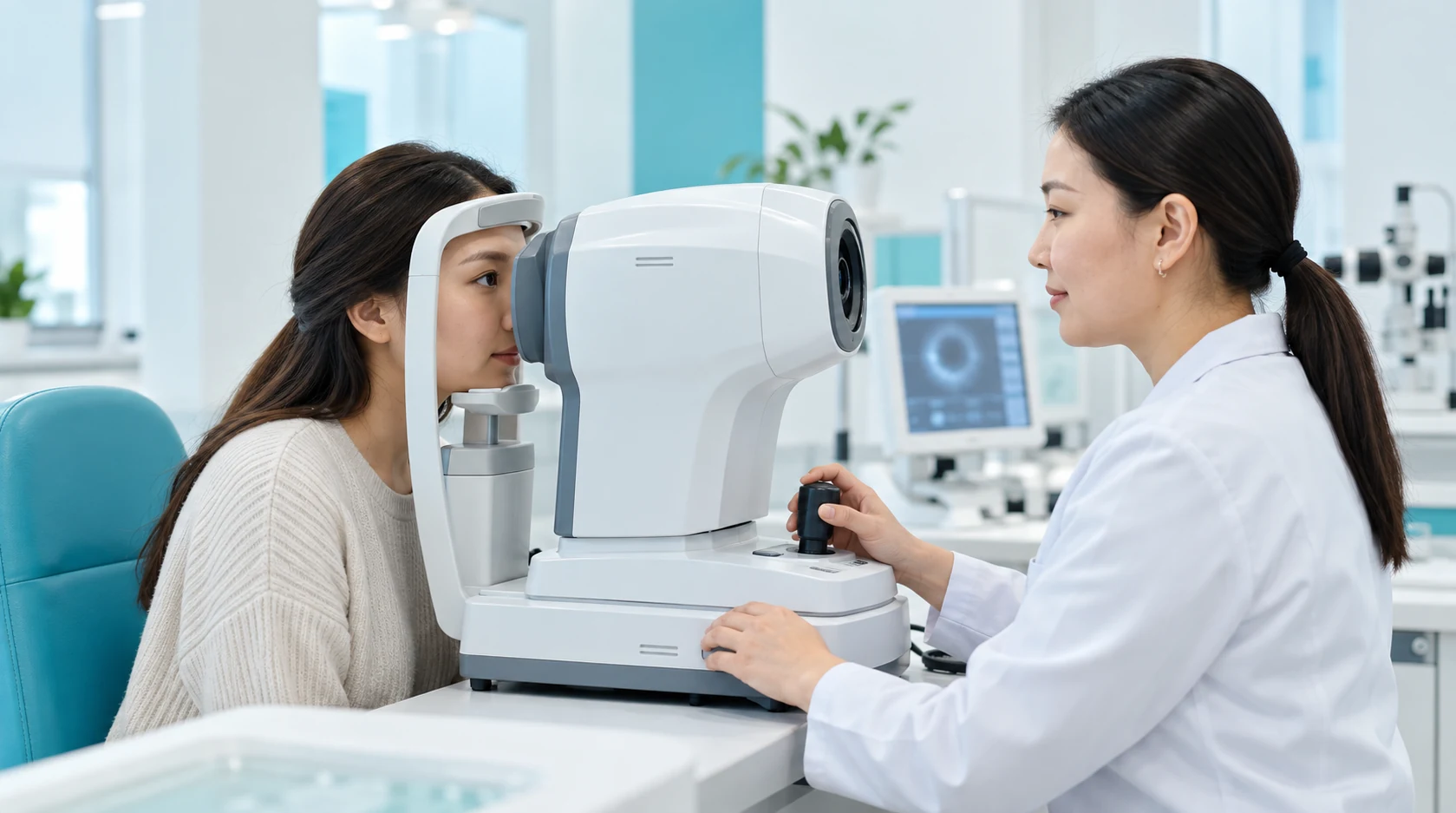
The doctor distinguishes predominantly anterior, posterior/MGD, Demodex-associated, allergic or mixed disease.

The patient is shown safe lid cleaning, a suitable warm-compress regimen and massage if needed.

Medicines are added according to the cause and severity of inflammation.
Response is assessed and maintenance planned because blepharitis can recur.

Selected treatment can reduce burning, grittiness and discomfort associated with tear film dysfunction.
When meibomian glands are dysfunctional, treatment helps improve eyelid margin health and the tear film's lipid layer.
Individual eyelid hygiene guidance helps control chronic inflammation between medical appointments.
Eyelid assessment helps select therapy according to inflammation, gland function and accompanying conditions.
Book an ophthalmology consultation at KazRIED. The doctor will identify the blepharitis subtype, assess the lid margin, meibomian glands and ocular surface, and select a treatment plan without unnecessary procedures or self-medication.
A team of experienced doctors across specialties.

Highest-category ophthalmologist

Highest-category ophthalmologist

Highest-category ophthalmologist

Highest-category ophthalmologist

Highest-category ophthalmologist

First-category ophthalmologist

Second-category ophthalmologist

Second-category ophthalmologist

Second-category ophthalmologist

Second-category ophthalmologist
Blepharitis is a group of inflammatory conditions affecting the eyelid margin. Anterior blepharitis primarily affects the eyelash margin, skin, and lash follicles. Posterior blepharitis involves the meibomian glands, which contribute the lipid component of the tear film.
These forms often coexist, so similar symptoms may require different management.
With meibomian gland dysfunction, secretions become thicker and flow less readily through the ducts. This may worsen evaporative dry eye.
Diagnosis is usually made during a consultation with slit-lamp examination of the anterior segment and eyelid margins.
Additional tests are selected according to the clinical findings:
In Demodex-associated disease, laboratory findings must be correlated with clinical signs.
Eyelid margin hygiene is the foundation of treatment. Controlled warming and massage are commonly used for posterior blepharitis and meibomian gland dysfunction under clinical guidance.
Medications are added for a specific purpose:
Antibiotics do not resolve mechanical gland blockage, massage does not replace antibacterial treatment for a confirmed infection, and antiparasitic agents are unnecessary without clinically significant Demodex.
Blepharitis often requires long-term management. If appropriate treatment is ineffective, particularly with marked asymmetry, eyelash loss, or scarring, the clinician reassesses the diagnosis and excludes conditions that can mimic chronic blepharitis.
KazRIED offers ophthalmology consultations, slit-lamp examination, Demodex testing, laboratory testing of ocular discharge, a dry eye diagnostic module, and eyelid massage.
The clinician selects the services after examination. A consultation is not a complete treatment package: tests and procedures have different indications and do not automatically form a single course.
Patients pay for the prescribed consultations, tests, and procedures.
Some follow-up may be arranged locally after the initial assessment. The availability of remote support and the treatment location should be confirmed with KazRIED.
Kazakhstan’s first specialized ophthalmology institute, operating since 1933.
Modern diagnostics and surgery using world-class equipment.
Leading ophthalmologists in Kazakhstan, scientists and experienced surgeons.
More than 30,000 operations and around 270,000 consultations annually.


Kazakhstan’s first specialized ophthalmology institute, operating since 1933.
Modern diagnostics and surgery using world-class equipment.
Leading ophthalmologists in Kazakhstan, scientists and experienced surgeons.
More than 30,000 operations and around 270,000 consultations annually.
Kazakhstan’s first specialized ophthalmology institute, operating since 1933.
Modern diagnostics and surgery using world-class equipment.
Leading ophthalmologists in Kazakhstan, scientists and experienced surgeons.
More than 30,000 operations and around 270,000 consultations annually.


