Almaty, Astana Shymkent

Upper eyelid ptosis correction

Price after consultation
Book an appointment

About the service

Blepharoptosis correction aims to restore the position of a drooping upper eyelid. Treatment is chosen after identifying the cause and assessing the eyelid-lifting muscle.

Who the service is for

Choosing a ptosis repair technique

Patients with aponeurotic blepharoptosis in whom the upper lid has drooped despite preserved or good levator function. Patients with congenital ptosis after assessment of the visual axis, levator function and amblyopia risk.

Upper-eyelid position

Patients with post-traumatic or postoperative ptosis after the injured structure is identified. Patients with mechanical ptosis after the cause that weighs down the eyelid has been addressed or incorporated into the surgical plan.

Eyelid function and condition

Patients whose eyelid blocks part of the pupil or visual field and causes compensatory brow or neck strain.

Upper eyelid position

True blepharoptosis must be distinguished from blepharochalasis, brow ptosis and pseudoblepharoptosis.

Limitations and safety

Sudden ptosis with diplopia, severe headache, unequal pupils, impaired eye movements, weakness or numbness requires urgent assessment.

Book a consultation

Stages

Stage 1

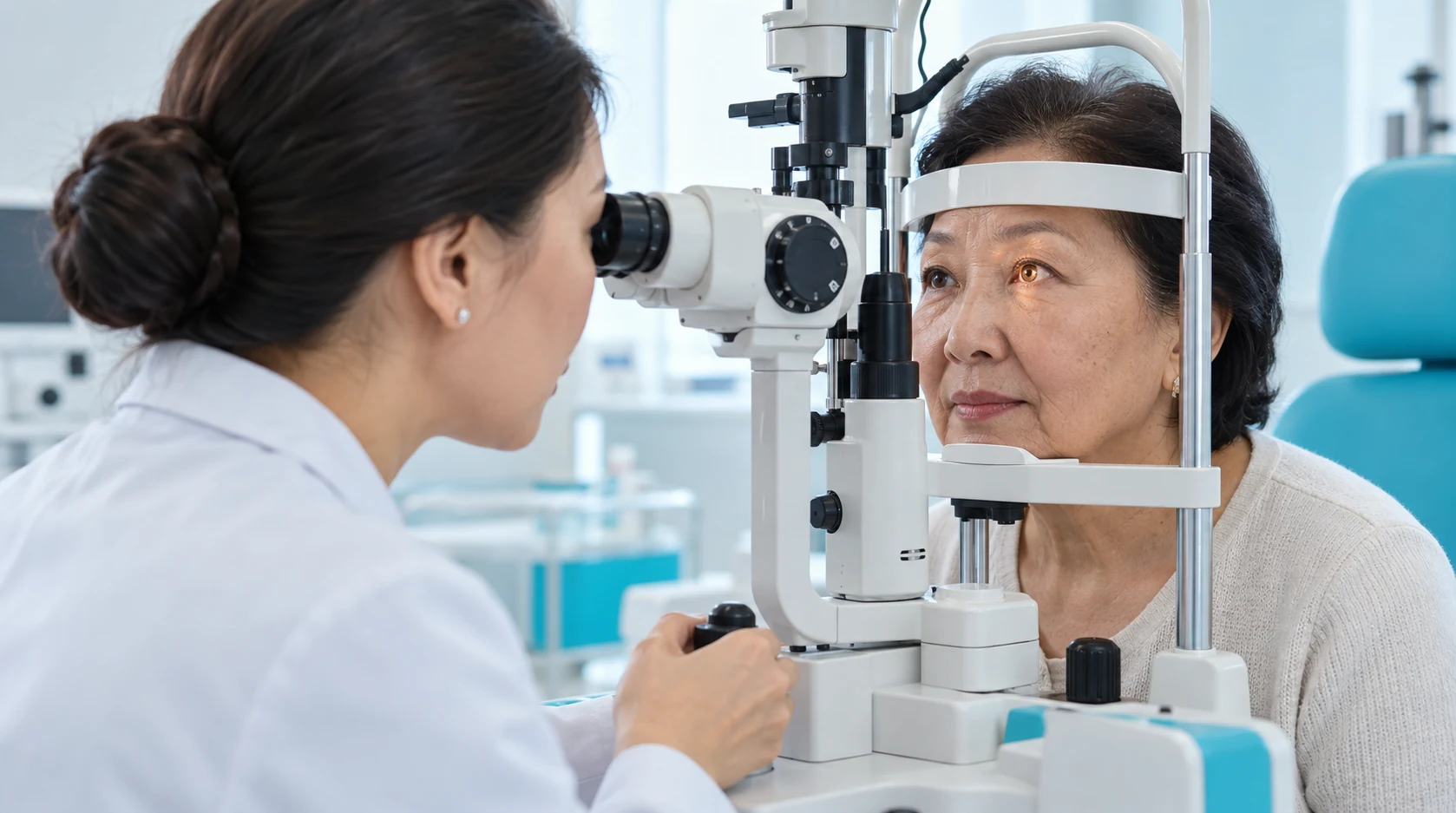
Consultation and identification of the cause

The doctor reviews history, compares eyelids and assesses vision, eye movements, pupils and signs of associated disease.

Consultation and cause assessment

Service benefits

Correction of upper eyelid position

Lifting a drooping eyelid helps reduce pupil obstruction when ptosis is the cause.

More symmetrical eyelid position

Surgery is planned around eyelid height and contour, with safe eye closure remaining a priority.

Fewer obstacles to vision

Correction can reduce visual obstruction caused by overhanging tissue or abnormal eyelid position.

Correction based on the cause

The operation is selected according to skin, muscle, ligament and ocular surface health, rather than appearance alone.

Methods comparison

Criterion
Aponeurosis advancement
Levator resection
Frontalis suspension
Principle
Strengthen or refix the aponeurosis
Shorten the levator
Connect eyelid elevation to frontalis
Typical setting
Aponeurotic ptosis
Ptosis with partly preserved levator function
Severe ptosis with poor levator function
Levator function
Usually good
Good to moderate
Poor or absent
External skin incision
Usually yes
Usually yes
Usually eyelid/brow access is needed
Phenylephrine test
Not the main criterion
Main limitation
Not suitable when levator is essentially nonfunctional
Resection amount depends on anatomy and function
Higher concern for incomplete closure and corneal exposure
Corneal exposure risk
Present, depends on lid elevation
Especially important with a weak Bell phenomenon or a dry ocular surface
Relationship to blepharoplasty
May be combined when indicated
Does not substitute for blepharoplasty
Colour applies only to the specific criterion and is not an overall ranking of the method.
Aponeurosis advancement
Principle
Typical setting
Levator function
External skin incision
Phenylephrine test
Main limitation
Corneal exposure risk
Relationship to blepharoplasty
Colour applies only to the specific criterion and is not an overall ranking of the method.
Strengthen or refix the aponeurosis
Aponeurotic ptosis
Usually good
Usually yes
Not the main criterion
Not suitable when levator is essentially nonfunctional
Present, depends on lid elevation
May be combined when indicated
Shorten the levator
Ptosis with partly preserved levator function
Good to moderate
Usually yes
Not the main criterion
Resection amount depends on anatomy and function
Present, depends on lid elevation
May be combined when indicated
Connect eyelid elevation to frontalis
Severe ptosis with poor levator function
Poor or absent
Usually eyelid/brow access is needed
Not the main criterion
Higher concern for incomplete closure and corneal exposure
Especially important with a weak Bell phenomenon or a dry ocular surface
Does not substitute for blepharoplasty

Book an appointment

Book a KazRIED ophthalmology or ophthalmic surgery consultation. The doctor can determine whether the eyelid droop is true ptosis, assess levator function and the ocular surface, then discuss suitable correction options, risks and confirmed pricing.

Book an appointment

Procedure prices

Service name Price
Ophthalmic surgeon consultation (per consultation) from 12 000 ₸
Ophthalmologist consultation: highest-category doctor or doctor with more than 10 years of experience (per consultation) from 14 500 ₸
Reconstructive plastic surgery of the upper eyelid (per eye) from 204 000 ₸
Our services, payable in installmentsTake care of your vision today and pay for our services in installments. Choose installment terms and a payment schedule that suit you.

Our doctors

A team of experienced doctors across specialties.

All doctorsThe full list of doctors is available here!

Blepharoptosis: diagnosis, surgical planning, and recovery

Blepharoptosis is an abnormally low position of the upper eyelid. The cause may involve the eyelid elevator muscle, its aponeurosis, nerve control, or mechanical loading of the eyelid. Treatment depends on the cause and levator function.

What is assessed during the consultation?

  • The eyelid margin’s position relative to the pupil and the height of the eyelid crease.
  • Levator function and brow position.
  • Palpebral fissure symmetry, eye movements, and pupil responses.
  • Complete eyelid closure and ocular surface condition.

In unilateral blepharoptosis, the possible Hering effect is considered: raising one eyelid may change the position of the other.

Comparing eyelid height in a photograph is insufficient for proper planning: similar appearances may have different causes.

When is treatment needed?

Persistent structural or aponeurotic blepharoptosis is usually corrected surgically. If a neurological, muscular, or other condition is suspected, its cause must first be investigated and treated when possible.

Exercises and massage do not replace surgical correction of true persistent blepharoptosis.

Treatment may have a functional goal: a drooping eyelid can obstruct the visual axis, restrict the superior visual field, and cause the patient to raise their eyebrows or tilt their head back. In children, visual axis obstruction carries a risk of amblyopia.

Clinical situations and next steps

  • The eyelid has gradually drooped with age: levator function, crease position, and possible blepharochalasis are assessed. The next step is consultation with an oculoplastic surgeon.
  • A child’s eyelid covers the pupil: amblyopia risk, refraction, strabismus, and levator function are assessed. Pediatric ophthalmic assessment and surgical planning are needed.
  • Sudden ptosis with double vision or a pupil change: urgent medical assessment is required to exclude a neurological or vascular cause.
  • Drooping worsens toward evening and varies during the day: neuromuscular causes, including myasthenia gravis, are investigated before surgery is planned.
  • Excess upper eyelid skin is also present: the clinician determines what limits vision and how much skin can safely be removed. Ptosis correction may be performed alone or with blepharoplasty.
  • Ptosis persists or recurs after surgery: repeat reconstructive assessment considers the previous procedure, scarring, levator function, and eyelid closure.

How is surgery selected and performed?

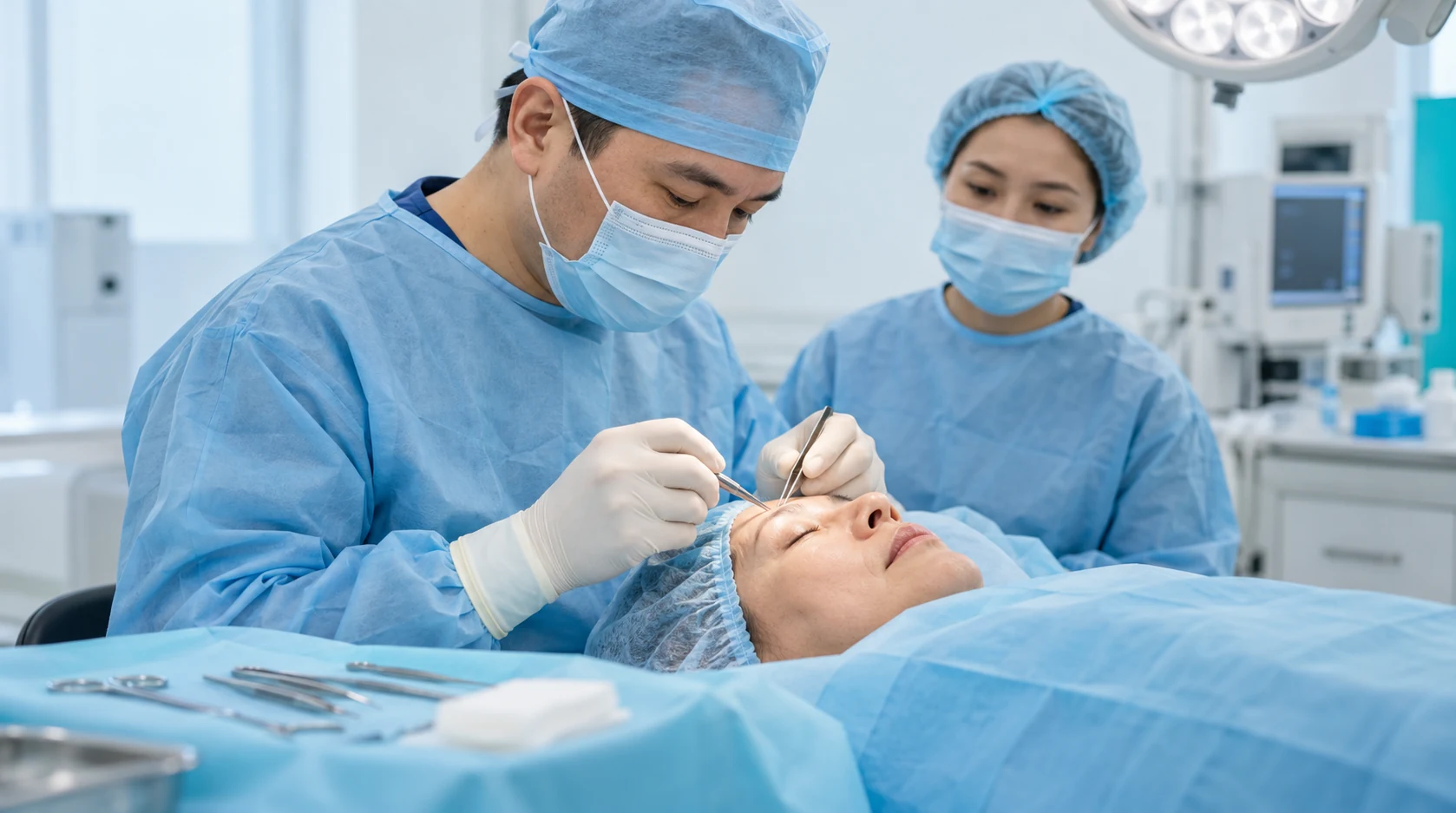
The technique depends on the cause of ptosis and levator function. If excess skin is present, the need for blepharoplasty is considered separately.

The surgeon corrects the structure responsible for eyelid elevation. Anesthesia and the extent of surgery are determined individually.

Safe eyelid closure, corneal protection, and a natural contour must be preserved. A moderate correction may sometimes be preferable, particularly with reduced corneal sensitivity, a weak Bell’s phenomenon, or significant dry eye.

Postoperative monitoring

The clinician assesses eyelid height and contour, closure, corneal condition, and healing as swelling subsides. Follow-up appointments and restrictions are specified in individualized instructions.

Contact the clinic without waiting for a scheduled appointment if there is increasing pain, a sudden reduction in vision, marked redness, purulent discharge, or inability to close the eye with corneal drying.

Booking a consultation

The ophthalmology consultation category — a clinician with the highest qualification category or more than 10 years of experience — depends on the specialist selected.

Facts and offers

Kazakhstan’s first specialized ophthalmology institute, operating since 1933.

Modern diagnostics and surgery using world-class equipment.

Leading ophthalmologists in Kazakhstan, scientists and experienced surgeons.

More than 30,000 operations and around 270,000 consultations annually.

Related services

Frequently asked questions

What is upper-eyelid ptosis?
Ptosis, or blepharoptosis, is an abnormally low position of the upper eyelid. It may be congenital or acquired, unilateral or bilateral, and can have aponeurotic, muscular, neurogenic, mechanical or mixed causes.
How is true ptosis different from excess upper-eyelid skin?
In true ptosis, the eyelid margin itself sits abnormally low. In dermatochalasis, excess skin overhangs the eyelid despite potentially normal eyelid-elevating function. Both conditions can coexist and may require different surgical components.
What causes ptosis?
Ptosis may be congenital or acquired. Causes include age-related stretching or weakening of the levator aponeurosis, trauma, previous surgery, muscle or neurologic disease and mechanical weight from a lesion or swelling.
When does sudden ptosis require urgent assessment?
Urgent assessment is required when ptosis appears suddenly, particularly with double vision, pupil-size changes, abnormal eye movements, an unusual severe headache, weakness, speech disturbance or altered sensation. A neurologic cause must be excluded first.
Is ptosis only a cosmetic problem?
No. Significant ptosis can cover part of the pupil, restrict the superior visual field and cause compensatory brow elevation or chin-up head posture. In children, it can also interfere with normal visual development.

Confirm you are not a robot

Complete the check to send your request.