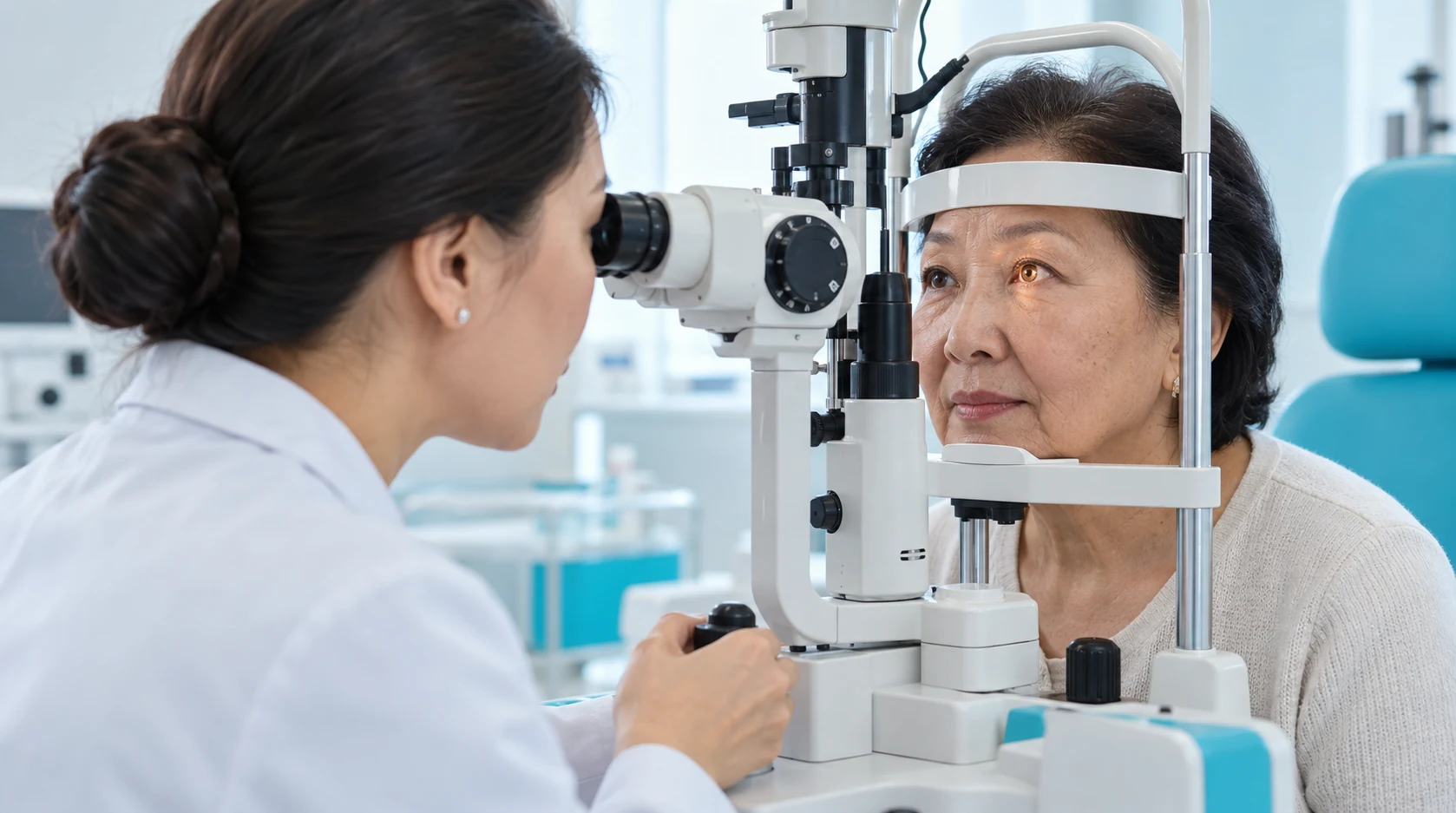
Dry eye treatment is tailored to the cause of tear-film dysfunction and the condition of the eyelids. Examination guides a care plan whose effect is reviewed at follow-up visits.
Who the service is for
Dryness and the ocular surface
Patients with burning, grittiness, dryness or episodic tearing, especially symptoms that worsen in the evening, during reading or screen work. Patients after refractive or other ophthalmic surgery when ocular-surface dryness persists or interferes with recovery.
Fluctuating vision
People with fluctuating or blurry vision that temporarily clears after blinking when no other obvious cause explains the symptom.
Meibomian-gland function
Patients with meibomian gland dysfunction, chronic blepharitis, obstructed gland orifices or a strong evaporative component.
Allergies and tolerance
Contact-lens users who develop lens intolerance, dryness, redness or shorter comfortable wear time.
General health
Patients with systemic risk factors, including autoimmune disease, diabetes, hormonal change or medicines that can affect tear production.
Identifying the cause of dryness
People who have used lubricating drops for a long time without sustained relief and want the underlying mechanism assessed.
Limitations depend on the method
There is no single contraindication list because the service includes several diagnostic and therapeutic options.
Dryness and the ocular surface
Restrictions depend on the selected method and ocular-surface condition.
Tearing and lacrimal drainage
Punctal occlusion, physiotherapy and other procedures are used only when indicated.
Refractive stability
Prescription anti-inflammatory medicines should not be self-started.
Intraocular pressure
Bring a complete list of eye drops and systemic medicines, including allergy, blood-pressure, sleep and mood medicines. Some drugs may worsen dryness, but they should not be stopped without the prescribing clinician.
Contact lenses
If you wear contact lenses, report the type, wearing schedule and tolerance. Ask KazRIED in advance whether lenses should be removed before testing and for how long.
Monitoring over time
Bring previous eye-surface or dry-eye test results if available so the clinician can assess response and progression.
Dryness and the ocular surface
Tell the clinician about dry mouth, joint symptoms, autoimmune disease, thyroid disease, diabetes, menopause and previous eye or eyelid surgery.
Pupil dilation and eye drops
Do not start new antibiotics, steroid eye drops or other prescription medicines before the visit without a prescription.
When urgent care is needed
If symptoms worsen suddenly, with severe pain, photophobia, vision loss , trauma or purulent discharge, seek urgent assessment rather than routine dry-eye testing. Active infection, marked inflammation, trauma, chemical injury, corneal ulceration or sudden vision loss require a separate urgent pathway rather than routine dry-eye treatment.
When urgent care is needed
Seek urgent assessment for severe pain, marked photophobia, purulent discharge, sudden vision loss or a painful red eye in a contact-lens wearer.
Limitations and safety
There is no single contraindication list because the service includes several diagnostic and therapeutic options.
Rapidly improve ocular-surface lubrication and comfort.
Improve meibomian gland function and the tear-film lipid component.
Target inflammation or tear production.
Reduce drainage of the patient’s own tears.
Adjunctive stimulation or tissue treatment when prescribed.
Most useful when
Screen use, dry air, infrequent blinking, wind and smoke.
Mild to moderate symptoms and as adjunctive therapy.
Evaporative DED and MGD.
Moderate to severe disease and persistent objective findings.
Selected patients with aqueous deficiency.
When a clinician identifies a role within the combined plan.
Key limitation
Does not replace treatment of inflammation, MGD or marked aqueous deficiency.
Often symptomatic; formulation should match mechanism and tolerance.
Not a universal treatment for isolated aqueous deficiency; active inflammation changes the plan.
Requires clinician selection, monitoring and attention to adverse effects.
Should not be used automatically before mechanism and inflammation are assessed.
Expected benefit and course depend on the specific modality; it does not replace core therapy.
Environmental and visual-habit changes
Primary goal
Most useful when
Key limitation
Reduce evaporation and triggers.
Screen use, dry air, infrequent blinking, wind and smoke.
Does not replace treatment of inflammation, MGD or marked aqueous deficiency.
Rapidly improve ocular-surface lubrication and comfort.
Mild to moderate symptoms and as adjunctive therapy.
Often symptomatic; formulation should match mechanism and tolerance.
Improve meibomian gland function and the tear-film lipid component.
Evaporative DED and MGD.
Not a universal treatment for isolated aqueous deficiency; active inflammation changes the plan.
Target inflammation or tear production.
Moderate to severe disease and persistent objective findings.
Requires clinician selection, monitoring and attention to adverse effects.
Reduce drainage of the patient’s own tears.
Selected patients with aqueous deficiency.
Should not be used automatically before mechanism and inflammation are assessed.
Adjunctive stimulation or tissue treatment when prescribed.
When a clinician identifies a role within the combined plan.
Expected benefit and course depend on the specific modality; it does not replace core therapy.
Book an appointment
Book an ophthalmology consultation and ocular-surface assessment at KazRIED to identify the mechanism of dryness and determine an appropriate treatment pathway. If the dedicated dry-eye module is needed, confirm its availability at the selected branch when booking.
Our services, payable in installmentsTake care of your vision today and pay for our services in installments. Choose installment terms and a payment schedule that suit you.
Dry eye disease: causes, treatment, and monitoring
Dry eye disease is a multifactorial disease of the ocular surface involving loss of tear film stability. Increased evaporation, insufficient aqueous tear production, inflammation, epithelial damage, and altered sensitivity may coexist.
What causes dry eye?
In evaporative dry eye, eyelid condition and the function of the meibomian glands, which contribute the tear film’s lipid component, are particularly important.
In aqueous-deficient dry eye, tear production and possible systemic causes of reduced secretion are assessed.
In mixed disease, several mechanisms coexist, so one category of eye drops may be insufficient.
What are the treatment goals?
Treatment aims to improve tear film quality and stability, protect the cornea and conjunctiva, and reduce burning, grittiness, redness, and fluctuating vision.
Two goals matter: relieving discomfort and addressing the disease mechanism. Lubricating drops may relieve symptoms without fully addressing the cause of ocular surface instability.
How is treatment selected at KazRIED?
KazRIED describes medical, surgical, and physiotherapeutic approaches. The need for each is determined individually after an examination.
The plan may include:
adjustments to environmental conditions and visual workload;
tear replacement and prescription therapy;
treatment of eyelid disease and meibomian gland dysfunction;
physiotherapy and selected surgical methods when indicated.
More invasive methods are considered for persistent symptoms, specific disease mechanisms, or complications.
When should the treatment plan be reassessed?
Drops provide only brief relief: evaporation, inflammation, and meibomian gland function are assessed.
Dryness develops during contact lens wear: the clinician determines whether wear can continue, the schedule should change, or another correction should be used temporarily.
Symptoms worsen after surgery: the epithelium, corneal sensitivity, inflammation, and tear film stability are assessed.
Dry mouth, joint symptoms, or other systemic complaints are present: investigation for a systemic condition and shared care with another specialist may be needed.
Meibomian gland dysfunction is confirmed: eyelid hygiene, massage, and other methods may be prescribed according to severity and eyelid margin condition.
Marked tear deficiency persists: the clinician may discuss reducing tear drainage or other treatment steps appropriate to the clinical situation.
What is the role of individual procedures?
Eyelid massage may be used for meibomian gland dysfunction when prescribed by a clinician.
Laser therapy and magnetic field therapy are listed as general physiotherapy procedures. Their suitability for dry eye disease and the specific treatment course require confirmation by the clinician.
How is the outcome assessed?
The outcome is assessed through subjective comfort and changes in ocular surface findings over time. Treatment is adjusted when necessary.
Conditions that may feel like “dryness” are also excluded: infectious keratitis, allergic inflammation, corneal injury, eyelid malposition, and neuropathic pain.
If symptoms are substantially greater than the clinical signs or persist after ocular surface recovery, the clinician may broaden the diagnostic assessment.
What is included in the treatment cost?
The consultation, diagnostic module, medications, and individual procedures do not automatically constitute a single treatment course at one price. The treatment components are determined by the clinician’s prescriptions.
Facts and offers
Kazakhstan’s first specialized ophthalmology institute, operating since 1933.
Modern diagnostics and surgery using world-class equipment.
Leading ophthalmologists in Kazakhstan, scientists and experienced surgeons.
More than 30,000 operations and around 270,000 consultations annually.
Kazakhstan’s first specialized ophthalmology institute, operating since 1933.
Modern diagnostics and surgery using world-class equipment.
Leading ophthalmologists in Kazakhstan, scientists and experienced surgeons.
More than 30,000 operations and around 270,000 consultations annually.
Kazakhstan’s first specialized ophthalmology institute, operating since 1933.
Modern diagnostics and surgery using world-class equipment.
Leading ophthalmologists in Kazakhstan, scientists and experienced surgeons.
More than 30,000 operations and around 270,000 consultations annually.
Dry eye is a multifactorial symptomatic disease involving loss of homeostasis of the tear film and/or ocular surface. It may cause dryness, burning, grittiness, redness, tearing, visual discomfort and fluctuating vision.
Why can dry eye cause watery eyes?
Ocular-surface irritation can trigger reflex tearing. A large tear volume does not necessarily mean that the tear film has a normal composition or remains stable between blinks.
Is dry eye caused only by low tear production?
No. Dry eye may be aqueous-deficient, evaporative or mixed. Meibomian gland dysfunction is a common contributor to evaporative disease because disruption of the lipid layer increases tear evaporation.
How is the type of dry eye determined?
The clinician assesses symptoms, the cornea and conjunctiva, tear-film stability, blinking, tear production, eyelid margins and meibomian glands. Ocular-surface staining, tear break-up testing and other tests may be used when indicated.
What does dry-eye assessment usually include?
Testing is individualized and may include symptom assessment, slit-lamp examination, corneal and conjunctival staining, tear-film stability, tear production and evaluation of the eyelids and meibomian glands. Additional tests are used when indicated.
How much does dry-eye assessment cost?
Cost depends on the required examination and additional diagnostic tests. Current pricing is available in the price list of KazRI of eye diseases.
Can dry eye be treated with artificial tears alone?
Artificial tears may be sufficient for some mild cases. Additional treatment may be required when inflammation, meibomian gland dysfunction, significant aqueous deficiency, corneal involvement or systemic disease is present.
Which eye drops are best for dry eye?
There is no single best drop for every patient. Selection depends on the disease mechanism, ocular-surface status, symptom severity, dosing frequency, allergies and contact-lens use.
When are preservative-free drops preferred?
They are particularly useful with frequent lubricant use, a sensitive or damaged ocular surface or intolerance to preservatives. The specific formulation is selected individually.
What is meibomian gland dysfunction?
It is abnormal function of the eyelid glands that produce the lipid component of the tear film. Changes in secretion or gland outflow increase tear evaporation and reduce ocular-surface protection.