Myopia, or nearsightedness, occurs when the eye's optical system focuses the image of a distant object in front of the retina. In children, this is often associated with an increase in the axial length of the eye. The earlier myopia develops and the faster it progresses, the greater the likelihood of reaching a higher degree of myopia by adulthood.
Managing myopia in children involves two objectives: providing clear vision now and, where possible, slowing further progression. Properly prescribed optical correction helps a child see clearly at a distance, participate in school activities and play sports. Myopia control aims to slow the increase in refractive error and the growth of the eyeball.
These objectives should be distinguished. Standard single-vision glasses and conventional contact lenses correct blurred vision but do not provide the same myopia-control effect as specially designed optical lenses or orthokeratology.
High myopia is associated with an increased lifetime risk of retinal changes and other complications. This does not mean that complications will necessarily occur, but it explains why controlling myopia progression during childhood is important.
Diagnosis of Myopia in Children
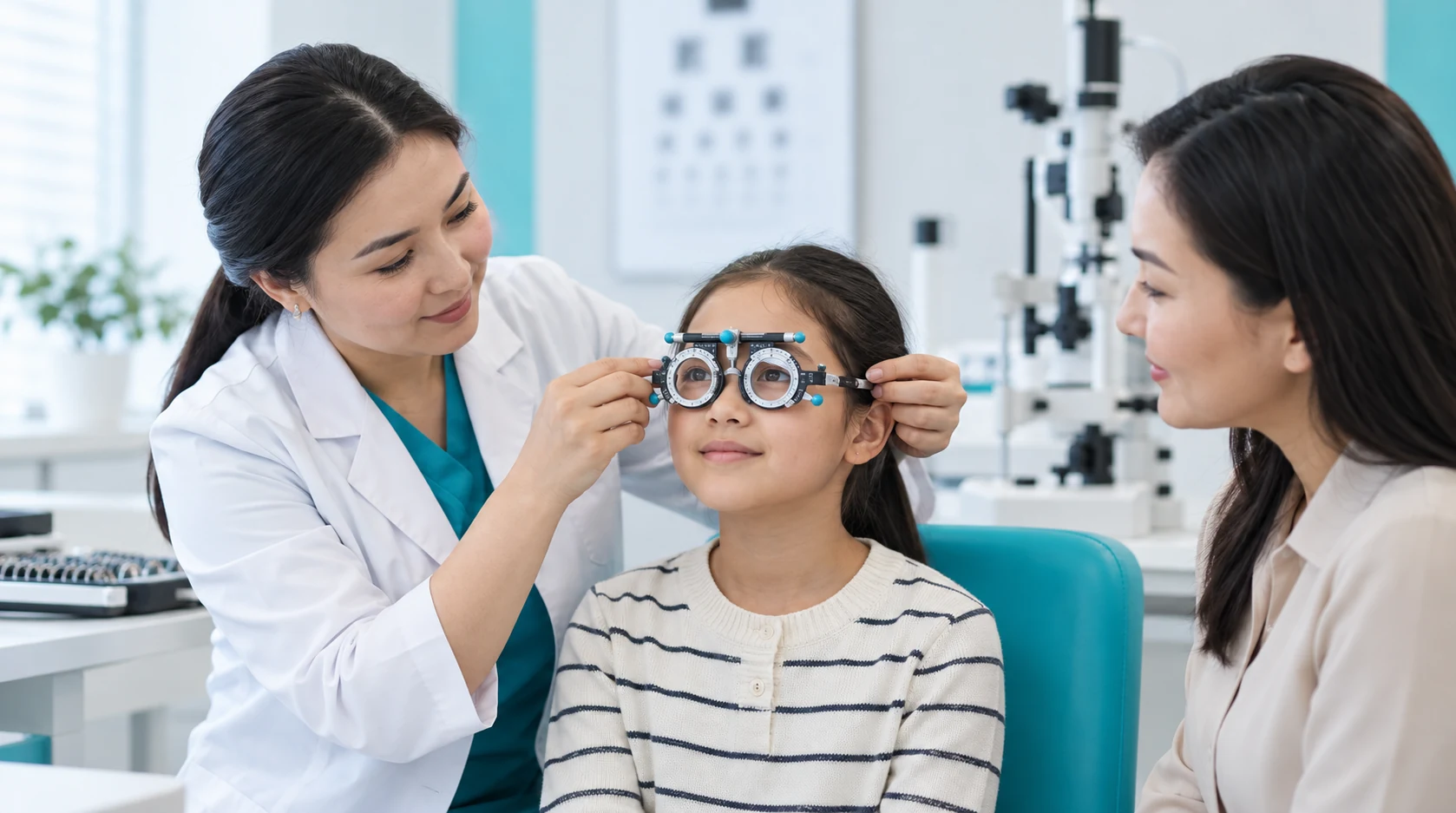
The ophthalmologist assesses refraction, visual acuity and eye health, taking into account the child's age, family history, changes in previous prescriptions and risk factors for progression.
In children, refraction is often assessed under cycloplegia, which temporarily relaxes accommodation using medication. This helps distinguish true myopia from situations in which accommodative effort makes the measured refraction appear more negative.
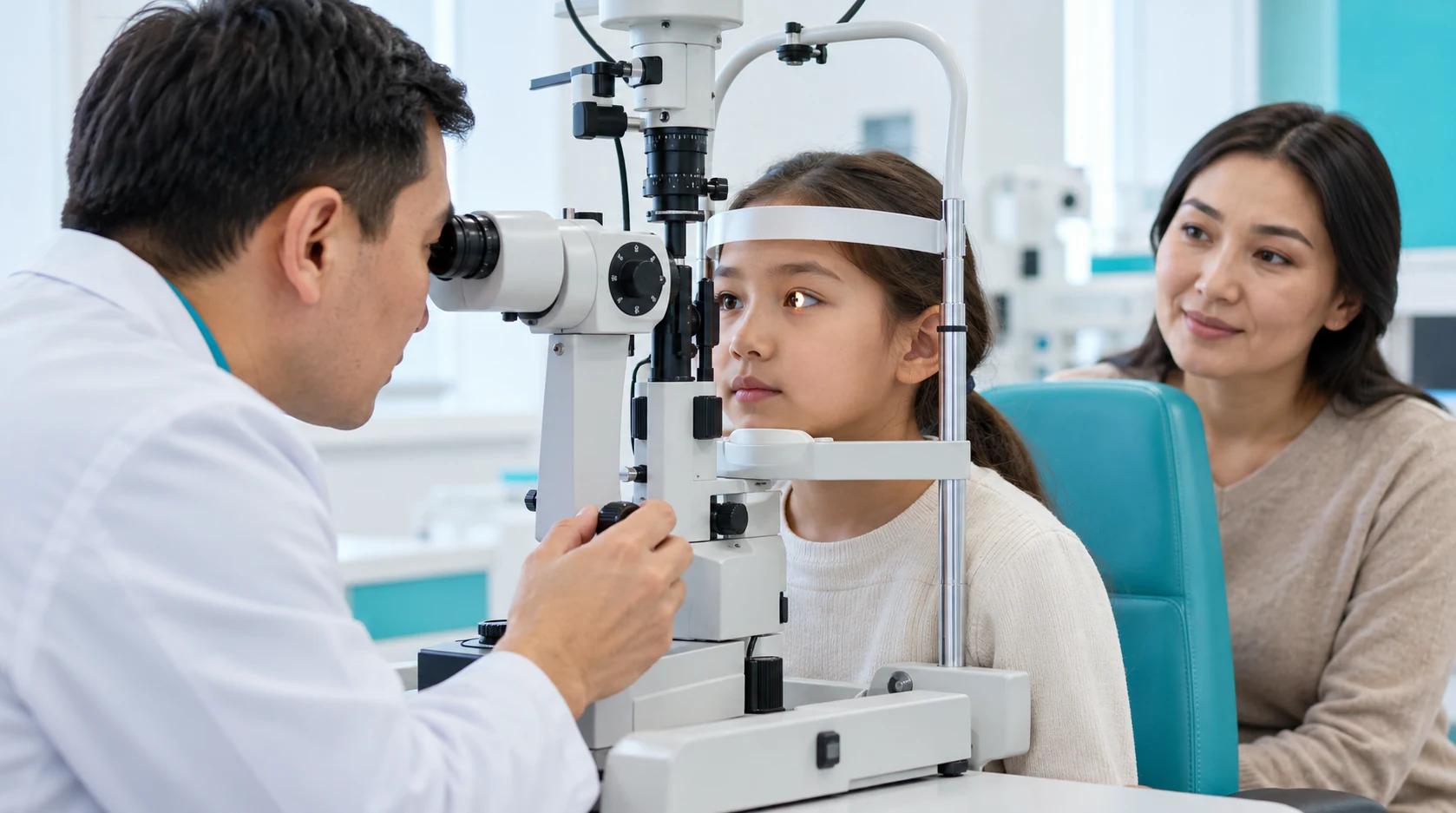
When indicated, the cornea and fundus are examined. If axial biometry is available and clinically indicated, the axial length of the eye is measured. Comparing these measurements over time provides a more objective way to monitor eye growth.
Assessing progression involves more than current diopter measurements. The ophthalmologist also considers the age of myopia onset, previous examination findings, visual habits and the child's ability to follow the prescribed correction regimen.
Methods of Vision Correction and Myopia Control
Once the diagnosis has been confirmed, the ophthalmologist prescribes optical correction. If myopia is progressing or the risk of progression is high, additional myopia-control methods may be considered.
- Standard single-vision glasses. Provide clear distance vision and remain an appropriate way to correct nearsightedness. Their primary purpose is to correct refractive error rather than actively slow eye growth.
- Conventional contact lenses. Correct vision without glasses but are not equivalent to specialized myopia-control methods.
- Specially designed spectacle lenses with myopic defocus. Use an optical design intended to slow myopia progression.
- Specialized soft contact lenses. May be used for myopia control in children who meet the indications for the specific technology.
- Orthokeratology lenses. Are worn during sleep and represent a separate approach to vision correction and myopia control. They require individualized fitting, careful hygiene and regular follow-up.
- Pharmacological methods. May be considered when medically indicated, following an assessment of the child's condition and possible treatment options.
No method guarantees that myopia progression will stop completely. Effectiveness depends on the child's individual characteristics, the selected technology, adherence to the prescribed regimen and follow-up findings.
Additional Recommendations and Common Situations
- A school-aged child begins having difficulty seeing the classroom board. Visual acuity is assessed, cycloplegic refraction is performed when indicated, myopia is confirmed and full optical correction is prescribed. Risk factors are then evaluated, and a follow-up plan is established.
- The myopia prescription becomes more negative every year. The ophthalmologist compares previous prescriptions, assesses axial length when measurements are available and discusses active myopia-control methods. After a suitable method is selected, progression is monitored over time.
- A child actively participates in sports and does not want to wear glasses. The ophthalmologist examines the cornea and evaluates the child's ability to follow lens-care rules. Specialized soft contact lenses or orthokeratology may be discussed when indicated. Fitting is followed by training and review visits.
- Parents are interested in overnight lenses. A comprehensive ophthalmological examination is performed, including assessment of corneal topography and parameters, indications and contraindications. Orthokeratology lenses are then fitted individually, with monitoring of lens fit and corneal condition.
- A child has high myopia. Full optical correction, fundus examination, a myopia-control strategy and closer monitoring are required. The ophthalmologist also explains retinal warning symptoms that require urgent medical attention.
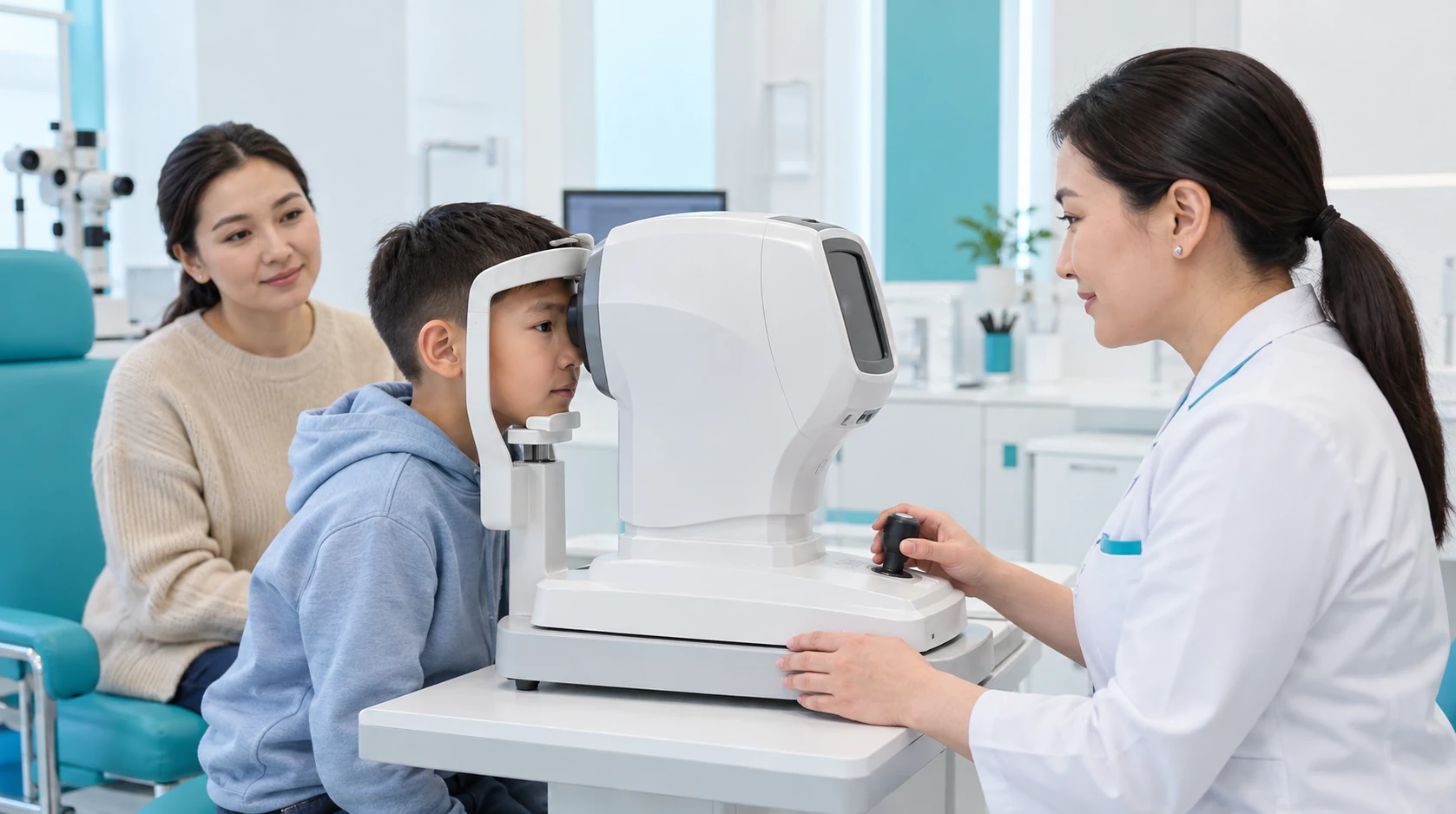
- An autorefractor shows a more negative prescription, but the child's vision is unstable. Accommodation is assessed and cycloplegic refraction is performed. This helps distinguish true myopia from an accommodative component and guides treatment according to the confirmed diagnosis.
Diagnostic Investigations and Orthokeratology Lenses
Additional investigations and specific lens models are selected according to clinical indications. Their necessity is determined by the results of the ophthalmological examination.
- Refractometry. A separate functional diagnostic investigation used to assess refraction.
- Ocular ultrasound, A-scan. May be used for biometric measurements.
- Pentacam corneal diagnostic examination. May be relevant when assessing suitability for contact lens or orthokeratology methods, where indicated.
- Paragon CRT / Dual Axis orthokeratology lenses. These products are charged as separate items. The specific model is prescribed by the ophthalmologist.
- MoonLens orthokeratology lenses. Several options are available. The specific model is determined during individualized fitting.
How a Myopia Management Strategy Is Selected
The first step is to confirm the child's true refraction. Cycloplegia is used when necessary to reduce the influence of accommodation on measurement results.
The ophthalmologist then assesses the rate of myopia progression, age of onset, family history, eye health and previous examination findings. Axial length may also be monitored when measurements are available and clinically indicated.
Based on these findings, an appropriate vision correction method is selected, and the need for a separate myopia-control program is assessed. The decision considers not only research findings on treatment effectiveness but also the child's and family's ability to follow the prescribed regimen.
Even a potentially effective method may not produce the expected result if the child does not wear the prescribed glasses or contact lenses consistently or fails to follow contact lens hygiene rules.
Why Measuring Axial Length Matters
Axial length is an additional measurement used to monitor myopia progression.
Refractive measurements in diopters may be affected by accommodation and examination conditions. Repeated biometric measurements help evaluate eye growth and complement refractometry findings.
Myopia control is based on comparing measurements over time. Previous prescriptions, ophthalmology reports and biometric measurements, when available, help guide and adjust the follow-up strategy.
What if Specialized Myopia-Control Methods Are Not Suitable?
Standard single-vision glasses remain an appropriate way to provide clear vision. If a family is not ready to use specialized optical methods or contact lenses, this does not mean the child cannot receive appropriate correction and monitoring.
The child still needs properly prescribed optical correction, assessment of myopia progression and regular follow-up examinations.
Monitoring Results and Prognosis
The goal of treatment is to provide clear vision, slow myopia progression where possible and reduce the likelihood of developing high myopia later in life.
Complete cessation of myopia progression, elimination of existing nearsightedness or a fixed percentage of treatment effectiveness cannot be guaranteed. The response to myopia control varies individually and is assessed through changes in refraction and, when measured, axial length.
Regular follow-up examinations allow the ophthalmologist to evaluate the selected strategy and adjust the treatment and monitoring plan when necessary.