
Eyelid function and condition
Patients with a firm eyelid nodule that does not reduce after prescribed conservative care.
Chalazion removal is considered after examination and assessment of other treatment options. The approach and follow-up depend on the lesion’s size, location and course.
Patients with a firm eyelid nodule that does not reduce after prescribed conservative care.
Patients with a large chalazion that presses on the cornea, causes astigmatic changes or discomfort, or interferes with vision.
Patients with recurrent chalazia after evaluation of the underlying recurrence factors.
Patients with multiple lesions when the surgeon considers single-session or staged removal appropriate.
Patients in whom another eyelid lesion cannot be confidently excluded and excision with pathology is recommended.
Do not squeeze or puncture the nodule yourself. This increases the risk of injury and infection and can complicate diagnosis.
Active suppuration, marked inflammation or widespread swelling may first require treatment of the acute process; the doctor determines when elective removal can be performed.
Anticoagulant use and bleeding disorders require individual planning. Medicines must not be stopped without medical advice.
Expected postoperative effects can include swelling, bruising, soreness, minor bleeding and temporary discomfort. Infection, scarring, incomplete removal or recurrence are less common risks.
A lesion recurring in exactly the same location, atypical shape, lash loss or non-healing ulceration should prompt exclusion of eyelid neoplasia.
If the lesion recurs in the same location, tell the doctor and bring previous operative and pathology reports if available.
Tell the surgeon about anticoagulants or other medicines that affect bleeding. Do not stop them without medical advice.
If removal has already been scheduled, arrive without eye makeup and confirm instructions about contact lenses, food and laboratory tests.
Seek urgent care for rapidly increasing swelling, severe pain, fever, redness spreading around the eye or reduced vision.
Severe pain, rapidly increasing swelling, fever, reduced vision or spreading periocular inflammation requires urgent assessment.
Severe pain, rapidly increasing swelling, fever, reduced vision or spreading periocular inflammation requires urgent assessment.
Book a consultation
The doctor reviews duration, inflammation and recurrence, examines the eyelid and everts it if needed to assess its inner surface.
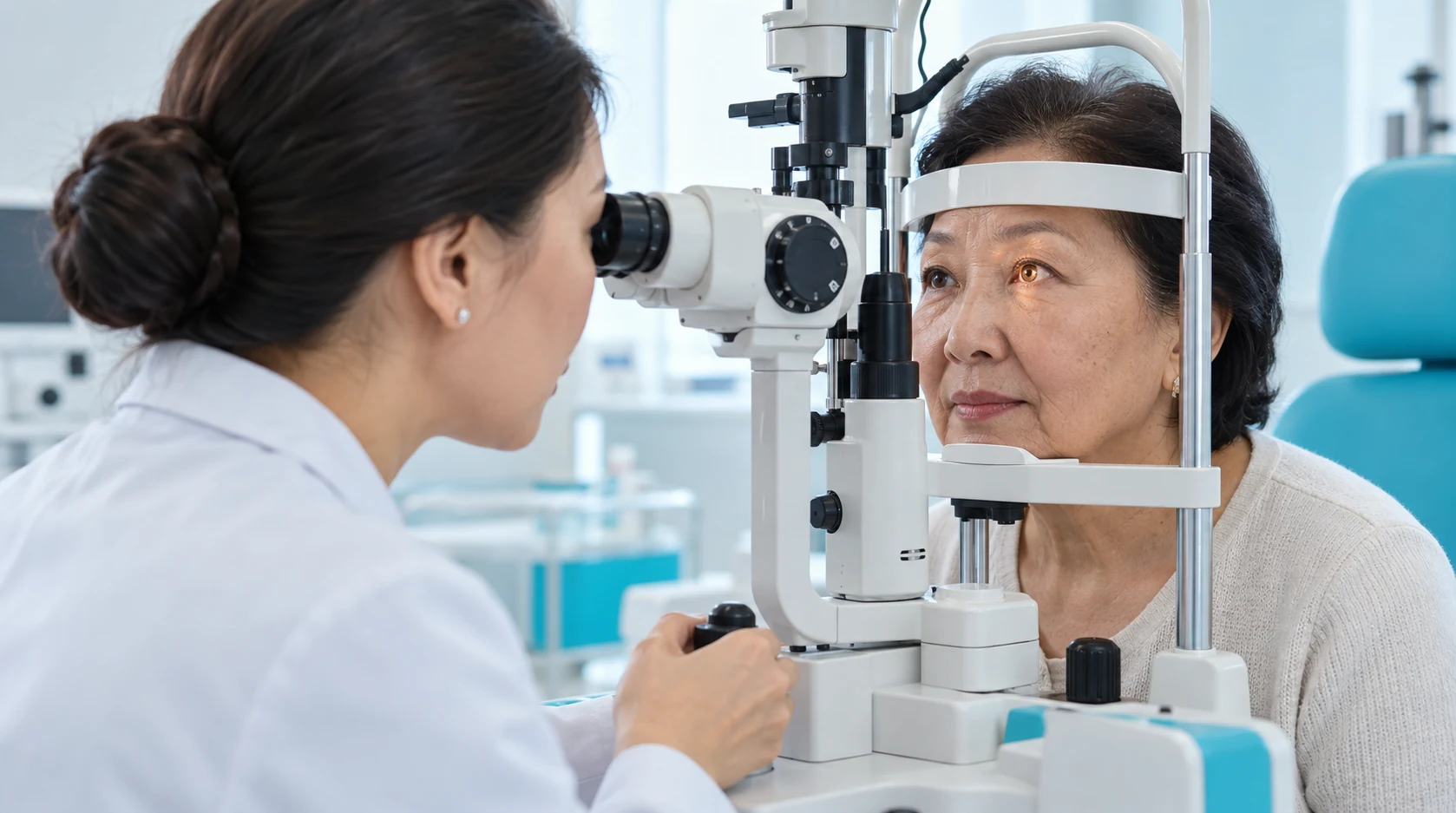
A small recent chalazion may be managed conservatively; a firm, large or recurrent nodule may require removal.

The surgeon determines required tests, reviews medicines and selects local anaesthesia.

After anaesthesia and lid fixation, a small conjunctival or skin incision is made and the contents and capsule removed.
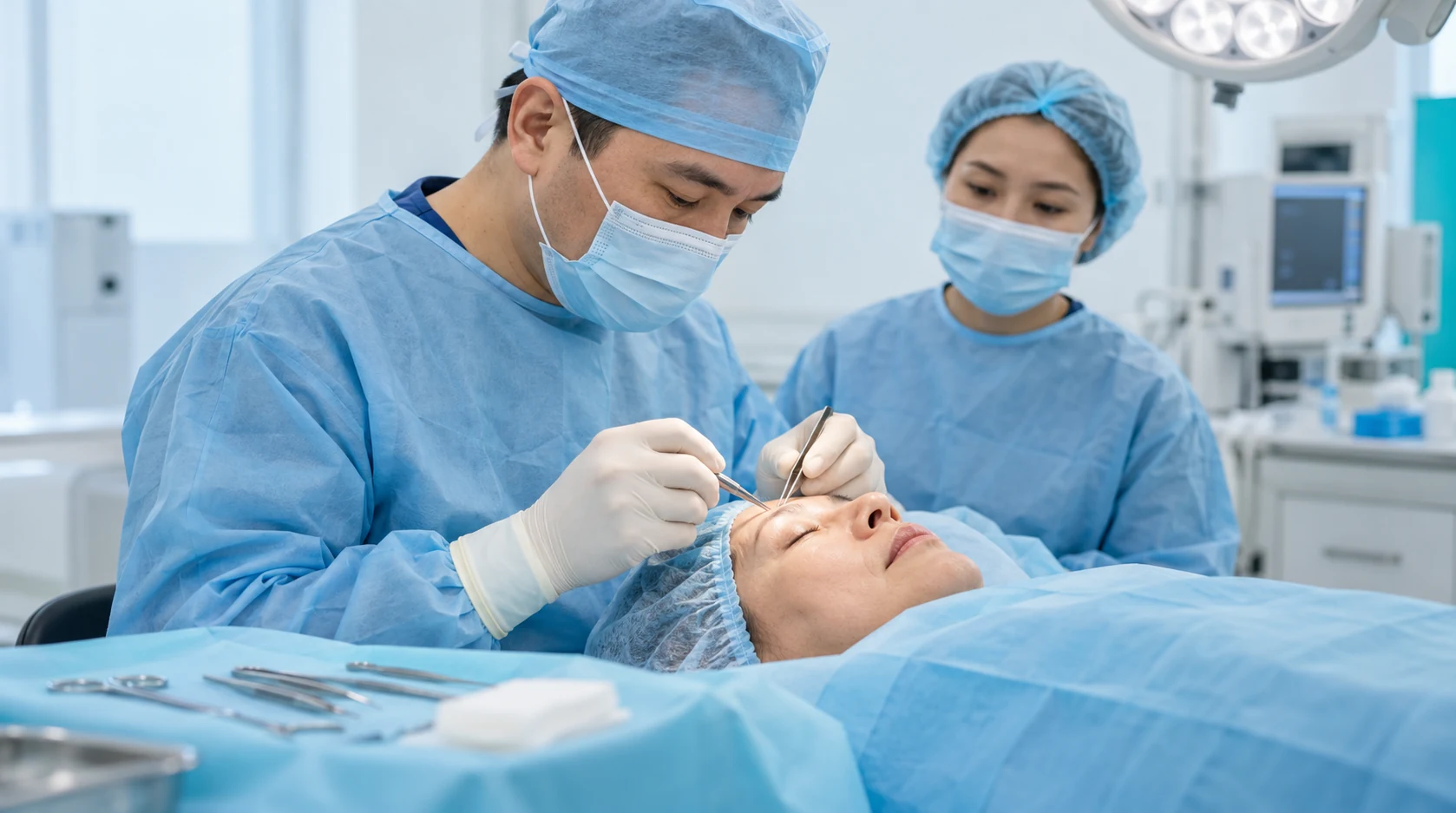
Sutures and a dressing are applied if needed.
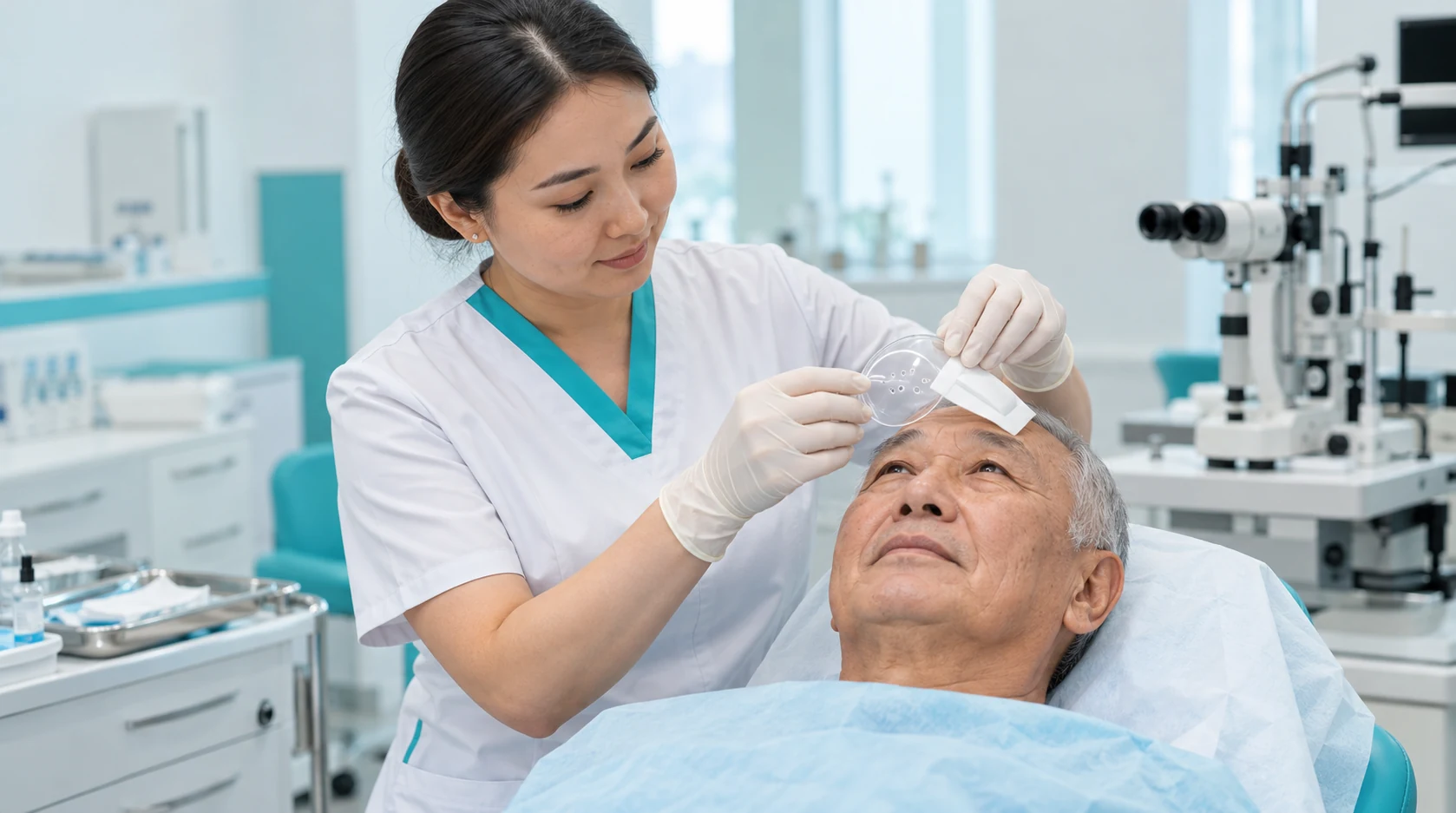
The patient receives local care instructions and a review date.

Chalazion removal addresses a persistent lump when conservative treatment is insufficient.
Removing a large chalazion can reduce pressure and irritation caused by that particular lump.
When suitable, removal is performed under local anaesthesia; children and some patients need a different anaesthetic plan.
When indicated, removed tissue is sent for histological examination to clarify the diagnosis.
If an eyelid nodule persists, recurs or enlarges, book an appointment with an ophthalmologist or ophthalmic surgeon at KazRIED. The doctor will confirm that it is a chalazion, assess the eyelid and select observation, treatment of associated inflammation or removal.
A team of experienced doctors across specialties.

Highest-category ophthalmologist

Highest-category ophthalmologist

Highest-category ophthalmologist

Highest-category ophthalmologist

First-category ophthalmologist

Second-category ophthalmologist

Second-category ophthalmologist

Second-category ophthalmologist


A chalazion develops when the duct of a meibomian gland becomes blocked. Lipid secretions accumulate within the eyelid, triggering a chronic inflammatory reaction. The lump becomes firm and may persist for weeks or months.
Unlike a typical stye, a chalazion usually develops gradually and causes little or no pain outside an inflammatory flare-up.
Not every chalazion requires surgical removal. Management depends on its duration, size, inflammation, recurrence, and whether its appearance is typical.
Early treatment may include eyelid hygiene, warm compresses, and treatment of associated blepharitis or meibomitis.
Removal may be discussed if a firm lump persists despite treatment, recurs, or causes problems.
KazRIED officially describes a conventional surgical approach. The surgeon selects the technique and equipment; availability should be confirmed for the chosen location.
Before the procedure, the surgeon determines whether tests are needed, reviews medications, and selects local anesthesia. The treatment pathway may differ for children and patients with special medical circumstances.
The eyelid is anesthetized and stabilized. An incision is made through the conjunctiva or skin, and the contents and capsule are removed.
A small internal incision may not require an external stitch. Sutures and a dressing are applied when needed.
If the lesion recurs in the same location, looks unusual, or the diagnosis is uncertain, the removed tissue should be considered for pathological examination, including histology.
This does not automatically mean that a tumor is suspected, but helps safely exclude rare eyelid conditions.
After the procedure, the patient receives local care instructions and a follow-up date. Do not rub the eyelid or change prescribed medications independently while it heals.
Swelling, bruising, and temporary asymmetry may occur during the first few days. Their resolution varies between patients. Follow-up assesses healing and checks for infection.
Removal treats the existing lump but does not prevent every future chalazion. With ongoing blepharitis or meibomian gland dysfunction, new lumps may develop nearby or elsewhere on the eyelid.
Following eyelid hygiene and treatment recommendations for the underlying condition remains important.
The consultation, additional examinations, and histological analysis have separate fees.
Kazakhstan’s first specialized ophthalmology institute, operating since 1933.
Modern diagnostics and surgery using world-class equipment.
Leading ophthalmologists in Kazakhstan, scientists and experienced surgeons.
More than 30,000 operations and around 270,000 consultations annually.


Kazakhstan’s first specialized ophthalmology institute, operating since 1933.
Modern diagnostics and surgery using world-class equipment.
Leading ophthalmologists in Kazakhstan, scientists and experienced surgeons.
More than 30,000 operations and around 270,000 consultations annually.
Kazakhstan’s first specialized ophthalmology institute, operating since 1933.
Modern diagnostics and surgery using world-class equipment.
Leading ophthalmologists in Kazakhstan, scientists and experienced surgeons.
More than 30,000 operations and around 270,000 consultations annually.


