

Myopia
Laser correction may be used to correct myopia when the vision measurements and corneal condition meet the requirements of the chosen technique.
 Femto LASIK laser vision correction
 ReLEx SMILE Laser Vision Correction
 TransPRK (Transepithelial Photorefractive Keratectomy)
 Contact Lenses for Children
TransPRK (Transepithelial Photorefractive Keratectomy)
 Myopia correction (nearsightedness correction)
 Hyperopia correction (farsightedness correction)
 Astigmatism correction
Laser vision correction changes corneal optics to reduce dependence on glasses and contact lenses. The method is selected after diagnostic testing, safety assessment and discussion of visual needs.
Laser correction may be used to correct myopia when the vision measurements and corneal condition meet the requirements of the chosen technique.
Some refractive laser surgery techniques can correct hyperopia. Suitability depends on the degree of refractive error, age and ocular health.
Laser correction may be used for suitable forms of astigmatism when diagnostic findings allow the selected procedure.
Patients whose glasses or contact lenses interfere with daily life, sport or work may consider laser vision correction.
Visual stability: a change in glasses or contact lens prescription during the past year may indicate unstable refraction and requires further assessment. Age and unstable refraction: surgery is usually considered after eye development is complete and visual measurements are stable.
Corneal thickness and shape: diagnostic assessment is needed to evaluate thickness, topography or tomography and ectasia risk factors.
Ocular-surface health: marked dryness or inflammation may require treatment before refractive surgery.
Retina and internal ocular structures: if another eye condition is identified, the doctor determines whether it needs treatment before correction.
Pregnancy and breastfeeding: hormonal changes may affect refraction, so the doctor determines the timing of surgery.
Keratoconus and other corneal changes: structural corneal changes may limit suitability for laser correction.
Significant dryness or active inflammation: Ocular-surface treatment may be needed first.
Other eye and systemic diseases: The decision depends on the specific condition, treatment and the tissues' ability to heal.
Laser correction requires comprehensive diagnostics and an ophthalmic surgeon consultation. It does not guarantee a particular acuity or exclude future glasses. Temporary dryness, fluctuating clarity, glare, halos and other visual effects may occur. Expected results, restrictions and risks must be discussed beforehand.
The doctor assesses refraction, corneal measurements and shape, ocular surface and other findings needed for eligibility and method selection.
The doctor reviews results and explains available methods, expected outcomes, recovery and risks.
Laser correction requires comprehensive diagnostics and an ophthalmic surgeon consultation. It does not guarantee a particular acuity or exclude future glasses. Temporary dryness, fluctuating clarity, glare, halos and other visual effects may occur. Expected results, restrictions and risks must be discussed beforehand.
Book a consultation
The doctor assesses refraction, corneal measurements and shape, ocular surface and other findings needed for eligibility and method selection.
Takes: 20 min
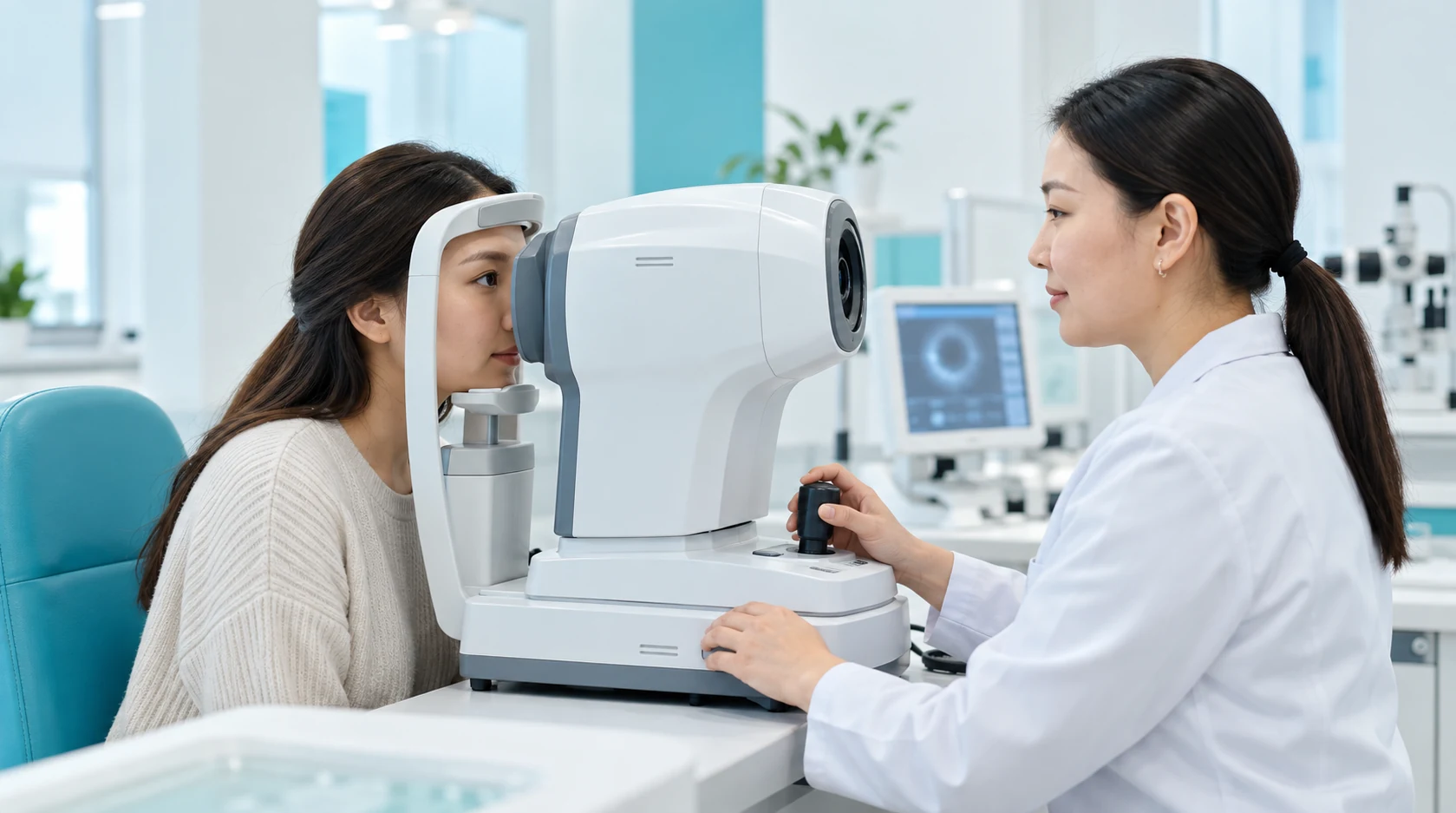
The doctor reviews results and explains available methods, expected outcomes, recovery and risks.
Takes: 25 min

The patient receives individual advice on lenses, medicines, cosmetics and required tests or examinations.
Takes: 20 min

Surgery follows a precalculated programme.
Takes: 5–10 min
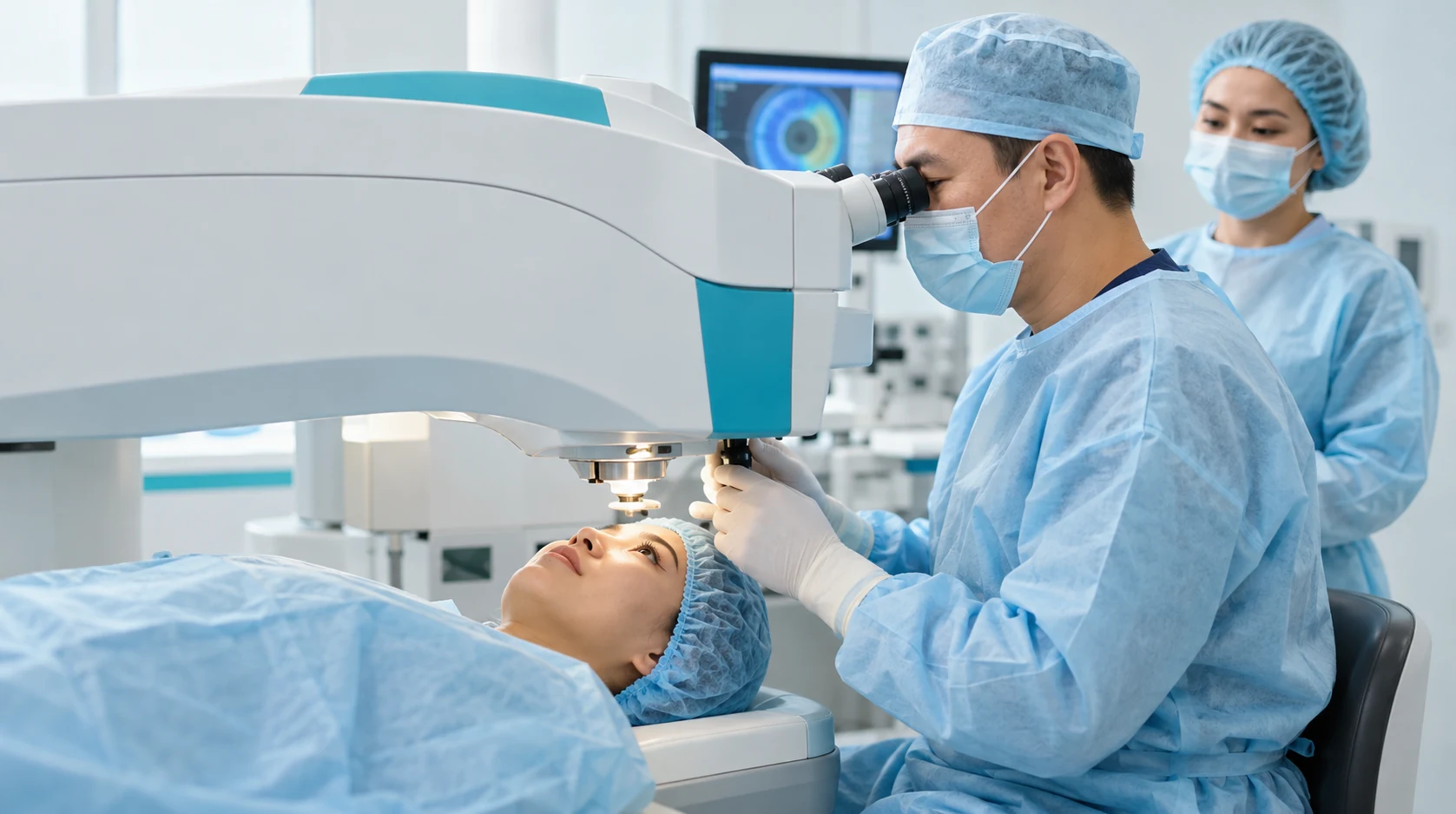
After treatment, the doctor assesses the eyes and gives a postoperative regimen and advice on activity, hygiene and reviews.
Takes: 2–3 days after surgery and after one month

Laser correction can reduce the need for glasses or contact lenses when clinically appropriate.
Laser treatment is planned from diagnostic findings, not simply the strength of your prescription.
Different laser techniques allow selection according to corneal anatomy and your visual needs.
Successful correction can make everyday activities, work and sport easier without constant reliance on glasses.
Femto LASIK combines femtosecond laser flap creation with excimer laser corneal reshaping.
Learn moreReLEx SMILE corrects vision by removing a laser-created corneal lenticule through a small incision.
Learn moreCLEAR is lenticule-based laser vision correction without a corneal flap.
Learn moreTransPRK is surface laser vision correction without a corneal flap.
Learn moreFind out whether laser vision correction is right for you The first step is comprehensive diagnostics. Your doctor will assess your eyes, determine eligibility and discuss which treatment options may be appropriate.
The package includes: • Intraocular pressure (IOP) measurement • Visual acuity testing • Refractometry • Corvis examination • Sirius examination • Pentacam examination • Ophthalmologist consultation • Cycloscopy
A team of experienced doctors across specialties.

Doctor of Medical Sciences, Associate Professor; Highest-category ophthalmologist

Candidate of Medical Sciences; Highest-category ophthalmologist

Candidate of Medical Sciences; Highest-category ophthalmologist

Candidate of Medical Sciences; Highest-category ophthalmologist
Master’s Student in Public Health

Highest-category ophthalmologist

Highest-category ophthalmologist

Highest-category ophthalmologist

Highest-category ophthalmologist

Highest-category ophthalmologist
With myopia, hyperopia and astigmatism, the optical system of the eye does not focus light as required for a clear retinal image. Laser vision correction changes corneal shape and therefore its refractive power to improve focusing.
The technologies differ: Femto LASIK uses a corneal flap and excimer laser correction, ReLEx SMILE and CLEAR are based on lenticule extraction, while PRK and TransPRK are surface procedures. There is no universally best method: the choice depends on the diagnostic assessment.
Consultation
The doctor explains the diagnostic findings, correction options and expected postoperative care.
Preparation
The patient receives instructions on contact lenses, cosmetics, medications and the required examinations.
Postoperative care
The doctor prescribes eye care and explains temporary restrictions.
Follow-up examinations
Monitoring continues according to the surgeon's schedule.
Laser vision correction should not be chosen solely by the technology’s name or price.
Two patients with the same myopic prescription may have different corneal thickness and shape, ocular surface conditions, and other parameters that influence the choice of surgery.
The purpose of the diagnostic assessment is therefore not simply to confirm the number of diopters, but to determine whether refractive surgery is suitable and which technology matches the eye’s characteristics and the patient’s expectations.
If one method is unsuitable, this does not necessarily rule out vision correction altogether. An ophthalmic surgeon assesses possible alternatives after the examination.
Up to +6.0.
A diagnostic assessment before laser vision correction starts at 28,000 ₸ in Almaty, Astana, and Shymkent. The tests included in the package and payment terms are clarified when booking.
Anti-inflammatory eye drops and an antibiotic are provided after laser vision correction.
Follow-up examinations during the first month are free of charge. Their timing depends on the correction method and recovery progress.
When medically indicated, a laser enhancement procedure within one year is performed free of charge, provided that an examination confirms its feasibility and safety.
The correction method for hyperopia is selected individually after a diagnostic assessment.
Kazakhstan’s first specialized ophthalmology institute, operating since 1933.
Modern diagnostics and surgery using world-class equipment.
Leading ophthalmologists in Kazakhstan, scientists and experienced surgeons.
More than 30,000 operations and around 270,000 consultations annually.


Kazakhstan’s first specialized ophthalmology institute, operating since 1933.
Modern diagnostics and surgery using world-class equipment.
Leading ophthalmologists in Kazakhstan, scientists and experienced surgeons.
More than 30,000 operations and around 270,000 consultations annually.
Kazakhstan’s first specialized ophthalmology institute, operating since 1933.
Modern diagnostics and surgery using world-class equipment.
Leading ophthalmologists in Kazakhstan, scientists and experienced surgeons.
More than 30,000 operations and around 270,000 consultations annually.


