


Retreatment
Persistent tearing or recurrent discharge when impaired lacrimal drainage is suspected.
Oculoplastic and lacrimal surgery address eyelid position and tear drainage. The method is chosen after assessing the cause of symptoms, the site of the problem and the ocular surface.
Persistent tearing or recurrent discharge when impaired lacrimal drainage is suspected.
Recurrent dacryocystitis after the acute inflammatory episode has been controlled and obstruction is confirmed.
Upper-lid ptosis that obstructs the pupil or limits the visual field.
Entropion or trichiasis causing lash contact with the cornea. For eyelid malposition, mention previous blepharoplasty , tumor removal, burns, facial nerve palsy and any condition affecting eyelid closure.
Ectropion associated with irritation, tearing or punctal eversion.
Scar-related or post-traumatic deformity of the eyelid, medial canthus or lacrimal canaliculi.
Need for conjunctival socket or adnexal reconstruction before ocular prosthetic fitting.
Treatment depends on the cause and stage. In acute dacryocystitis, infection and inflammation are treated first, and definitive restoration of drainage is planned after stabilization. A tumour, severe trauma, orbital disease or complex nasal anatomy may require multidisciplinary care.
Bring prior ophthalmology notes, operative reports, trauma records and a list of current eye drops.
For tearing, report whether it is constant, whether there is purulent discharge, pain or swelling at the inner corner of the eye, and whether you have had nasal trauma or surgery around the nose or eyelids.
Tell the surgeon about anticoagulants, antiplatelet medicines and other systemic medication, but do not stop them on your own.
The exact laboratory checklist must come from KazRIED after the operation and anesthesia plan are chosen.
Fresh medial eyelid trauma, vision loss , major bleeding or painful swelling over the lacrimal sac requires prompt assessment rather than routine booking.
Treatment depends on the cause and stage. In acute dacryocystitis, infection and inflammation are treated first, and definitive restoration of drainage is planned after stabilization. A tumour, severe trauma, orbital disease or complex nasal anatomy may require multidisciplinary care. Urgent assessment is needed for severe pain and rapidly increasing swelling at the inner corner of the eye, fever, impaired eye movement, reduced vision, deep eyelid trauma or injury to the medial eyelid with possible canalicular rupture.
Book a consultation
The main problem is defined: eyelid malposition, tissue defect, tearing, discharge, trauma or prosthetic-socket issue.

Closure, lid margin, corneal protection and possible dry-eye contribution are assessed.
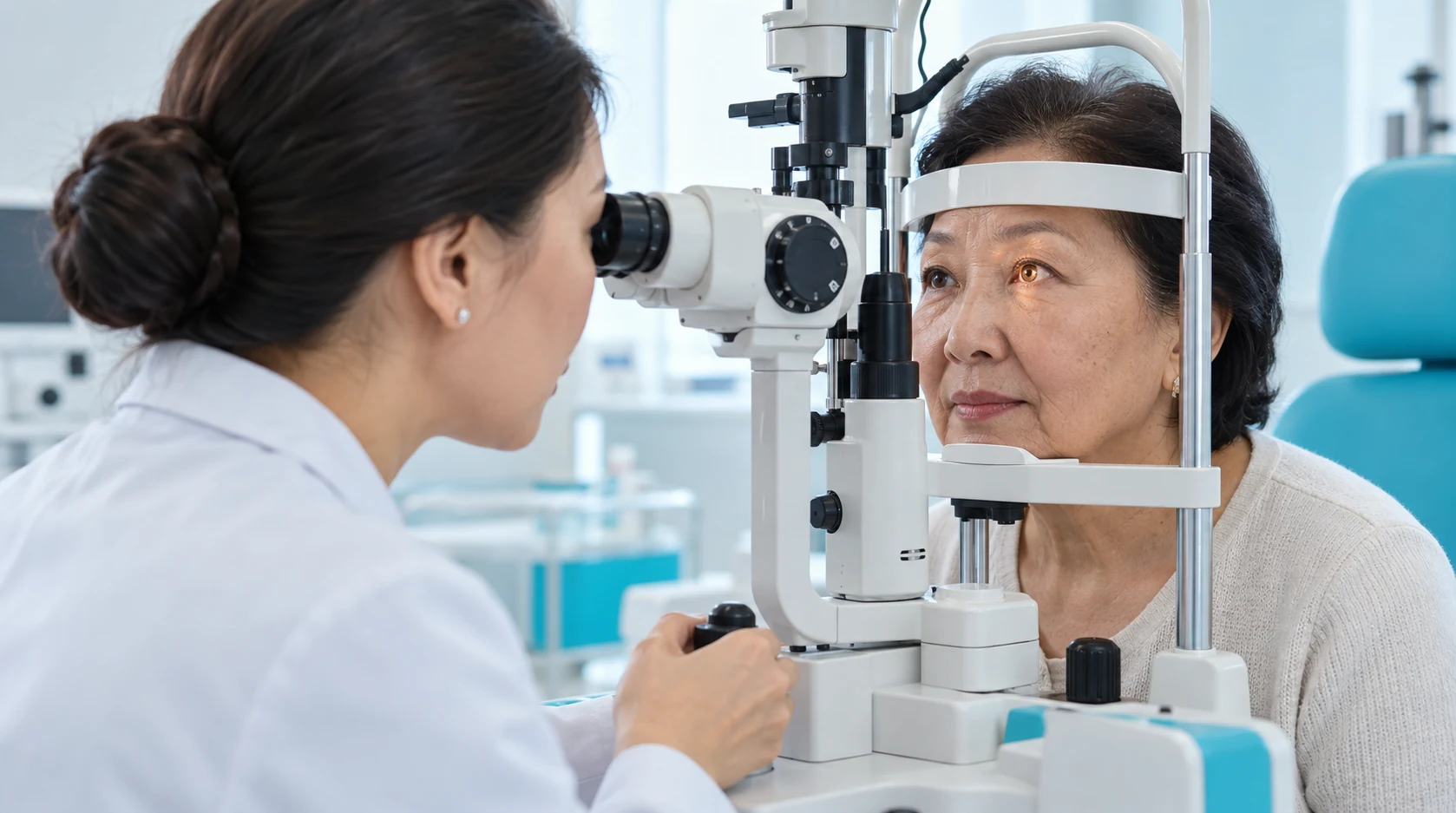
Irrigation, probing or imaging is added when indicated.

Eyelid deformity is classified by mechanism; lacrimal disease by the anatomical level of stenosis or injury.

Tests, consultations and anesthesia are determined by the selected operation and KazRIED protocol.

This may involve eyelid or canalicular reconstruction, intubation or DCR.
The doctor assesses healing, eyelid position, the cornea and lacrimal drainage patency; if a stent has been placed, its position and the timing of removal are also reviewed.

Correction can reduce visual obstruction caused by overhanging tissue or abnormal eyelid position.
Correcting age-related eyelid changes and asymmetry can create a more open, rested appearance.
Treatment aims to reduce corneal irritation and restore eyelid protection according to the cause of the problem.
Restoring drainage can reduce persistent tear overflow when impaired tear drainage is the cause.
Blepharoptosis correction aims to restore the position of a drooping upper eyelid.
Learn moreEntropion or ectropion correction restores a more appropriate eyelid position and helps protect the ocular surface.
Learn moreDacryocystorhinostomy creates a new drainage route from the lacrimal sac into the nose.
Learn moreBook a KazRIED ophthalmic-surgeon consultation for eyelid or lacrimal disease. The clinician can determine whether symptoms arise from eyelid position, ocular-surface disease or mechanical drainage obstruction and then select the appropriate surgical pathway.
A team of experienced doctors across specialties.

Highest-category ophthalmologist

Highest-category ophthalmologist


Second-category ophthalmologist
Oculoplastic surgery helps restore eyelid position and function. Eyelid position affects corneal protection, tear film distribution, and the lacrimal pump.
Blepharoptosis, entropion, ectropion, lagophthalmos, and scar-related deformities may require reconstructive surgery for functional reasons.
Excessive tearing may result from nasolacrimal duct obstruction, punctal malposition, lacrimal pump weakness, dry eye, or inflammation.
Lacrimal irrigation, probing, and imaging are performed when indicated. KazRIED’s price list includes contrast radiography of the lacrimal drainage system.
If irrigation confirms that the drainage system is patent, functional causes and ocular surface disease should be assessed. Nasolacrimal duct surgery should not be planned automatically in this situation.
The need for intubation, surgical technique, and consumables depends on the clinical situation.
Selection begins with identifying the anatomical and functional cause of the symptom. Eyelid deformity may be age-related, scar-related, paralytic, or post-traumatic.
The pathway includes symptom assessment, diagnostic testing, localization of the problem, selection of a specific operation, and clarification of its fee. No single procedure treats every cause of excessive tearing or eyelid deformity.
Kazakhstan’s first specialized ophthalmology institute, operating since 1933.
Modern diagnostics and surgery using world-class equipment.
Leading ophthalmologists in Kazakhstan, scientists and experienced surgeons.
More than 30,000 operations and around 270,000 consultations annually.


Kazakhstan’s first specialized ophthalmology institute, operating since 1933.
Modern diagnostics and surgery using world-class equipment.
Leading ophthalmologists in Kazakhstan, scientists and experienced surgeons.
More than 30,000 operations and around 270,000 consultations annually.
Kazakhstan’s first specialized ophthalmology institute, operating since 1933.
Modern diagnostics and surgery using world-class equipment.
Leading ophthalmologists in Kazakhstan, scientists and experienced surgeons.
More than 30,000 operations and around 270,000 consultations annually.


