

Accommodative dysfunction
For patients in whom examination identifies a functional focusing problem and the ophthalmologist considers optico-reflex training appropriate.
Visotronic M3 sessions provide visual training using a programme selected by the ophthalmologist. The need for a course and its results are assessed against the specific functional problem and measured progress.
For patients in whom examination identifies a functional focusing problem and the ophthalmologist considers optico-reflex training appropriate.
For discomfort and unstable focus after prolonged near work, once other causes of the symptoms have been excluded.
For school pupils and students when an ophthalmologist includes training in an individual programme after checking refraction.
Training may be an adjunctive functional component but is not a substitute for an evidence-based myopia-control plan.
For fatigue, blur after near tasks or difficulty switching focus from near to distance and back.
KazRIED determines the number, frequency and duration of sessions.
A universal course of 5, 10 or 15 procedures is not prescribed without an examination.
When glasses or contact lenses are already appropriately prescribed but a trainable functional deficit remains.
Contraindications are determined using the instructions for the specific Vizotronik M3 device used at KazRIED.
A course does not guarantee 100% vision, freedom from glasses or complete recovery.
Vizotronik M3 should not be regarded as a stand-alone proven method to stop axial eye growth in progressive myopia.
Accommodative spasm is not diagnosed from symptoms alone: ophthalmic assessment and accurate refraction are required.
Acute vision loss, flashes, a curtain-like shadow, severe pain, trauma, marked redness or sudden double vision require medical assessment rather than a routine device-based treatment course.
Do not stop prescribed correction for myopia, astigmatism or hyperopia because of device sessions.
Have an ophthalmic assessment before starting: fatigue or a presumed “accommodative spasm” is not enough to select the device independently.
Bring spectacles, the current prescription and previous test results if available.
For a child with progressive myopia, ask the doctor separately about the plan for monitoring refraction and axial eye length.
A course does not guarantee 100% vision, freedom from glasses or complete recovery.
Book a consultation
The clinician reviews symptoms, refraction and current correction and decides whether functional training is indicated.
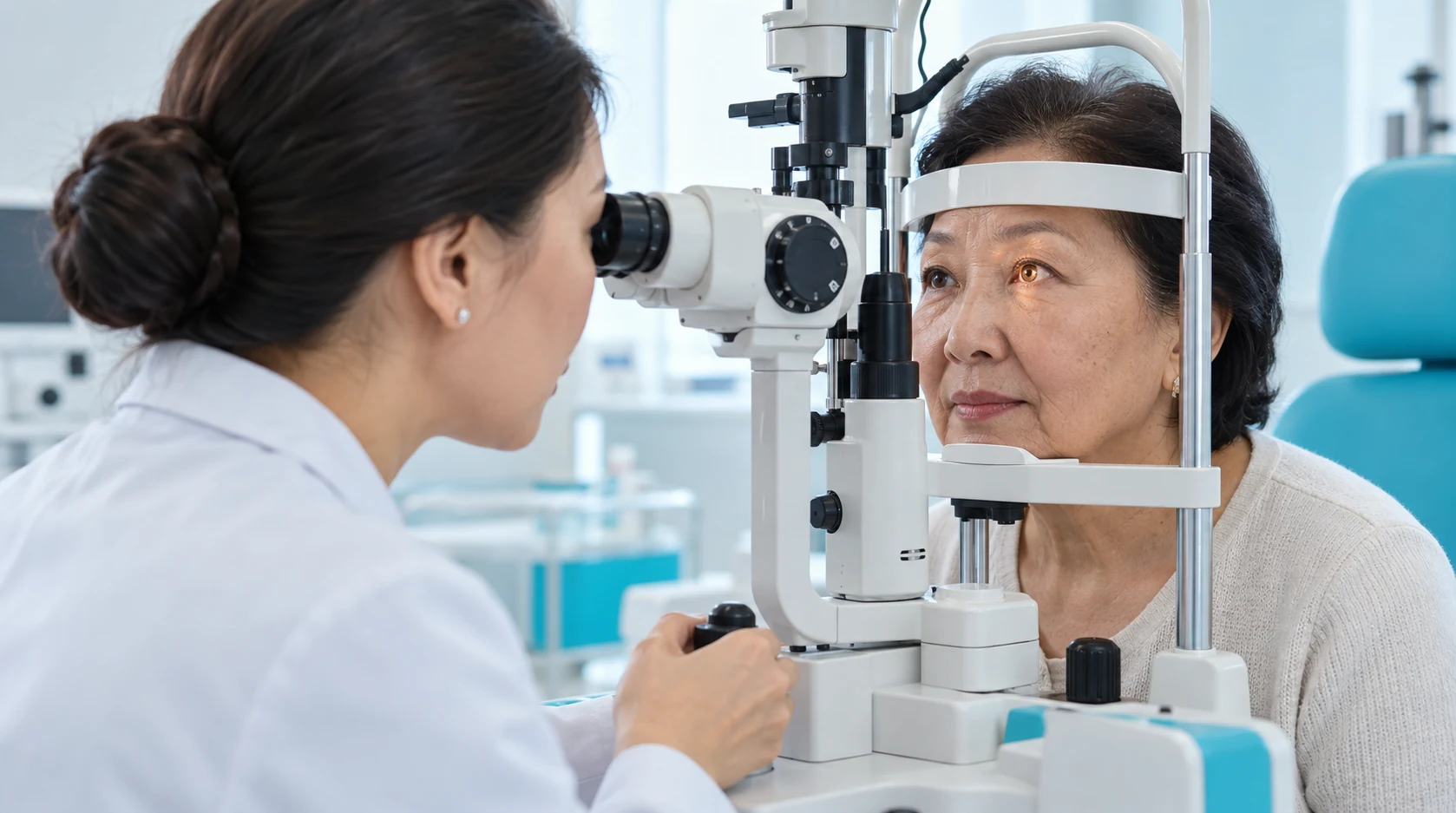
The goal is defined: accommodation, visual endurance, vergence or Vizotronik as one component of a broader plan.

The specialist selects the mode and sequence of optical exercises.

The patient performs tasks through the optical lenses and prisms while fixating a target as instructed.
Staff assess fatigue, discomfort and correct performance.

The clinician compares symptoms and functional measures with baseline and decides whether to stop, continue or change strategy.
When indicated, sessions aim to train the eye's focusing system.
The course may be used for suitable accommodation problems; it does not replace treatment of progressive myopia.
Device-based sessions do not require eye incisions; the doctor determines suitability and the course schedule.
The duration and combination of exercises are selected according to visual function and tolerance of the workload.
If "Visotronic" has not been prescribed yet, make an appointment with an ophthalmologist who provides pleoptic and orthoptic treatment. Bring your glasses, previous prescription, and examination results.
Vizotronik M3, Dashevsky, Avetisov-Matz and convergence training.
Per session; Ambliocor TM-01: per eye and per session.
A team of experienced doctors across specialties.


Visotronic M3 uses optical lenses and prismatic elements to alternate between visual effort and relaxation.
The exercises primarily target accommodation — the eye’s ability to change focus between different distances — and coordinated eye movements during vergence.
The patient completes a prescribed sequence of exercises under specialist supervision. Depending on the program, the optical demand, direction of divergence, and intervals of activity and rest vary.
This distinguishes Visotronic M3 from passive light stimulation and from Ambliokor, which uses video-based computerized biofeedback.
Training may improve certain measures of accommodation and subjective visual comfort. It is important to distinguish these functional effects from claims to “cure myopia.”
Current recommendations for managing progressive myopia primarily emphasize monitoring refraction and axial length, increasing time outdoors, and using specific optical or pharmacological methods when indicated.
A 2026 systematic review describes the evidence for near–far and accommodative training as preliminary and insufficient to confirm sustained myopia control.
At KazRIED, these sessions form part of pleoptic and orthoptic treatment and are prescribed following an ophthalmic assessment.
The method may be used for certain functional accommodative disorders and visual fatigue, and as an additional component of a treatment program for patients with myopia.
It does not replace glasses, contact lenses, or evidence-based methods for controlling progressive myopia.
Treatment with the Visotronic M3 device at KazRIED is a controlled form of optical-reflex training of the visual system.
The device uses lenses and prisms to apply a sequence of accommodative and vergence demands. A specialist selects the settings according to the treatment goal.
The method may be useful for certain functional disorders and visual fatigue, but it does not replace refractive correction and should not be presented as a way to “cure” progressive myopia.
The price for one listed service item in KazRIED’s public price list starts at 2,300 ₸.
Kazakhstan’s first specialized ophthalmology institute, operating since 1933.
Modern diagnostics and surgery using world-class equipment.
Leading ophthalmologists in Kazakhstan, scientists and experienced surgeons.
More than 30,000 operations and around 270,000 consultations annually.


Kazakhstan’s first specialized ophthalmology institute, operating since 1933.
Modern diagnostics and surgery using world-class equipment.
Leading ophthalmologists in Kazakhstan, scientists and experienced surgeons.
More than 30,000 operations and around 270,000 consultations annually.
Kazakhstan’s first specialized ophthalmology institute, operating since 1933.
Modern diagnostics and surgery using world-class equipment.
Leading ophthalmologists in Kazakhstan, scientists and experienced surgeons.
More than 30,000 operations and around 270,000 consultations annually.


