Almaty, Astana, Shymkent

Pediatric Ophthalmologist Consultation

from 15.400 ₸
Book an appointment

About the service

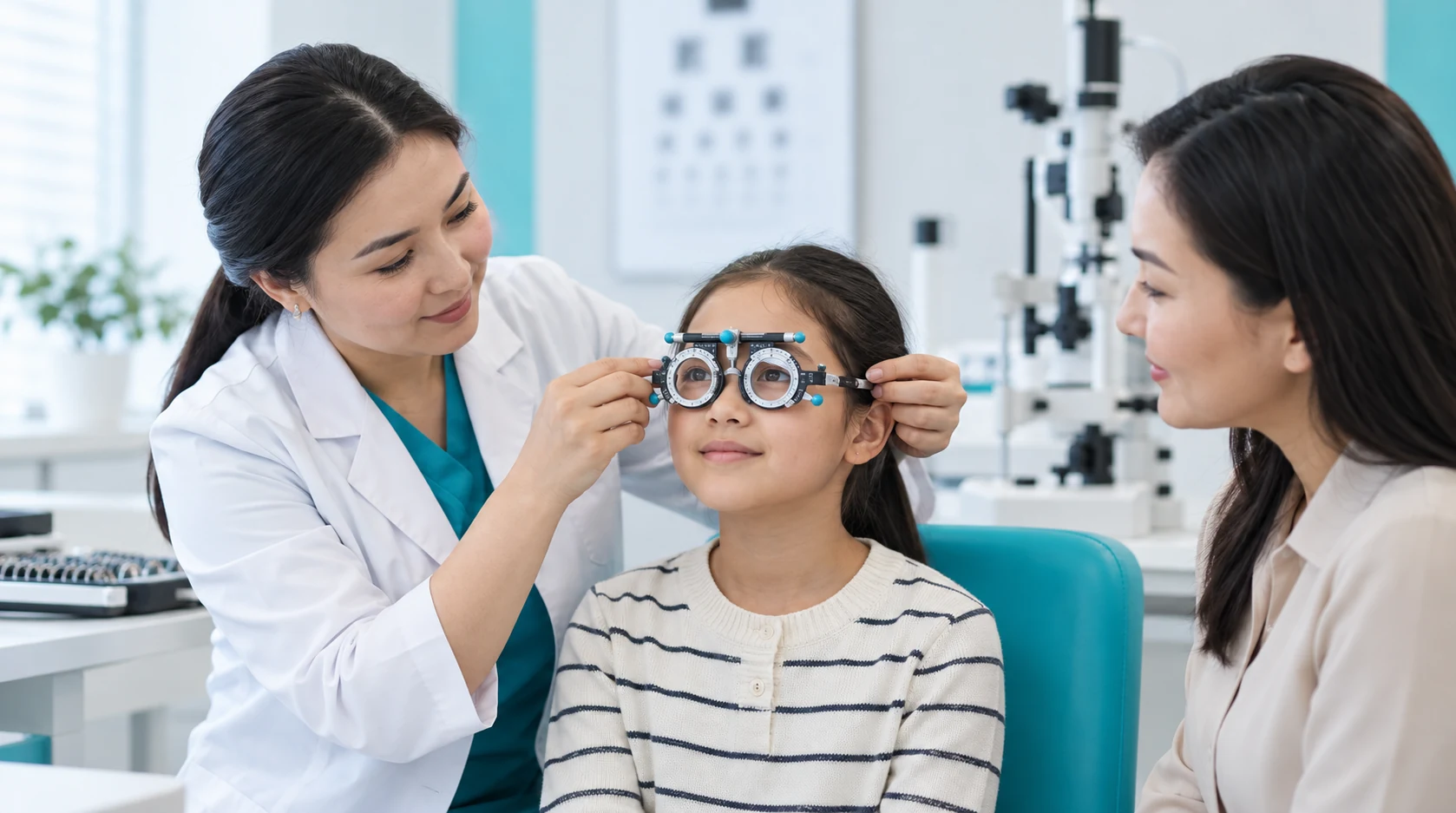
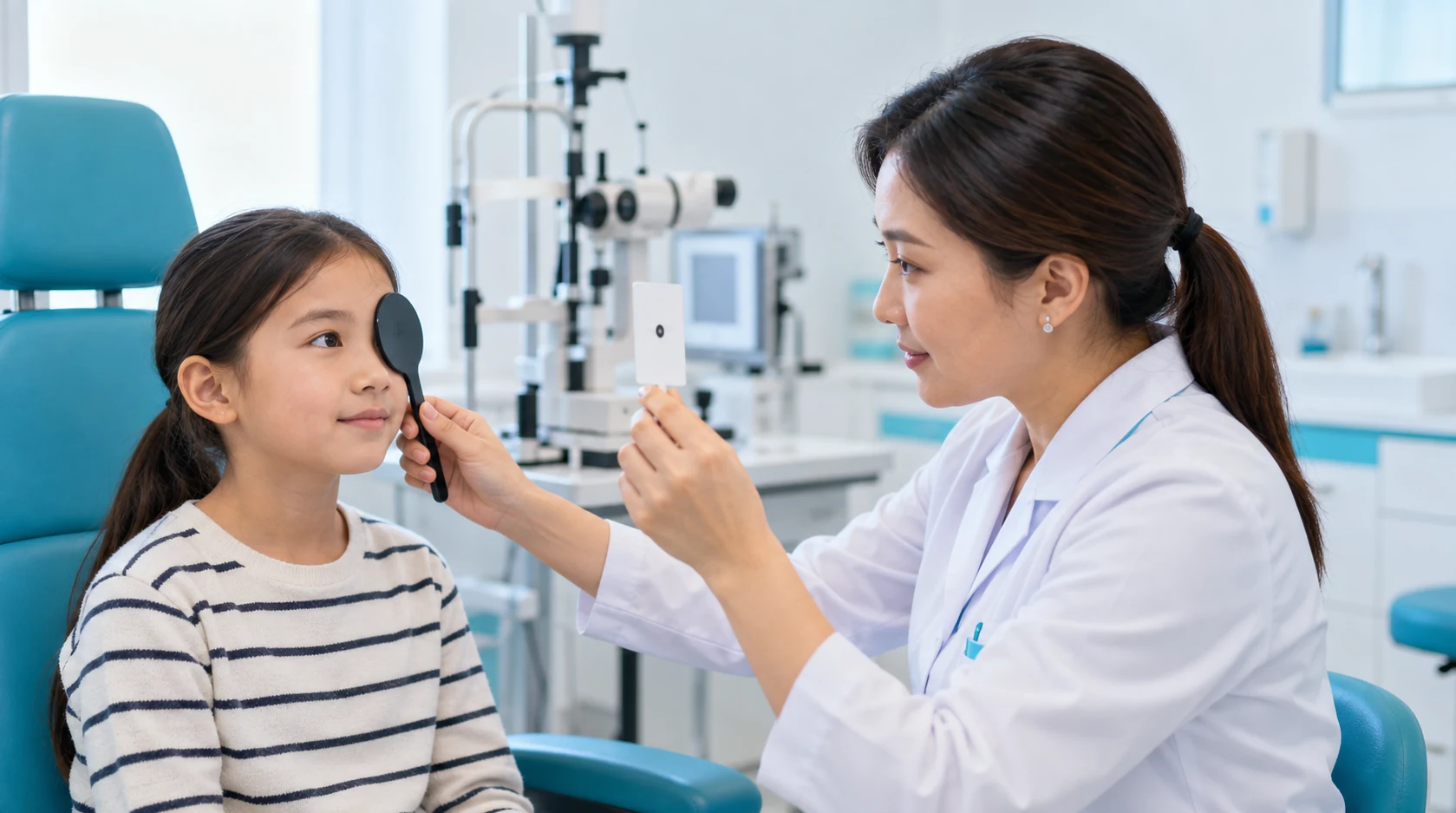
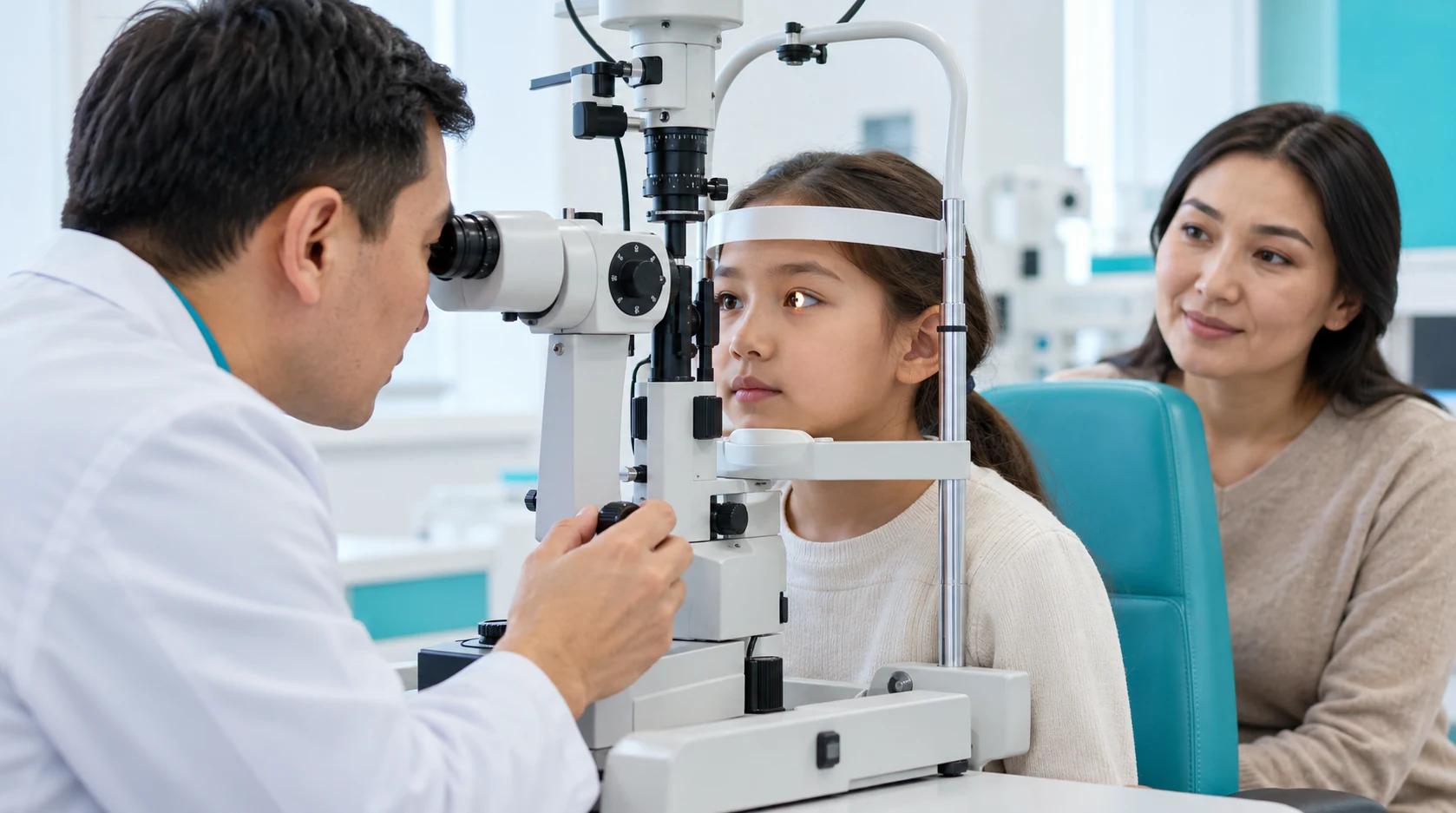
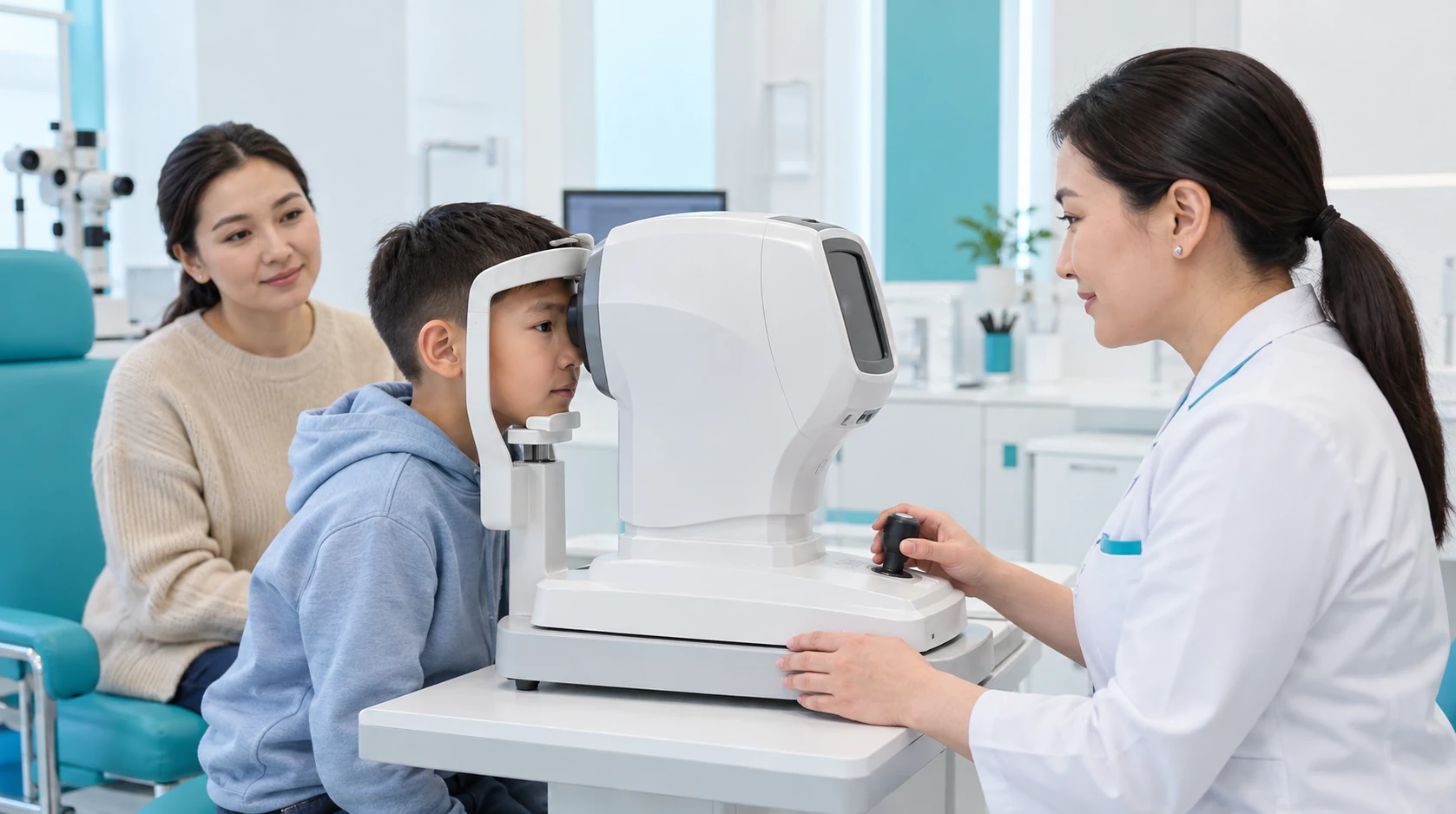
A paediatric ophthalmology consultation includes discussion with parents and age-appropriate vision testing. The doctor explains the diagnosis, recommendations and timing of the next examination.

Who the service is for

Age considerations

infants, children and adolescents with visual symptoms or suspected eye disease; children after a failed or uncertain vision screening; children with risk factors such as prematurity or a significant family ophthalmic history; the child squints, holds books or screens very close, cannot see the board clearly or struggles with visual tasks

Refractive stability

patients with myopia, hyperopia, astigmatism, anisometropia or a changing eyeglass prescription; the eyeglass prescription is changing quickly or myopia , hyperopia , astigmatism or anisometropia has already been identified

Amblyopia

children with strabismus, amblyopia, nystagmus or double vision; there is suspected amblyopia , nystagmus or impaired binocular vision

Reviewing prescribed treatment

patients who require monitoring of previously prescribed optical correction or treatment.

Strabismus and eye alignment

one eye turns constantly or intermittently, the child closes one eye, tilts the head or reports double vision

Age considerations

the child failed a vision screening or the result was uncertain

Tearing and lacrimal drainage

an infant has an unusual pupil reflex, poor fixation or tracking, chronic tearing or visible eye changes

Myopia

the child needs review of previously prescribed glasses, amblyopia treatment , strabismus management or myopia control.

Limitations and safety

After chemical exposure to the eye, irrigation with clean water should begin immediately and urgent medical care should be sought. Eye trauma, sudden vision loss, severe pain, marked photophobia with other concerning symptoms, a white pupil reflex or sudden strabismus with neurological signs require urgent assessment rather than a routine scheduled visit.

Book a consultation

Stages

Stage 1

History

Symptoms, child development, family eye disease, previous diagnoses, glasses and examination results.

History

Service benefits

Age-appropriate assessment

Vision testing methods are selected for the child's age and abilities to obtain information useful for treatment.

Understanding the cause of symptoms

Examination helps distinguish refractive errors from other causes of reduced vision and discomfort.

Clear answers for parents

The doctor explains examination findings, the need for correction and signs to watch for at home.

A plan for next steps

After consultation, parents receive guidance on treatment, vision correction and the timing of follow-up.

Methods comparison

Criterion
Vision screening
Initial consultation
Separate diagnostics
Follow-up consultation
Primary purpose
Identify risk and determine who needs specialist assessment
Assess the child and make a medical decision
Answer a specific diagnostic question
Assess change over time and adjust management
Who performs it
May be performed by trained staff or a screening program
Ophthalmologist
Diagnostic specialist and/or department
Ophthalmologist
Diagnosis
Screening is not a final diagnosis
The physician can establish or refine a diagnosis
Test results require clinical interpretation
Diagnosis and progression are reassessed as needed
Refraction
May be approximate or not performed
Assessed according to age; cycloplegia when indicated
Specialized refractive testing may be performed
Compared with previous measurements
Binocular vision
Limited assessment
Evaluated when strabismus, amblyopia or related symptoms are suspected
Specialized tests may be used
Follow-up based on the known problem
OCT, ultrasound, perimetry
⬜ Usually outside routine screening
Not an automatic part of every consultation
Performed for a specific indication
Repeated only when clinically necessary
Cycloplegia
⬜ Not a standard element of every screening
Decided by the physician
May be part of refractive assessment
Repeated when indicated
Visit outcome
Pass screening or referral required
Clinical conclusion, recommendations and plan
Measurements or images for clinical decision-making
Progress assessment and next follow-up interval
When it fits
Preventive risk detection in children without known disease
Symptoms, risk factors, failed screening or known condition
After physician decision when an additional answer is needed
Monitoring optical correction, treatment or observation
Vision screening
Primary purpose
Who performs it
Diagnosis
Refraction
Binocular vision
OCT, ultrasound, perimetry
Cycloplegia
Visit outcome
When it fits
Identify risk and determine who needs specialist assessment
May be performed by trained staff or a screening program
Screening is not a final diagnosis
May be approximate or not performed
Limited assessment
⬜ Usually outside routine screening
⬜ Not a standard element of every screening
Pass screening or referral required
Preventive risk detection in children without known disease
Assess the child and make a medical decision
Ophthalmologist
The physician can establish or refine a diagnosis
Assessed according to age; cycloplegia when indicated
Evaluated when strabismus, amblyopia or related symptoms are suspected
Not an automatic part of every consultation
Decided by the physician
Clinical conclusion, recommendations and plan
Symptoms, risk factors, failed screening or known condition
Answer a specific diagnostic question
Diagnostic specialist and/or department
Test results require clinical interpretation
Specialized refractive testing may be performed
Specialized tests may be used
Performed for a specific indication
May be part of refractive assessment
Measurements or images for clinical decision-making
After physician decision when an additional answer is needed
Assess change over time and adjust management
Ophthalmologist
Diagnosis and progression are reassessed as needed
Compared with previous measurements
Follow-up based on the known problem
Repeated only when clinically necessary
Repeated when indicated
Progress assessment and next follow-up interval
Monitoring optical correction, treatment or observation

Book an appointment

Bring the child’s previous reports, prescriptions and glasses. The physician will assess the situation, decide which tests are actually needed and define the appropriate follow-up interval.

Book an appointment

Procedure prices

Service name Price
Consultation with a first-category physician 15 400 ₸
Consultation with a highest-category physician 17 900 ₸
Consultation with a physician with a Candidate of Medical Sciences degree 22 900 ₸
Pediatric ophthalmologist consultation (per consultation) from 12 000 ₸
Consultation with a highest-category ophthalmologist (per consultation) from 14 500 ₸
Consultation with an ophthalmologist, Candidate of Medical Sciences (per consultation) from 19 500 ₸
Consultation with an ophthalmologist, Doctor of Medical Sciences (per consultation) from 26 500 ₸
Follow-up ophthalmologist consultation (per consultation) from 5 900 ₸
Follow-up consultation, Candidate of Medical Sciences (per consultation) from 9 800 ₸
Follow-up consultation, Doctor of Medical Sciences (per consultation) from 13 000 ₸
Our services, payable in installmentsTake care of your vision today and pay for our services in installments. Choose installment terms and a payment schedule that suit you.

The price includes intraocular pressure (IOP) measurement and refractometry Billing unit: for initial and follow-up consultation — per 1 consultation.

Ophthalmologist consultation without diagnostic package

Our doctors

A team of experienced doctors across specialties.

All doctorsThe full list of doctors is available here!

Pediatric Ophthalmology Consultation: What to Expect and When to Seek Care

A pediatric ophthalmology consultation begins with a clinical assessment rather than a predefined set of instrument-based tests. The ophthalmologist considers the child's age, symptoms, vision screening results, previous glasses prescriptions, changes in refraction over time and relevant risk factors.

In infants, visual function is assessed through visual fixation, tracking of objects, eye alignment, pupillary responses and the red reflex. In preschool and school-aged children, age-appropriate visual acuity tests and more detailed refraction assessments are also performed.

Children can be examined by a pediatric ophthalmologist from infancy. If a child cannot yet speak or read an eye chart, the ophthalmologist uses objective, age-appropriate methods to assess vision.

Specific Features of Vision Assessment in Children

Refraction assessment in children requires a particular approach because active accommodation can affect measurement results. When a more objective assessment is needed, the ophthalmologist may recommend cycloplegia, which involves using special eye drops to temporarily relax accommodation.

Cycloplegia is not a mandatory part of every consultation. It is performed when clinically indicated to obtain a more accurate assessment of refraction.

In children with myopia, the ophthalmologist evaluates not only the current degree of nearsightedness but also changes over time. In strabismus, the assessment includes the type of eye deviation, refraction, vision in each eye and binocular functions. In amblyopia, the aim is to identify the cause of insufficient visual development and select appropriate correction or treatment without guaranteeing a particular outcome.

If a child does not pass a school or pediatric vision screening, an ophthalmology consultation is needed to confirm or rule out a vision problem. Vision screening, ophthalmology consultations and individual diagnostic investigations serve different purposes and should not be treated as interchangeable.

Additional Recommendations and Common Situations

  • A school-aged child squints and has difficulty seeing the classroom board. The ophthalmologist assesses visual acuity and checks for refractive errors. If necessary, refraction is measured more precisely, optical correction is prescribed and changes in myopia are evaluated.
  • A preschool child does not pass vision screening. The examination aims to establish whether an eye condition or risk factor is present. A comprehensive ophthalmological examination is performed, with additional investigations only when clinically indicated.
  • One eye occasionally turns away from its normal position. The ophthalmologist evaluates the type of strabismus, refraction, risk of amblyopia and binocular functions. Depending on the findings, glasses, amblyopia treatment, orthoptic therapy or a surgical consultation may be recommended.
  • Glasses no longer provide the same clarity of vision. The ophthalmologist checks whether refraction has changed and whether there are signs of progression. The glasses prescription may be adjusted, and an individualized follow-up schedule is established when necessary.
  • Parents notice a white reflex in an infant's pupil. Potentially serious intraocular disease must be ruled out. Urgent ophthalmological assessment is required rather than waiting for a routine appointment.

The Main Purpose of the Consultation

The purpose of a consultation is not to perform as many tests as possible, but to identify the clinical question and select the necessary investigations. The ophthalmologist reviews symptoms, the child's age, visual behavior, visual acuity, eye position and movements, previous examination findings and prescribed optical correction.

If a refractive error is suspected, the ophthalmologist selects an appropriate method of measuring refraction and determines whether cycloplegia is necessary. In cases of strabismus or suspected amblyopia, the assessment also includes the visual function of each eye, ocular motility and binocular vision.

Optical coherence tomography (OCT), ultrasound, perimetry, tonometry and other investigations are not performed automatically. They are prescribed according to specific medical indications.

A consultation is not a fixed diagnostic package. The ophthalmologist first identifies the clinical problem that needs to be addressed and then selects the investigations required to evaluate it.

What Happens After the Consultation

Based on the examination findings, the pediatric ophthalmologist determines the next steps. These may include observation, glasses or contact lenses, treatment of amblyopia and binocular vision disorders, a myopia progression control program, additional diagnostic investigations or referral to a specialist eye surgeon.

Facts and offers

Kazakhstan’s first specialized ophthalmology institute, operating since 1933.

Modern diagnostics and surgery using world-class equipment.

Leading ophthalmologists in Kazakhstan, scientists and experienced surgeons.

More than 30,000 operations and around 270,000 consultations annually.

Related services

Frequently asked questions

What does a pediatric ophthalmologist do?
A pediatric ophthalmologist evaluates visual development and eye health in children, diagnoses eye conditions, prescribes optical correction or treatment, determines whether additional testing is needed and plans follow-up.
At what age can a child see a pediatric ophthalmologist?
From infancy. Examination methods are adapted to the child's age and development, so the child does not need to read an eye chart or describe symptoms in detail.
Can an infant who cannot speak be examined?
Yes. The ophthalmologist can assess fixation and tracking, eye alignment and movements, pupil responses, the red reflex and other objective signs. Refraction can also be assessed with methods that do not require verbal responses.
When should a child see an ophthalmologist?
Assessment is appropriate for reduced vision, persistent squinting, strabismus, unusual head posture, double vision, visual fatigue, persistent tearing, failed screening, relevant risk factors or follow-up of a known eye condition.
What happens at the first visit?
The ophthalmologist reviews symptoms, developmental and medical history, previous eye findings and relevant family history. Visual function and eye health are then assessed to determine whether testing, glasses, treatment or follow-up is needed.

Confirm you are not a robot

Complete the check to send your request.