

Myopia
children and adolescents with myopia who need daytime contact correction; children with progressive myopia when a dedicated myopia-control strategy is indicated. progressive myopia requires assessment for a dedicated myopia-control strategy;
Contact lens fitting for a child includes checking vision, assessing the cornea and evaluating a trial lens on the eye. The doctor and parents choose an appropriate option and discuss safe use.
children and adolescents with myopia who need daytime contact correction; children with progressive myopia when a dedicated myopia-control strategy is indicated. progressive myopia requires assessment for a dedicated myopia-control strategy;
children with astigmatism who fit available toric parameters; myopia, hyperopia or astigmatism has been diagnosed and the family is considering a switch from glasses; toric correction is needed for astigmatism;
children with hyperopia when contact correction is clinically appropriate;
patients with significant anisometropia or selected amblyopia treatment plans;
children with aphakia or selected postoperative optical needs;
active children for whom contact lenses are more practical for sports, if there are no contraindications; Optical correction has been prescribed for the child, but spectacles interfere with sport or active pursuits, or do not provide the desired quality of peripheral vision; aphakia or postoperative optical rehabilitation requires a contact lens in selected cases;
In anisometropia, contact lenses can reduce the difference in image size between the two eyes compared with spectacles, which may make the correction easier to tolerate.
standard lenses fit poorly or vision fluctuates and custom fitting may be needed;
a current lens wearer develops discomfort, unstable vision, redness or needs updated parameters.
A contact lens sits directly on the surface of the eye, so knowing only the ‘minus’ or ‘plus’ is not enough to prescribe it. The doctor assesses the shape and condition of the cornea, refraction, tear-film quality and how the particular lens behaves during blinking and eye movements.
Do not sleep in daytime soft contact lenses unless the specific model and the doctor permit overnight wear. Wearing ordinary lenses overnight increases the risk of a serious infection.
Do not allow contact lenses or their case to come into contact with tap water, pool water, lake water or seawater. Remove lenses before swimming and showering; prescription swimming goggles or a prescription mask can be used for water sports.
With active conjunctivitis, keratitis, marked eyelid inflammation, corneal injury or another ocular-surface condition, contact lens correction is usually postponed until treatment. The doctor makes the final decision. Failure to follow the wearing and care schedule increases the risk of inflammation and microbial keratitis, which can threaten sight in severe cases.
Contact lenses are not completely safe.
Decorative lenses without refractive power also require medical fitting and safe use.
diagnosis, prior glasses/lenses, allergies, previous inflammation, sport, daily routine and readiness for lens care.
Visual acuity and refractive assessment; cycloplegic refraction is added when clinically needed.
Remove lenses and seek prompt eye care for increasing pain, red eye, photophobia, sudden blur, unusual tearing or discharge.
Remove lenses and seek prompt eye care for increasing pain, red eye, photophobia, sudden blur, unusual tearing or discharge.
Book a consultation
The doctor reviews previous correction, eye conditions, allergies and the child’s readiness to use lenses.

Visual acuity and refraction are checked, with cycloplegia when indicated.
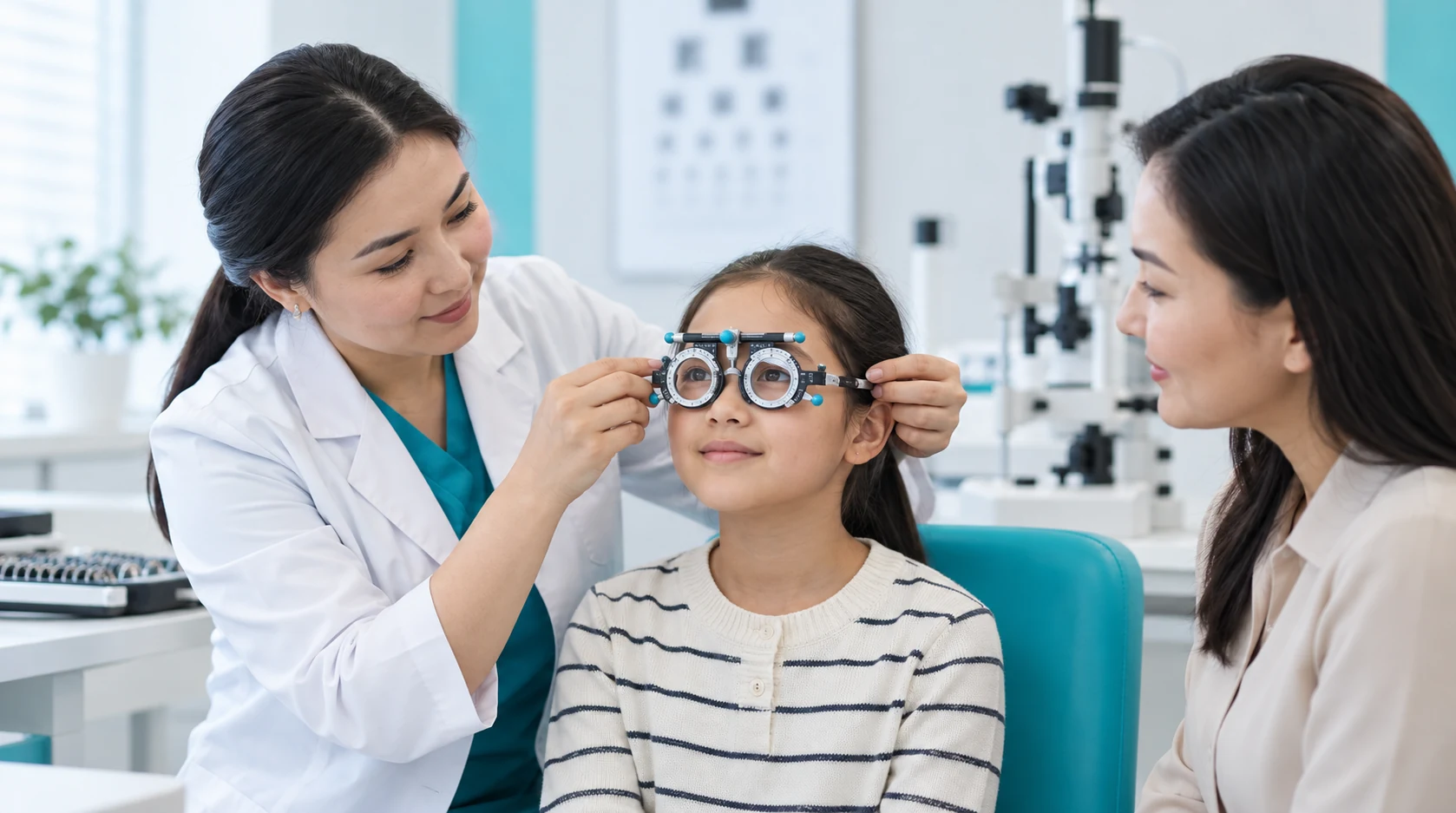
Anterior segment examination and assessment for contraindications.
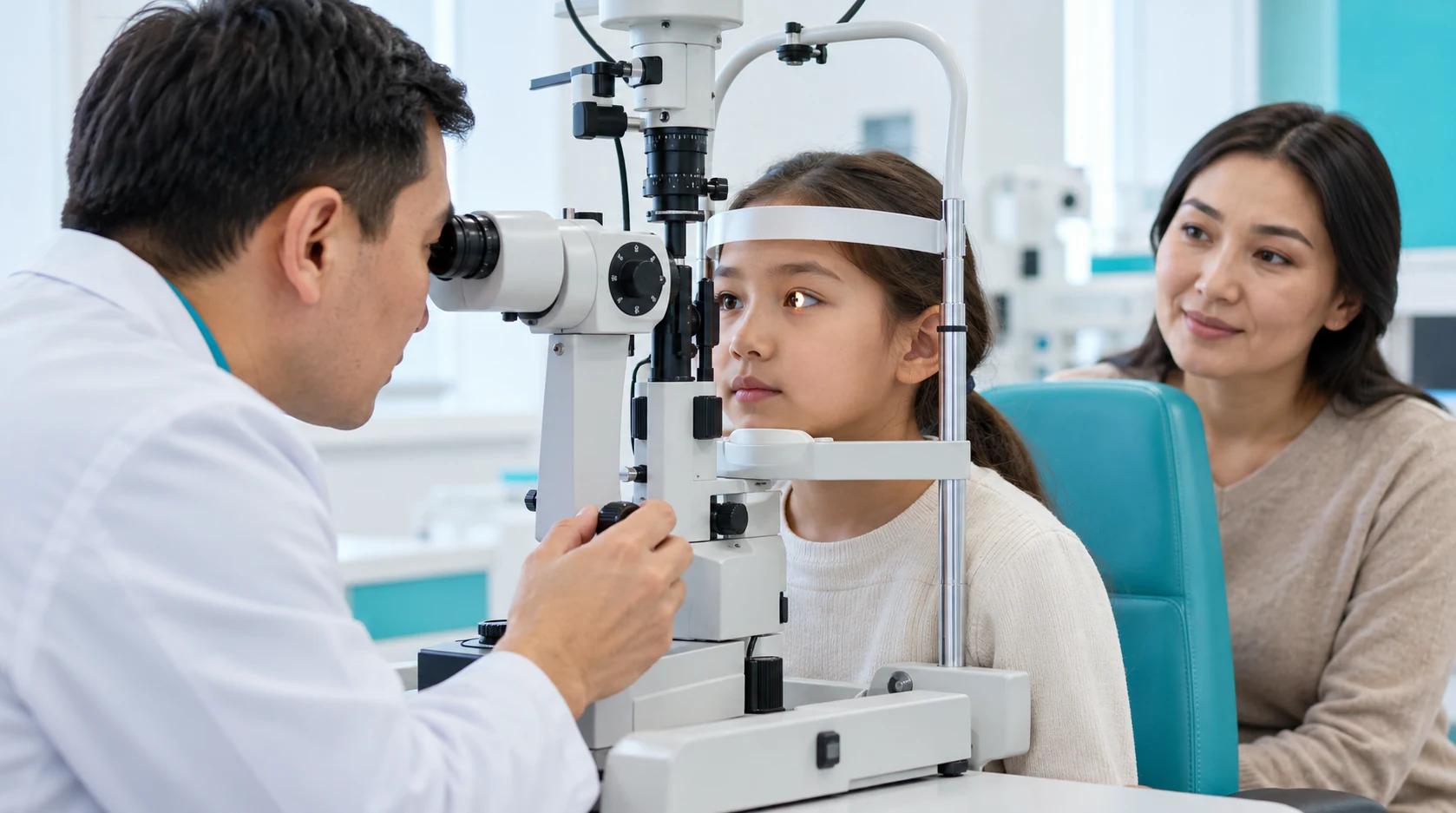
Keratometry and other corneal measurements as indicated.
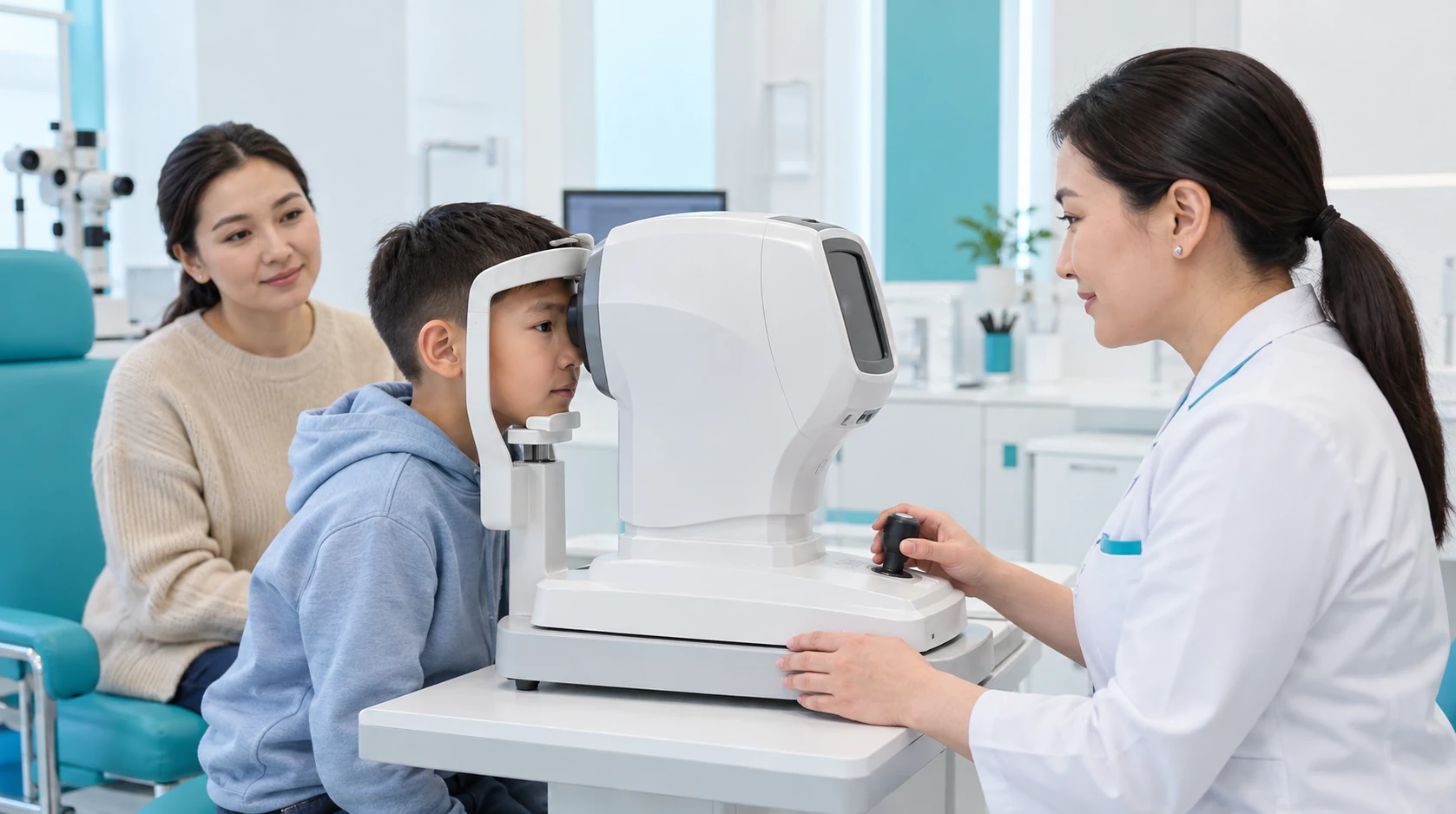
The doctor selects a trial lens according to power, curvature, diameter and design.

Lens position, movement and vision with the lens are assessed.
The child and parents learn lens handling, care and what to do if discomfort occurs.

The doctor schedules follow-up according to the correction type and eye health.

A contact lens moves with the eye and does not restrict the view with a spectacle frame.
Properly fitted lenses can be convenient for sports and active pursuits when wear and eye protection rules are followed.
When indicated, toric contact lenses are selected according to refraction, fit and positional stability on the eye.
The child and parents are taught insertion, removal, hygiene and signs that require lens removal and medical advice.
Bring previous prescriptions, glasses, old lens packaging and relevant medical reports. The doctor will determine whether standard soft lenses, a myopia-control option or another correction is appropriate and define the follow-up plan. If the child has a red painful eye, photophobia or sudden loss of vision, remove the lens and seek urgent eye care rather than waiting for a routine appointment.
The cost of contact lens packaging is not equal to the cost of medical fitting.
Lenses and fitting services are presented as separate items in the pricelist.
In Almaty, the composition of the initial pediatric consultation is provided below; the examinations and eyeglass fitting included in it should not be re-billed as separate services. A-scan (axial length measurement / PZO) is paid for separately.
A team of experienced doctors across specialties.

Highest-category ophthalmologist

Second-category ophthalmologist

Second-category ophthalmologist


A contact lens rests directly on the surface of the eye, so knowing a child's prescription for nearsightedness or farsightedness is not enough to select an appropriate lens. The ophthalmologist assesses corneal shape and condition, refraction, tear film quality, and how a particular lens fits and moves during blinking and eye movements.
The decision to use contact lenses in children is made together with their parents. International recommendations do not establish a single minimum age for all situations. For independent daily wear, the child's ability to follow hygiene rules, insert and remove lenses correctly, follow replacement schedules and report discomfort to an adult is more important.
Contact lenses may be considered for myopia, hyperopia, astigmatism, significant anisometropia, aphakia and other conditions where contact correction offers clinical or practical advantages. The ophthalmologist considers not only age but also medical indications, the child's maturity and motivation, and the family's ability to supervise safe lens use.
Contact lenses are medical devices. They should not be selected independently based solely on a glasses prescription or the parameters printed on a previous lens package.
The choice of contact lens depends on refraction, ocular surface condition, the intended wearing schedule and the purpose of correction.
For example, the FDA approved MiSight 1 Day for initiating treatment in a defined group of children aged 8–12 years within a specified range of myopia. This illustrates why myopia-control treatment must follow the indications established for the particular medical device.
Standard single-vision contact lenses should not be considered equivalent to myopia-control treatments. The effectiveness and approved range of use of specialized technologies depend on the specific product and the individual patient.
Contact lens fitting begins by confirming that contact correction is suitable for the child. The ophthalmologist evaluates the diagnosis, visual acuity, refraction, cornea, eyelids and tear film, as well as the child’s and parents’ ability to follow lens hygiene and wearing instructions.
A contact lens prescription is finalized only after the lens fit has been assessed. Glasses prescription parameters cannot be transferred directly to contact lenses without a separate fitting assessment.
Safe contact lens use requires proper hygiene and adherence to replacement schedules. Hands must be washed and completely dried before inserting or removing lenses. Daily disposable lenses are discarded after use, while planned-replacement lenses must be cleaned and disinfected with a suitable solution according to the prescribed care routine.
Contact lenses must never be rinsed or stored in water. Tap water must not be used to clean a contact lens case. The CDC recommends removing contact lenses before showering, swimming or using hot tubs.
Swimming pools, lakes, the sea and showers are not safe environments for wearing contact lenses. These restrictions are particularly important to explain to teenagers before they begin managing their lenses independently.
If redness, pain, light sensitivity or significant discomfort develops, the lenses should be removed. Pain and light sensitivity require urgent assessment by an ophthalmologist to rule out corneal inflammation.
If a family's goal is not only to correct vision but also to slow myopia progression, this should be discussed with the ophthalmologist before lenses are selected.
Standard single-vision contact correction and myopia control are separate clinical objectives. Specialized soft contact lenses for myopia control create a particular optical profile designed to slow the progression of nearsightedness.
The ophthalmologist assesses changes in refraction over time and eligibility for specific technologies. Where appropriate, specialized soft contact lenses, orthokeratology, specially designed spectacle lenses and other myopia-control methods are compared.
Orthokeratology requires a separate approach because the lenses are worn during sleep and have a different risk profile. Each method requires an individual assessment of indications and an appropriate follow-up program.
Contact lenses and glasses are complementary, not mutually exclusive. Even children who successfully wear contact lenses need an up-to-date pair of backup glasses.
Backup glasses are necessary during illness, eye inflammation, contact lens damage, travel and other situations when lenses must be removed earlier than usual or temporarily discontinued.
Contact lens fitting does not end after the first comfortable trial. The ophthalmologist must assess visual quality and lens fit, then monitor tolerance over time.
As a child grows, changes in myopia, the development of astigmatism or new symptoms may require contact lens parameters to be reviewed.
Complex contact lens correction and specialized myopia-control lenses require an individualized schedule of follow-up examinations.
Kazakhstan’s first specialized ophthalmology institute, operating since 1933.
Modern diagnostics and surgery using world-class equipment.
Leading ophthalmologists in Kazakhstan, scientists and experienced surgeons.
More than 30,000 operations and around 270,000 consultations annually.


Kazakhstan’s first specialized ophthalmology institute, operating since 1933.
Modern diagnostics and surgery using world-class equipment.
Leading ophthalmologists in Kazakhstan, scientists and experienced surgeons.
More than 30,000 operations and around 270,000 consultations annually.
Kazakhstan’s first specialized ophthalmology institute, operating since 1933.
Modern diagnostics and surgery using world-class equipment.
Leading ophthalmologists in Kazakhstan, scientists and experienced surgeons.
More than 30,000 operations and around 270,000 consultations annually.


