Amblyopia, commonly known as "lazy eye," develops when a child's visual system receives a blurred or conflicting image from one eye over an extended period. The eye may appear anatomically normal, but the visual cortex of the brain does not fully process the signals it receives. As a result, even correctly prescribed glasses may not immediately restore visual acuity to the expected level for the child's age.
Amblyopia may develop due to uncorrected hyperopia, astigmatism, significant differences in refraction between the eyes, strabismus, congenital cataracts, ptosis and other conditions that interfere with normal visual development.
The main principle of treatment is to address the specific cause of reduced vision rather than prescribe the same standard course of procedures for every child. The treatment strategy depends on the type of amblyopia, the child's age, initial visual acuity and examination findings.
Main Types of Amblyopia
- Refractive amblyopia. Develops when a significant uncorrected refractive error causes a persistently blurred image to form on the retina.
- Anisometropic amblyopia. Occurs when there is a substantial difference in refractive error between the eyes. The brain begins to favor the clearer image from one eye.
- Strabismic amblyopia. Is associated with strabismus, in which the brain suppresses the image from the misaligned eye.
- Deprivation amblyopia. Develops when a clear image cannot reach the retina because of clouding of the ocular media or physical obstruction of the visual axis.
How Amblyopia Is Diagnosed in Children
The ophthalmologist first confirms that the reduction in vision is consistent with amblyopia and rules out organic eye disease that cannot be explained solely by abnormal visual development.
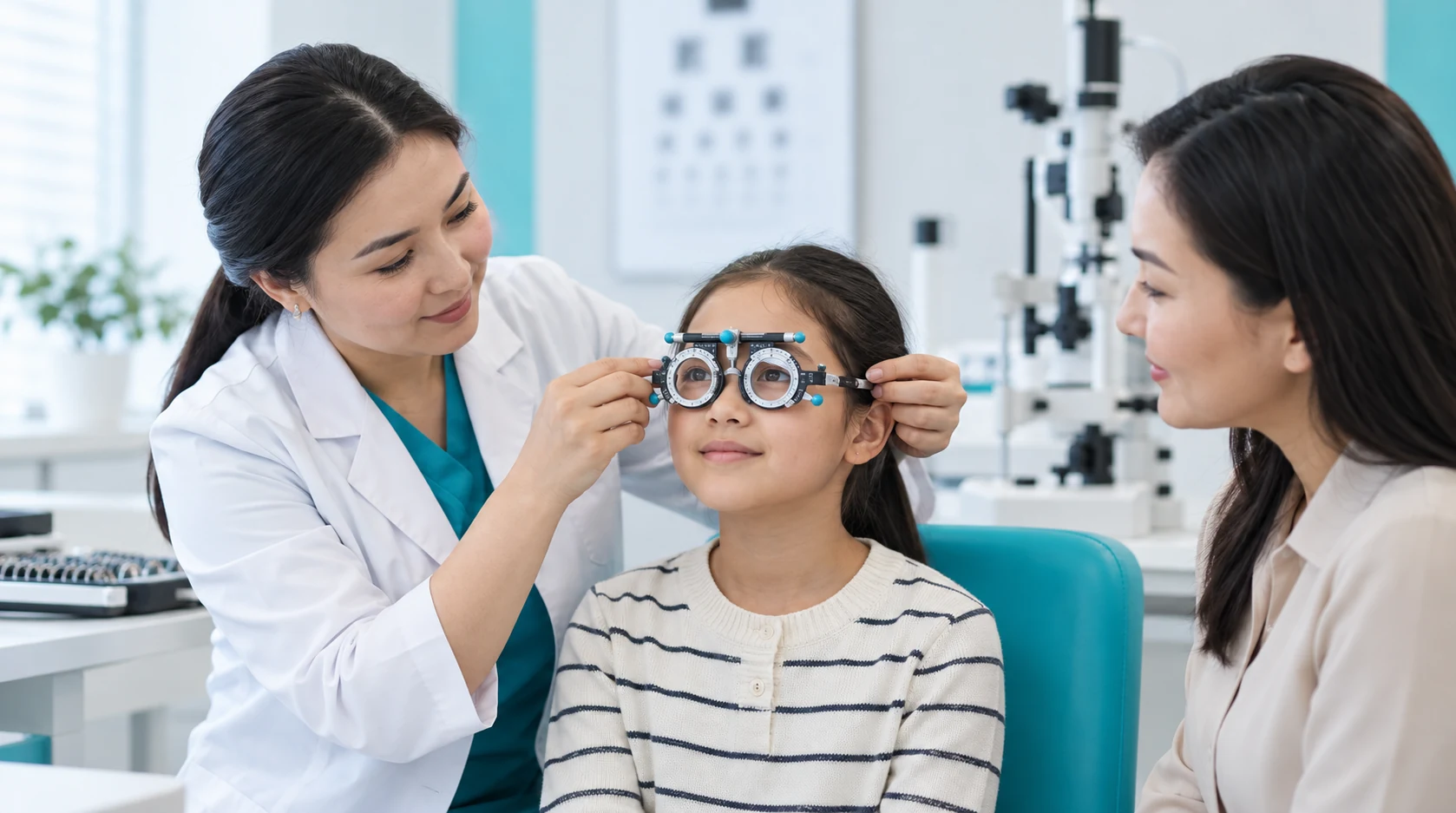
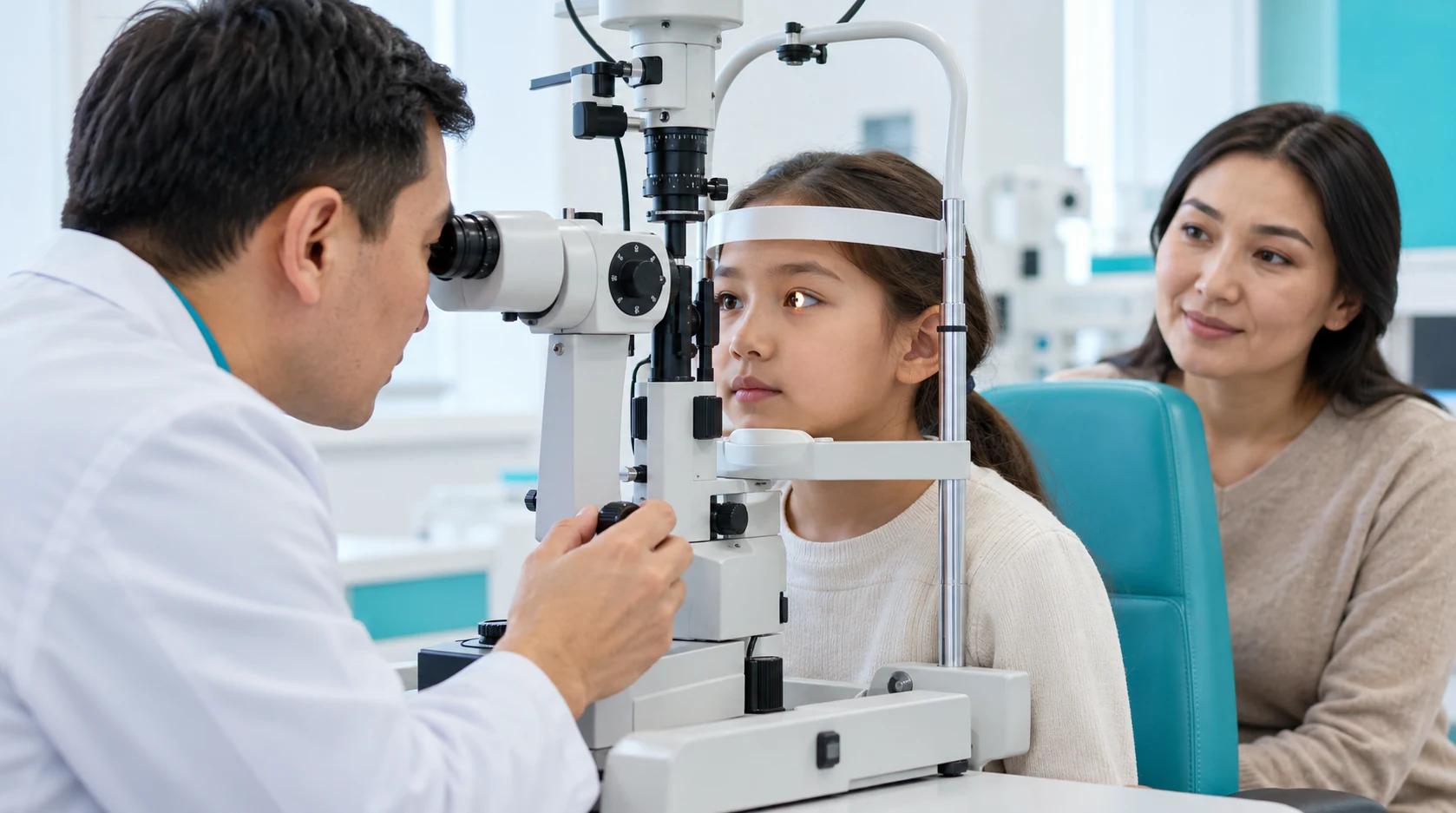
The examination includes assessment of visual acuity in each eye, fixation, refraction and the anterior and posterior segments of the eye. Ocular motility and binocular functions are also evaluated when necessary.
In children, refraction is often assessed under cycloplegia. Special eye drops temporarily relax accommodation, allowing more accurate measurement of hyperopia, astigmatism and refractive differences between the eyes. This is particularly important because an incorrect or incomplete optical prescription may contribute to persistent amblyopia.
If cataracts, significant ptosis, strabismus or another structural disorder is identified, further examination and treatment are coordinated with the management of the underlying condition.
Methods of Amblyopia Treatment
Treatment follows a stepwise approach. The first objective is to provide the clearest possible retinal image and remove any obstacles to normal vision. If the difference in visual acuity between the eyes persists after appropriate optical correction, the ophthalmologist evaluates the need for additional treatment.
- Optical correction. Correctly prescribed glasses or, in suitable cases, contact lenses may be the primary or initial stage of treatment. In refractive and anisometropic amblyopia, full optical correction alone can sometimes improve visual acuity.
- Patching. Temporarily covering the better-seeing eye encourages the child to use the amblyopic eye. The duration and schedule are determined by the ophthalmologist according to the clinical situation.
- Penalization. Pharmacological or optical methods temporarily modify vision in the better-seeing eye to encourage greater use of the weaker eye.
- Pleoptic treatment. Additional functional procedures may be prescribed when indicated as part of an individualized treatment program.
- Treatment of the underlying condition. In congenital cataracts, significant ptosis or another obstruction of the visual axis, treatment may first require removal of the cause of visual deprivation.
Patching does not always need to begin on the first day of treatment. If the clinical situation allows, the ophthalmologist may first assess the effect of correctly prescribed optical correction.
The patching or penalization schedule is reviewed periodically. Excessive or incorrectly prescribed suppression of the better-seeing eye without appropriate monitoring may also have undesirable consequences.
Additional Recommendations and Common Situations
- A 4-year-old child has significantly poorer vision in one eye and marked hyperopia. Refraction is assessed under cycloplegia, and full optical correction is prescribed. After an adaptation period, visual acuity is reassessed to determine whether patching is necessary.
- There is a large difference in prescription between the eyes, but no strabismus. Treatment begins with accurate correction of anisometropia using glasses or, in suitable cases, a contact lens. If vision in the weaker eye remains reduced, additional amblyopia treatment is introduced.
- Amblyopia occurs together with strabismus. Refractive errors are corrected and amblyopia is treated. The need for strabismus surgery is assessed separately according to the type and angle of eye deviation.
- An infant has a congenital cataract obstructing the visual axis. Urgent assessment by a pediatric ophthalmic surgeon is required. The cause of visual deprivation is addressed when indicated. After the optical media have been cleared, optical correction and amblyopia rehabilitation are necessary.
- Amblyopia is diagnosed for the first time in an adolescent. Treatment should not be ruled out solely because of age. The ophthalmologist identifies the cause, corrects refractive errors and assesses the potential response to active treatment.
Device-Based and Functional Treatment Procedures
Additional procedures may be used as part of an individualized amblyopia treatment program. The ophthalmologist determines their suitability according to the type of amblyopia, visual function and diagnostic findings.
- Ambliotrener training sessions. A separate procedure prescribed when clinically indicated.
- Computer-based Ambliotrener training. A separate procedure that is not a universal treatment for every type of amblyopia.
- Light stimulation using the ПЛИЗ device. A separate pleoptic procedure performed when indicated.
Device-based treatment does not replace appropriate optical correction or treatment of anatomical conditions that interfere with vision. In deprivation amblyopia, timely restoration of the ability to form an image on the retina is particularly important.
At What Age Is Amblyopia Treatment Most Effective?
The earlier treatment begins, the greater the potential for improvement in visual function generally is. However, age should not be the sole factor in predicting the outcome.
According to the American Association for Pediatric Ophthalmology and Strabismus (AAPOS), amblyopia generally responds better to treatment in younger children, although studies have also demonstrated improvement in some adolescents up to 14 years of age.
It is incorrect to claim that amblyopia treatment becomes ineffective after the age of 7. Visual system plasticity decreases with age, but this does not mean that the condition suddenly becomes irreversible after a particular birthday.
The goal of treatment is to achieve the best possible age-appropriate visual function in each eye, stable fixation and, where the underlying condition permits, the ability of both eyes to work together. Outcomes depend on the cause of amblyopia, age at treatment initiation, initial visual acuity and adherence to the prescribed treatment plan.
Monitoring Results and Completing Treatment
Once the cause of amblyopia has been established, the ophthalmologist develops an individualized plan that may include optical correction, patching or penalization when necessary, additional functional procedures and follow-up examinations.
Treatment effectiveness is evaluated over time. The ophthalmologist compares visual acuity in each eye, monitors the difference between them and adjusts the duration of patching or other elements of treatment when necessary.
After vision improves, treatment is generally not stopped abruptly. The ophthalmologist may gradually reduce treatment intensity and continue monitoring because amblyopia can partially recur if therapy is discontinued too quickly.