

Intraocular pressure
Refractory glaucoma with inadequate IOP control on tolerated treatment.
Glaucoma drainage procedures improve aqueous outflow and lower eye pressure. The operation and device are selected according to glaucoma characteristics and scarring risk.
Refractory glaucoma with inadequate IOP control on tolerated treatment.
Repeat glaucoma surgery after a failed or scarred filtration procedure. Eyes with high conjunctival-scarring risk after previous surgery, inflammation or trauma.
Secondary glaucomas in which standard filtration surgery is less predictable.
Neovascular or uveitic glaucoma after disease activity has been stabilised and risks assessed.
Selected aphakic, pseudophakic, post-traumatic or post-keratoplasty glaucoma.
Refractory paediatric/congenital glaucoma only through a specialist paediatric surgical pathway.
Drainage surgery is an intraocular intervention. Possible complications include hypotony or insufficient IOP reduction, bleeding, inflammation, infection, scarring, tube displacement or obstruction, contact between the tube and cornea, endothelial damage, conjunctival erosion over the tube, double vision and the need for repeat surgery. Risks depend on the device, anatomy and previous operations.
Bring previous IOP measurements, pachymetry , gonioscopy, visual fields, optic nerve/RNFL OCT, operative reports and a complete medication list. Do not stop glaucoma drops, anticoagulants or systemic medicines on your own. Device selection depends on conjunctival scarring, previous surgery, glaucoma type, corneal status, lens status, retinal disease and the required target IOP.
Drainage surgery is an intraocular intervention. Possible complications include hypotony or insufficient IOP reduction, bleeding, inflammation, infection, scarring, tube displacement or obstruction, contact between the tube and cornea, endothelial damage, conjunctival erosion over the tube, double vision and the need for repeat surgery. Risks depend on the device, anatomy and previous operations. Seek urgent assessment for severe pain, sudden visual loss, marked redness, discharge or if part of the implant becomes visible.
Book a consultation
Glaucoma type, target pressure, OCT, visual fields, gonioscopy, cornea, crystalline lens and conjunctiva.
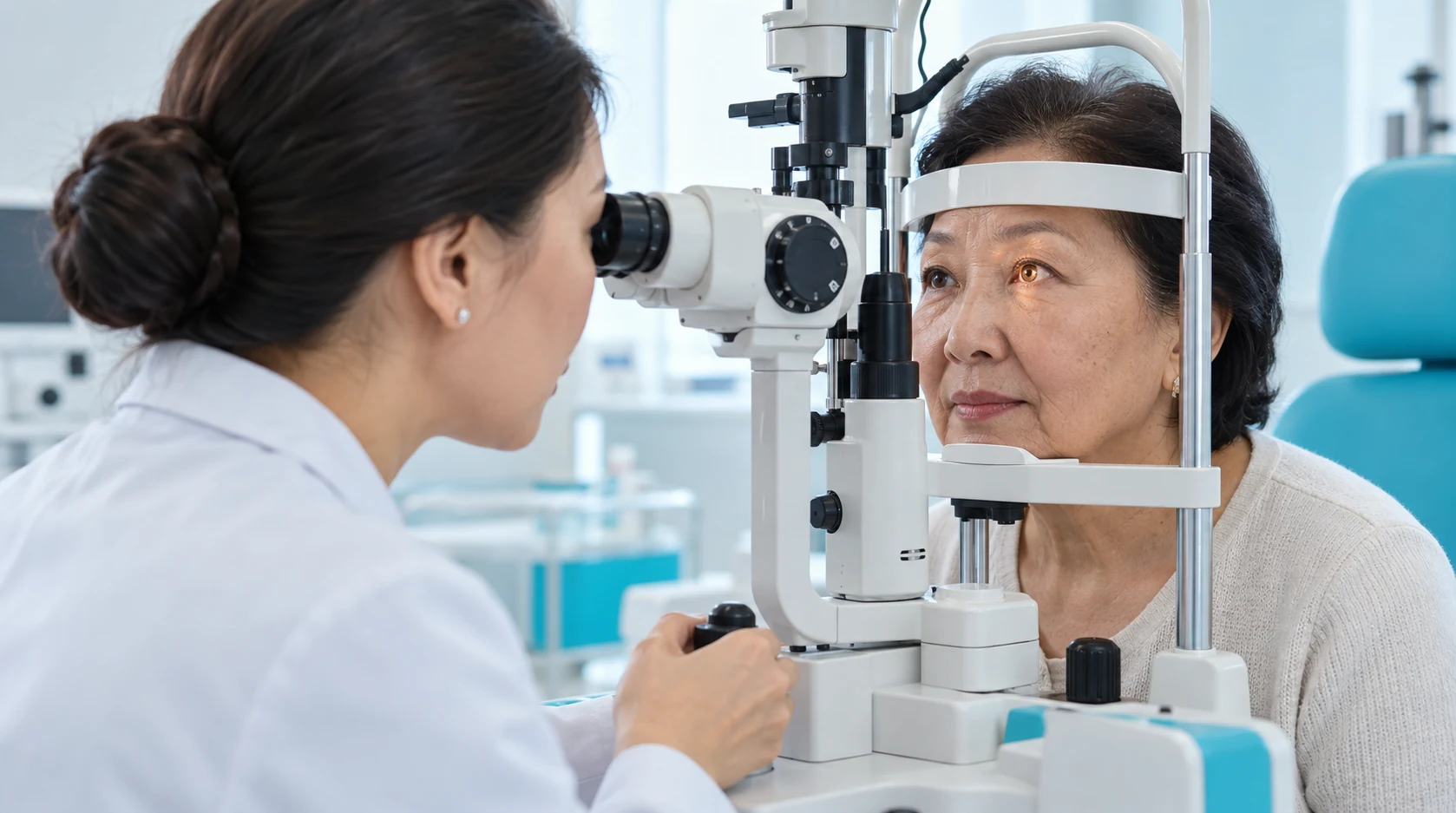
The surgeon decides whether drainage is needed and which type suits the eye.

Anaesthetic preparation and surgical-field preparation according to current KazRIED protocol.
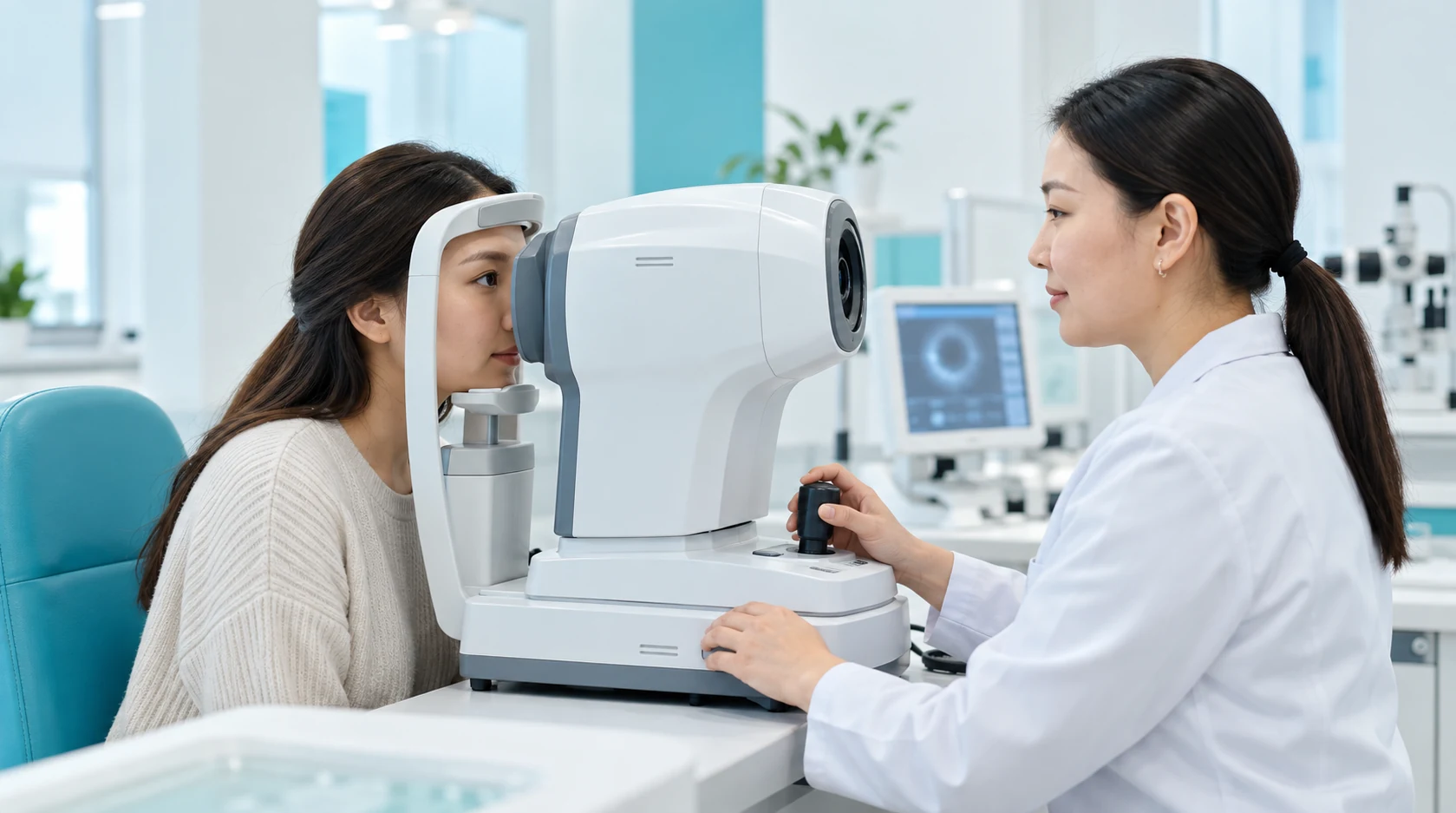
Creation of surgical access and implantation of drainage material or a tube shunt according to the selected technique.
Assessment of implant position, aqueous flow and tissue closure.

Pressure, anterior chamber, cornea, conjunctiva and signs of inflammation or infection.
Drop adjustment, implant assessment and serial OCT and visual fields.
A drainage device creates a route for aqueous fluid to leave the eye, helping control pressure.
A drainage device may be chosen when other operations have limited effectiveness or a high risk of scarring.
The surgical approach is selected according to the pressure needed to protect the individual optic nerve.
Scheduled examinations allow healing and pressure to be monitored and treatment adjusted when needed.
The surgeon will review target IOP, rate of progression, optic nerve status, previous operations and conjunctival condition and explain whether a drainage device, trabeculectomy, non-penetrating deep sclerectomy (NPDS), laser treatment or another route is more appropriate.
A team of experienced doctors across specialties.

Candidate of Medical Sciences; Highest-category ophthalmologist

Candidate of Medical Sciences; Highest-category ophthalmologist

Candidate of Medical Sciences; Highest-category ophthalmologist

Highest-category ophthalmologist

Highest-category ophthalmologist

Highest-category ophthalmologist
Second-category ophthalmologist

Second-category ophthalmologist
A glaucoma drainage device helps divert aqueous humor around an inadequately functioning natural drainage system. Its design and mechanism depend on the device type.
With a tube shunt, one end of the tube communicates with the anterior chamber, ciliary sulcus, or, in selected cases, the vitreous cavity. The plate or reservoir is positioned beneath the conjunctiva.
Valved systems use a built-in mechanism to restrict early flow. Nonvalved systems require surgical measures to control flow.
Another category includes bioresorbable materials and spacers, such as Glautex. These are used at the filtration site to reduce the risk of tissue adhesion.
KazRIED’s current price list includes trabeculectomy with Glautex and surgery using a Repegel drainage implant.
Implantation of various drainage devices is also mentioned in the day hospital description, while glaucoma drainage surgery is listed in the description of the Astana clinic.
Valved and nonvalved tube shunts, as well as bioresorbable drainage implants, serve different purposes. The choice depends on:
A drainage device does not restore visual field that has already been lost. Its purpose is to create or maintain an additional pathway for aqueous humor outflow and help achieve an individualized target IOP.
The main measure of effectiveness is safely achieving the target IOP and preventing progression of glaucomatous optic neuropathy.
Long-term follow-up is needed after implantation. Early monitoring includes IOP, tube position or the condition of the filtration site, and the anterior chamber, cornea, and conjunctiva.
Later assessments evaluate the optic nerve and visual field. Glaucoma remains a chronic disease even when pressure is well controlled. Some patients may need eye drops, additional procedures, or further surgery.
Surgery and subsequent monitoring are considered parts of a single treatment process.
Kazakhstan’s first specialized ophthalmology institute, operating since 1933.
Modern diagnostics and surgery using world-class equipment.
Leading ophthalmologists in Kazakhstan, scientists and experienced surgeons.
More than 30,000 operations and around 270,000 consultations annually.


Kazakhstan’s first specialized ophthalmology institute, operating since 1933.
Modern diagnostics and surgery using world-class equipment.
Leading ophthalmologists in Kazakhstan, scientists and experienced surgeons.
More than 30,000 operations and around 270,000 consultations annually.
Kazakhstan’s first specialized ophthalmology institute, operating since 1933.
Modern diagnostics and surgery using world-class equipment.
Leading ophthalmologists in Kazakhstan, scientists and experienced surgeons.
More than 30,000 operations and around 270,000 consultations annually.


