Almaty, Astana, Shymkent

Device-based vision treatment

from 1.000 ₸
Book an appointment

Related services

Sign up for a consultation

About the service

Device-based treatment is an individual programme of visual exercises for amblyopia and selected binocular vision problems. It forms part of care alongside necessary optical correction and other prescribed treatment.

Who the service is for

Amblyopia

Children and selected adults with confirmed reduced visual function when pleoptic methods are included in the treatment plan.

Strabismus

Patients who need work on binocular interaction, fusion and the sensory component of strabismus before or after other treatment stages.

Convergence insufficiency

Patients with confirmed weak near convergence and related symptoms.

Fusion disorders

When fusional reserves are reduced or binocular fusion is unstable on testing.

Accommodative dysfunction

When focusing dysfunction and visual fatigue are confirmed and functional training is prescribed.

How results are assessed

Assess response using specific baseline and follow-up visual-function measures, not only a subjective impression.

Limitations and safety

In progressive myopia, device exercises must not replace evidence-based myopia-control strategies and axial-length monitoring.

Book a consultation

Stages

Stage 1

Diagnostic assessment

Visual acuity, refraction and ocular health; binocular and ocular-motor testing when relevant.
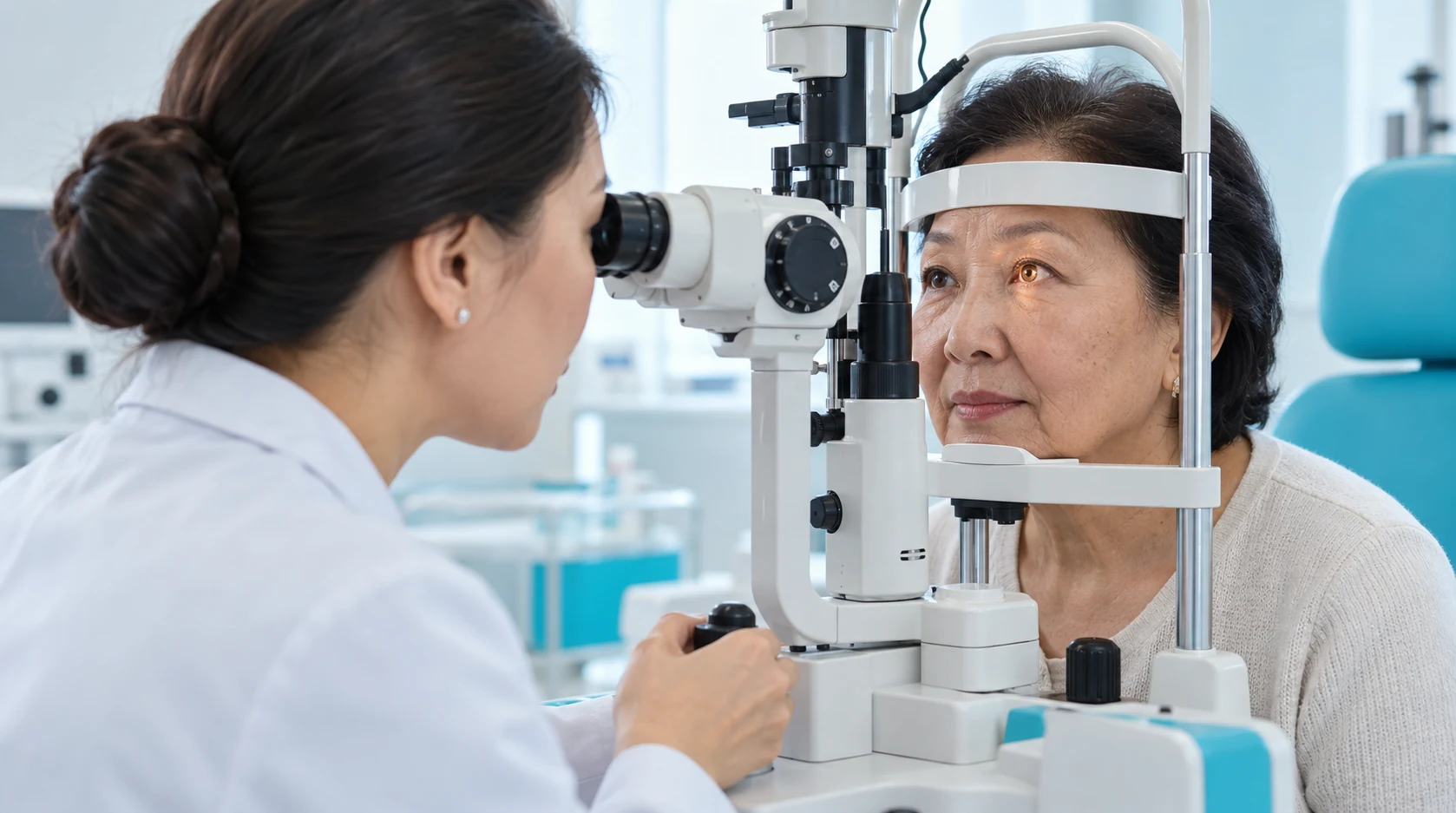
Diagnostic assessment

Service benefits

Training selected functions

Exercises are selected for specific visual function problems identified during examination.

A focus on a specific goal

The course is prescribed according to the diagnosis and treatment goals, rather than using one programme for every vision complaint.

No surgical intervention

Device-based sessions do not require eye incisions; the doctor determines suitability and the course schedule.

Monitoring changes in vision

Repeat measurements allow progress to be assessed and the plan adjusted using objective findings.

Methods comparison

Method
Dashevsky
Avetisov-Matz
Convergence
Amblyotrainer
Core principle
Accommodation training
Functional training of the visual system
Training eye convergence for near work
Stimulation of amblyopic-eye function
Typical goal
Accommodation / visual workload
Accommodative and refractive tasks
Convergence insufficiency / binocular function
Amblyopia
Monocular / binocular
Usually binocular or according to protocol
Per protocol
Binocular
Usually monocular / according to protocol
Patient participation
Active task performance
Active participation
Active
Active
Role in treatment
Supplements, not replaces, correction
Prescribed after diagnostics
Closely linked to a measurable function
As part of combined treatment
Price
from 1 300 ₸
from 2 300 ₸
from 1 000 ₸
from 1 300 ₸
Billing unit
per session
per session
per session
per session
Dashevsky
Core principle
Typical goal
Monocular / binocular
Patient participation
Role in treatment
Price
Billing unit
Accommodation training
Accommodation / visual workload
Usually binocular or according to protocol
Active task performance
Supplements, not replaces, correction
from 1 300 ₸
per session
Functional training of the visual system
Accommodative and refractive tasks
Per protocol
Active participation
Prescribed after diagnostics
from 2 300 ₸
per session
Training eye convergence for near work
Convergence insufficiency / binocular function
Binocular
Active
Closely linked to a measurable function
from 1 000 ₸
per session
Stimulation of amblyopic-eye function
Amblyopia
Usually monocular / according to protocol
Active
As part of combined treatment
from 1 300 ₸
per session

Methods comparison (continued)

Method
Bifoveal fusion
Fusional reserves
Diploptic training
Core principle
Developing central binocular fusion
Increasing binocular fusion reserves
Developing binocular interaction
Typical goal
Strabismus / impaired binocularity
Binocular instability
Strabismus after correction or orthoptics
Monocular / binocular
Binocular
Binocular
Binocular
Patient participation
Active
Active
Active
Role in treatment
Baseline sensory assessment is needed
Monitoring measured reserves
Does not replace indicated surgical alignment
Price
from 2 000 ₸
from 1 000 ₸
from 1 000 ₸
Billing unit
per session
per service
per session
Bifoveal fusion
Core principle
Typical goal
Monocular / binocular
Patient participation
Role in treatment
Price
Billing unit
Developing central binocular fusion
Strabismus / impaired binocularity
Binocular
Active
Baseline sensory assessment is needed
from 2 000 ₸
per session
Increasing binocular fusion reserves
Binocular instability
Binocular
Active
Monitoring measured reserves
from 1 000 ₸
per service
Developing binocular interaction
Strabismus after correction or orthoptics
Binocular
Active
Does not replace indicated surgical alignment
from 1 000 ₸
per session

Methods comparison · 2

Method
PLIZ
Amblyopia treatment
Computer-assisted strabismus treatment
Computer amblyotrainer
Ambliocor TM-01
Vizotronik M3
What it does
Light-based pleoptic stimulation
Diagnosis-based programme
Interactive binocular or orthoptic tasks
Computer-based pleoptic stimulation
Device-based pleoptic training
Accommodation relief or training
Typical task
Pleoptic tasks
Amblyopia
Strabismus / binocular function
Amblyopia
Amblyopia / prescribed treatment of functional loss
Accommodative dysfunction, visual fatigue
Invasiveness
Non-invasive
Depends on the selected protocol
Non-invasive
Non-invasive
Non-invasive
Non-invasive
Key limitation
Medical prescription is required
Not one universal method
Effectiveness depends on disorder type and adherence
Does not replace optical correction or indicated standard methods
Not presented as treatment of anatomical myopia
Price
from 1 000 ₸
from 1 000 ₸
from 1 100 ₸
from 1 100 ₸
from 3 200 ₸
from 2 300 ₸
Billing unit
per session
per session
per session
per session
per eye; per session
per session
PLIZ
What it does
Typical task
Invasiveness
Key limitation
Price
Billing unit
Light-based pleoptic stimulation
Pleoptic tasks
Non-invasive
Medical prescription is required
from 1 000 ₸
per session
Diagnosis-based programme
Amblyopia
Depends on the selected protocol
Not one universal method
from 1 000 ₸
per session
Interactive binocular or orthoptic tasks
Strabismus / binocular function
Non-invasive
Effectiveness depends on disorder type and adherence
from 1 100 ₸
per session
Computer-based pleoptic stimulation
Amblyopia
Non-invasive
Does not replace optical correction or indicated standard methods
from 1 100 ₸
per session
Device-based pleoptic training
Amblyopia / prescribed treatment of functional loss
Non-invasive
from 3 200 ₸
per eye; per session
Accommodation relief or training
Accommodative dysfunction, visual fatigue
Non-invasive
Not presented as treatment of anatomical myopia
from 2 300 ₸
per session

How device-based treatment differs from other methods

Method
Optical correction
Patching / atropine for amblyopia
Pleoptic and orthoptic treatment
Strabismus surgery
Myopia control
Primary goal
Creates a clear retinal image
Reduces the better-seeing eye's advantage
Trains selected visual functions
Changes mechanical eye alignment
Slows axial myopia progression
Tool
Glasses / contact lenses
Patch / drops
Devices / exercises / programmes
Eye-muscle surgery
Atropine, special lenses, orthokeratology and others
When especially important
A basic step for refractive error and amblyopia
Standard evidence-based options when indicated
An additional or functional component
For eye alignment when indicated
A separate strategy for progressive myopia
Key difference
Not training
Require monitoring
The result depends on the goal
Does not replace sensory rehabilitation
Not equivalent to device training
Optical correction
Primary goal
Tool
When especially important
Key difference
Creates a clear retinal image
Glasses / contact lenses
A basic step for refractive error and amblyopia
Not training
Reduces the better-seeing eye's advantage
Patch / drops
Standard evidence-based options when indicated
Require monitoring
Trains selected visual functions
Devices / exercises / programmes
An additional or functional component
The result depends on the goal
Changes mechanical eye alignment
Eye-muscle surgery
For eye alignment when indicated
Does not replace sensory rehabilitation
Slows axial myopia progression
Atropine, special lenses, orthokeratology and others
A separate strategy for progressive myopia
Not equivalent to device training

Service options

Amblyotrainer sessions

Amblyotrainer sessions provide controlled visual tasks for the weaker eye.

Learn more

Ambliocor

Ambliokor uses video-computer training with biofeedback.

Learn more

Vizotronic M3

Visotronic M3 sessions provide visual training using a programme selected by the ophthalmologist.

Learn more
Compare methodsCompare the features and indications of each method.

Book an appointment

If the diagnosis and program have not yet been defined, book an ophthalmology consultation first, particularly for a child with amblyopia, strabismus or progressive myopia. If KazRIED has already prescribed a course, provide the exact method or bring the prescription when booking.

Book an appointment

Procedure prices

Service name Price
Dashevsky exercises (per session) from 1 300 ₸
Avetisov-Mats exercises (per session) from 2 300 ₸
Convergence training (per session) from 1 000 ₸
Amblyotrainer sessions (per session) from 1 300 ₸
Bifoveal fusion training (per session) from 2 000 ₸
Fusional reserve training (per session) from 1 300 ₸
Diploptic training (per session) from 1 000 ₸
PLIZ light-stimulation sessions (per session) from 1 000 ₸
Amblyopia treatment (per session) from 1 000 ₸
Computer-assisted strabismus treatment (per session) from 1 100 ₸
Computer amblyotrainer (per session) from 1 100 ₸
Pleoptic treatment with Ambliocor TM-01 (per eye; per session) from 3 200 ₸
Visotronic M3 sessions (per session) from 2 300 ₸
Our services, payable in installmentsTake care of your vision today and pay for our services in installments. Choose installment terms and a payment schedule that suit you.

Our doctors

A team of experienced doctors across specialties.

Device-Based Vision Therapy at KazRIED

Device-based vision therapy consists of pleoptic, orthoptic, and functional exercises prescribed by an ophthalmologist for a specific purpose:

  • treating amblyopia;
  • addressing binocular vision disorders;
  • training convergence and fusional reserves;
  • training accommodative function.

The methods are selected after a diagnostic assessment. They do not replace glasses, standard amblyopia treatment, myopia control, or strabismus surgery when these are indicated.

How does device-based vision therapy differ from other services?

From diagnostic testing: the patient completes a course of targeted exercises rather than simply receiving measurement results.

From physiotherapy: the service focuses on visual, binocular, accommodative, and pleoptic exercises.

From strabismus surgery: the exercises train visual functions and sensory cooperation between the two eyes, but do not mechanically change the position of the eye.

Additional advice and situations

Refractive measurement

Control visual acuity and refraction.

Binocular-vision assessment

Repeat binocular, convergence and fusional-reserve testing if these were treatment targets.

Amblyopia treatment

For amblyopia, decide whether to continue or modify optical correction, patching, pharmacologic or digital treatment.

In strabismus

For strabismus, assess the need for further orthoptics, observation or surgery.

Myopia progression control

For progressive myopia, separately monitor refraction and axial length and discuss a myopia-control strategy.

How is device-based vision therapy selected at KazRIED?

Device-based vision therapy at KazRIED is not a single universal procedure, but a range of pleoptic and orthoptic exercises with different goals.

The starting point is therefore a diagnostic assessment and a treatment prescription from an ophthalmologist.

The clinician determines whether training should target the amblyopic eye, binocular fusion, convergence, fusional reserves, or accommodation. A specific method is then selected, and the outcome is assessed using the relevant measures.

Facts and offers

Kazakhstan’s first specialized ophthalmology institute, operating since 1933.

Modern diagnostics and surgery using world-class equipment.

Leading ophthalmologists in Kazakhstan, scientists and experienced surgeons.

More than 30,000 operations and around 270,000 consultations annually.

Frequently asked questions

What is pleoptic and orthoptic treatment?
It is a clinician-prescribed program of exercises and device-based techniques targeting specific visual functions, such as the amblyopic eye, binocular interaction, convergence, fusional reserves or accommodation.
Can pleoptic or orthoptic treatment restore 100% vision?
A 100% restoration of vision cannot be guaranteed. Outcome depends on the diagnosis, age, baseline visual function, appropriate optical correction and adherence to the prescribed program.
Can device-based treatment eliminate myopia?
No. These exercises do not eliminate the anatomical refractive basis of myopia and do not replace glasses or contact lenses. Selected exercises may be used for associated accommodative or binocular disorders.
Does device-based therapy stop myopia progression?
Device-based exercises alone are not considered an evidence-based method for controlling axial eye growth. Progressive myopia requires a dedicated myopia-control strategy and appropriate follow-up.
Why is pleoptic treatment used in amblyopia?
Amblyopia treatment aims to improve function of the weaker eye and visual processing. Device-based and digital approaches may form part of a broader treatment plan together with appropriate optical correction and other prescribed therapies.

Confirm you are not a robot

Complete the check to send your request.