

Cataract and lens condition
Cataract with a strong goal of reducing spectacle dependence at several distances.
A multifocal IOL provides several optical foci to reduce dependence on glasses at different distances. Selection requires assessment of eye health and discussion of optical limitations and patient expectations.
Cataract with a strong goal of reducing spectacle dependence at several distances.
Stable cornea and predictable refraction on repeatable measurements.
Macula and optic nerve without significant pathology likely to limit image quality.
Patients who understand the possibility of halos, glare and an adaptation period.
Presbyopia or a refractive indication in which lens surgery is clinically appropriate after risk assessment.
Regular corneal astigmatism when a toric presbyopia-correcting model is selected.
Patients willing to compare alternatives such as monofocal, mini-monovision or EDOF strategies.
A multifocal IOL does not guarantee complete spectacle independence and does not restore natural youthful accommodation. Halos, glare, starbursts, reduced contrast, dissatisfaction in dim light and the need to correct residual refractive error are possible.
Macular disease, progressive glaucoma, significant corneal disease, irregular astigmatism, substantial ocular-surface disease and unrealistic expectations may make complex presbyopia-correcting optics less suitable.
Standard intraocular-surgery risks remain, including infection, inflammation, increased IOP, corneal or macular oedema, capsular rupture, IOL displacement, posterior capsule opacification and retinal complications.
Before consultation, identify your priorities: driving, computer work, smartphone use, small print, sport and night vision. Tell the doctor about macular and retinal disease, glaucoma, corneal disease, dry eye, astigmatism, LASIK/PRK/SMILE, vitrectomy and other operations.
Do not choose a multifocal IOL solely on a promise of freedom from glasses: first assess the visual potential of both eyes and tolerance of photic phenomena.
Sudden vision loss, severe pain, marked redness, flashes or a curtain-like shadow require urgent review.
A multifocal IOL does not guarantee complete spectacle independence and does not restore natural youthful accommodation.
Book a consultation
Cataract diagnostics and confirmation that lens surgery is clinically indicated.

Visual acuity, refraction, IOP, slit-lamp examination and fundus assessment.
Biometry and IOL calculation are performed for the selected optical option.

Corneal and astigmatism assessment, including Pentacam when needed; treat ocular-surface disease before final measurements.
Macular OCT to assess visual potential when indicated or when selecting complex presbyopia-correcting optics.
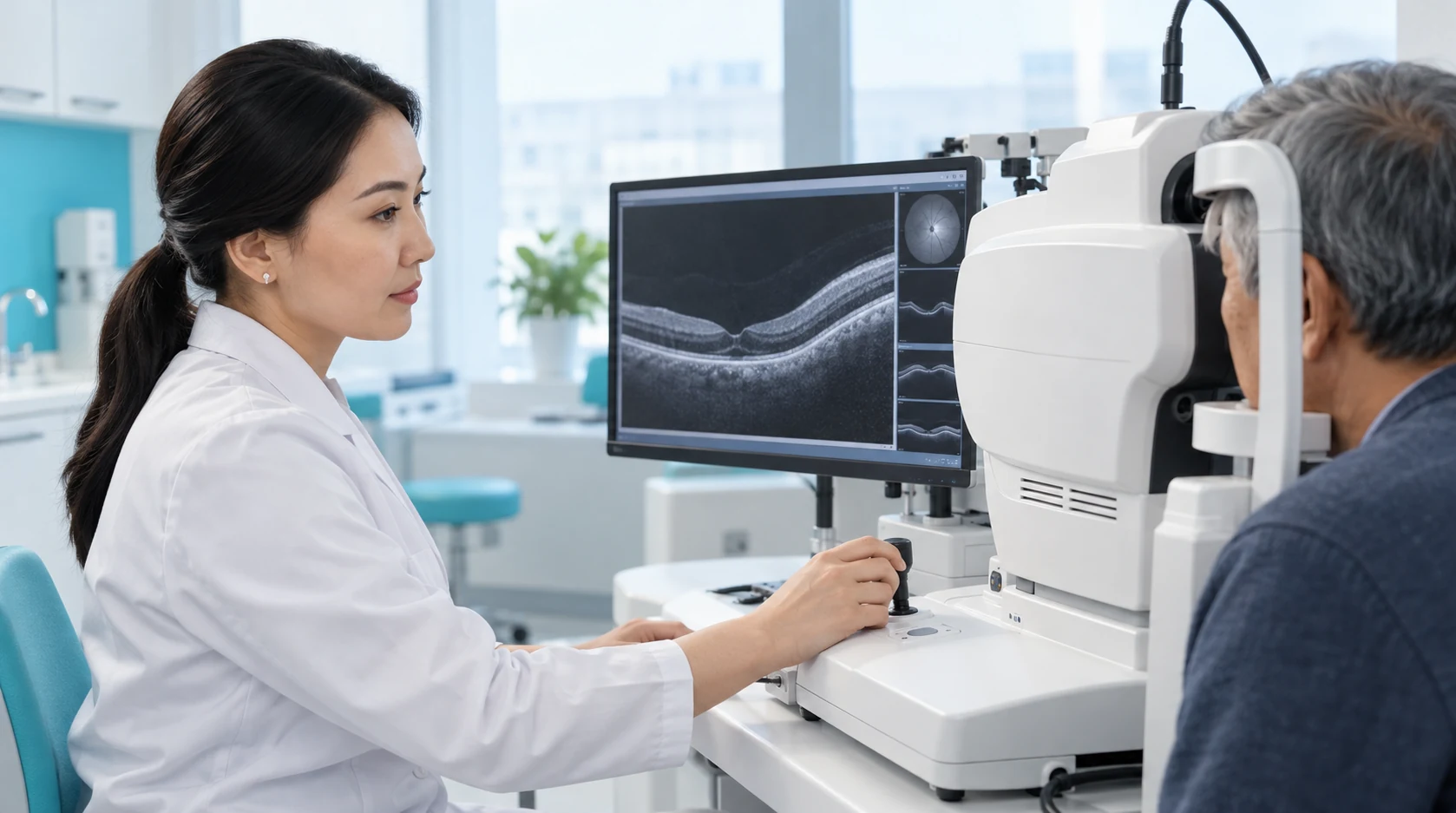
The doctor and patient discuss IOL options, possible glasses use and photic effects.

Phacoemulsification and implantation of the selected IOL.
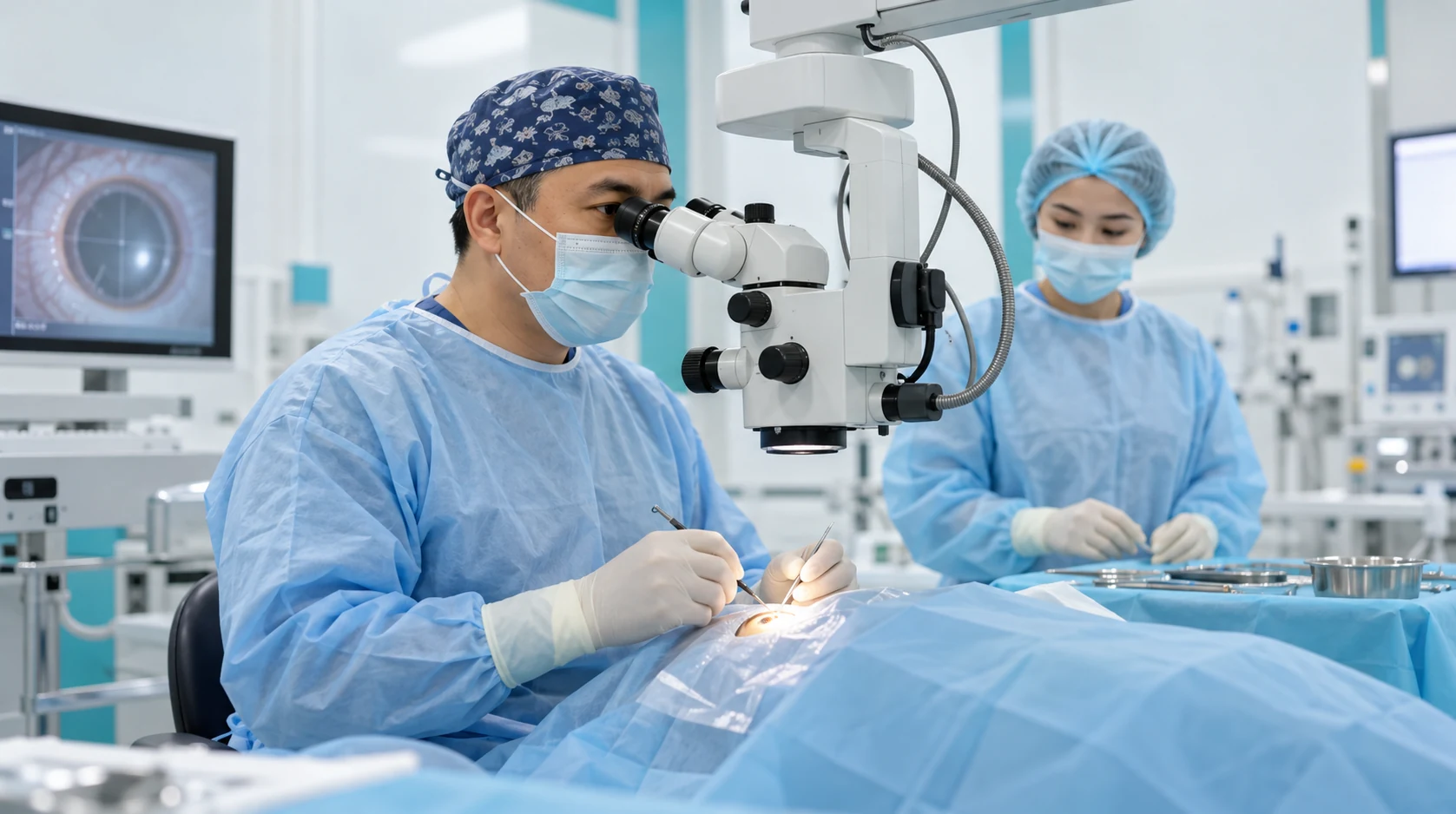
Postoperative assessment of refraction, IOL position, pressure, cornea and macula as indicated.

Multifocal optics can provide useful vision at several distances when eye health is suitable.
Differences between models allow near, distance and, with suitable optics, intermediate vision needs to be considered.
When indicated, a multifocal IOL can reduce the need for glasses, although it may not eliminate it completely.
Optics are selected according to retinal, corneal and optic nerve health, with the model's benefits and limitations discussed.
Table prices are per lens, starting from the lowest listed model price in the class. Surgery is considered separately.
Book cataract diagnostics and a KazRIED ophthalmic-surgeon consultation. After biometry and corneal/macular assessment, the surgeon can compare monofocal, EDOF and multifocal strategies and explain which model fits your visual goals.
A team of experienced doctors across specialties.
Candidate of Medical Sciences, Associate Professor; Highest-category ophthalmologist

Candidate of Medical Sciences; Highest-category ophthalmologist

Candidate of Medical Sciences; Highest-category ophthalmologist

Candidate of Medical Sciences; Highest-category ophthalmologist

Doctor of Philosophy (PhD)

Highest-category ophthalmologist

Highest-category ophthalmologist

Highest-category ophthalmologist

First-category ophthalmologist

Second-category ophthalmologist
A multifocal IOL creates more than one focal point to support distance and near vision. Modern trifocal and full-range designs also provide a distinct intermediate range.
These optics reduce the likelihood of needing glasses all the time. However, light is distributed between several optical zones, so halos, glare, starbursts, and reduced contrast may occur, particularly under challenging lighting conditions.
The final choice depends on the patient’s goals and the quality of the entire visual system.
The outcome is influenced by the condition of the cornea, macula, and optic nerve, the accuracy of biometry, residual refractive error, and adaptation to the optics.
KazRIED’s current price list includes TECNIS Multifocal ZMB00, TECNIS Synergy, and Clareon PanOptix, as well as toric presbyopia-correcting IOL options.
After surgery , the doctor checks refraction, IOL position, the cornea, intraocular pressure and the macula when indicated. Neuroadaptation to multiple focal distances may take time.
If visual quality does not meet expectations, the doctor seeks a specific cause: dry eye, residual refractive error, astigmatism, posterior capsule opacification, IOL decentration, macular disease or another problem. Decisions follow diagnostics, not a single symptom.
IOL Master: Non-contact optical calculation
Pentacam: Particularly useful when topography is uncertain
TECNIS Synergy Toric II: A toric presbyopia-correcting IOL.
TECNIS Symfony: An extended depth of focus (EDOF) IOL is an alternative optical option.
AcrySof Vivity: An extended depth of focus (EDOF) IOL is an alternative optical option.
Kazakhstan’s first specialized ophthalmology institute, operating since 1933.
Modern diagnostics and surgery using world-class equipment.
Leading ophthalmologists in Kazakhstan, scientists and experienced surgeons.
More than 30,000 operations and around 270,000 consultations annually.


Kazakhstan’s first specialized ophthalmology institute, operating since 1933.
Modern diagnostics and surgery using world-class equipment.
Leading ophthalmologists in Kazakhstan, scientists and experienced surgeons.
More than 30,000 operations and around 270,000 consultations annually.
Kazakhstan’s first specialized ophthalmology institute, operating since 1933.
Modern diagnostics and surgery using world-class equipment.
Leading ophthalmologists in Kazakhstan, scientists and experienced surgeons.
More than 30,000 operations and around 270,000 consultations annually.


