

Myopia
Stable myopia with adequate corneal thickness and a safe corneal shape. Diopter range is never assessed separately from tomography and tissue calculations.
Femto LASIK combines femtosecond laser flap creation with excimer laser corneal reshaping. Suitability is determined through comprehensive diagnostic assessment.
Stable myopia with adequate corneal thickness and a safe corneal shape. Diopter range is never assessed separately from tomography and tissue calculations.
Femto LASIK may be considered for hyperopia when ocular anatomy and expected refractive stability support an excimer-laser approach.
Regular astigmatism can be treated together with the spherical error. Suspected irregularity requires a more detailed corneal assessment.
Patients seeking less dependence on contact lenses because of discomfort may consider surgery after ocular-surface evaluation.
Rapid functional recovery can be an advantage, but the presence of a flap should be considered for contact or trauma-prone sports.
The refractive surgeon chooses between Femto LASIK, ReLEx SMILE, CLEAR, surface ablation and other options after reviewing the full examination.
Suitable for patients eligible for several technologies who need to compare recovery, flap status, refractive range and cost.
Femto LASIK creates a corneal flap. The eye must not be rubbed or traumatized during early healing, and severe trauma can potentially displace a flap even later.
Pregnancy, breastfeeding, unstable refraction, active eye disease and some systemic conditions may require postponement or avoidance of surgery. The final decision is medical.
Keratoconus, suspected ectasia and inadequate corneal biomechanical reserve require specific evaluation. LASIK should not be performed when the corneal safety profile is unacceptable. Rare complications include infection, inflammation, interface disorders and corneal ectasia.
Dry eye can worsen after LASIK. Ocular surface disease should be assessed and treated before surgery when necessary. Temporary or persistent symptoms can include dryness, fluctuating clarity, glare, halos, reduced night-vision quality, undercorrection or overcorrection.
No refractive procedure guarantees 20/20 vision or lifelong freedom from glasses. Outcomes depend on the original optical system, refractive stability, healing response and later age-related changes.
Dilating and diagnostic drops can temporarily blur vision.
Plan transportation according to the clinic’s instructions.
A pre- laser vision correction assessment is required before surgery. The procedure should not be selected from prescription strength or price alone.
Tell the surgeon about previous eye surgery or trauma, corneal disease, chronic dry eye and all relevant medications.
Contact lenses can temporarily alter corneal measurements. KazRIED should specify how long each lens type must be discontinued before testing.
Keratoconus, suspected ectasia and inadequate corneal biomechanical reserve require specific evaluation. LASIK should not be performed when the corneal safety profile is unacceptable.
Book a consultation
Refraction, visual acuity, corneal measurements, pachymetry, topography/tomography, ocular surface, pupil assessment and other tests as indicated.
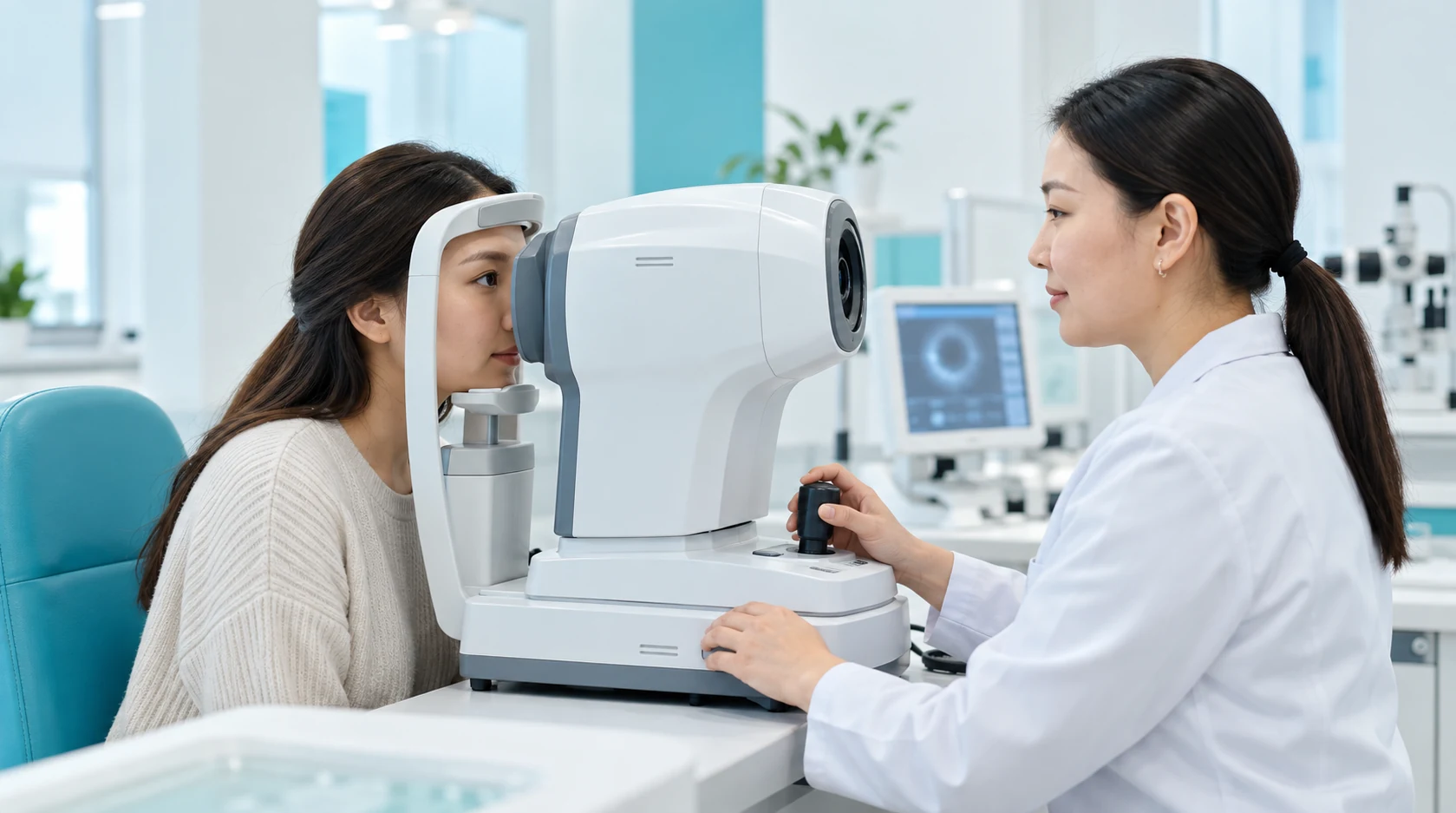
The surgeon compares Femto LASIK with alternatives and confirms adequate corneal tissue for the planned correction.

Data verification, informed consent, ocular preparation and topical anesthesia according to clinic protocol.
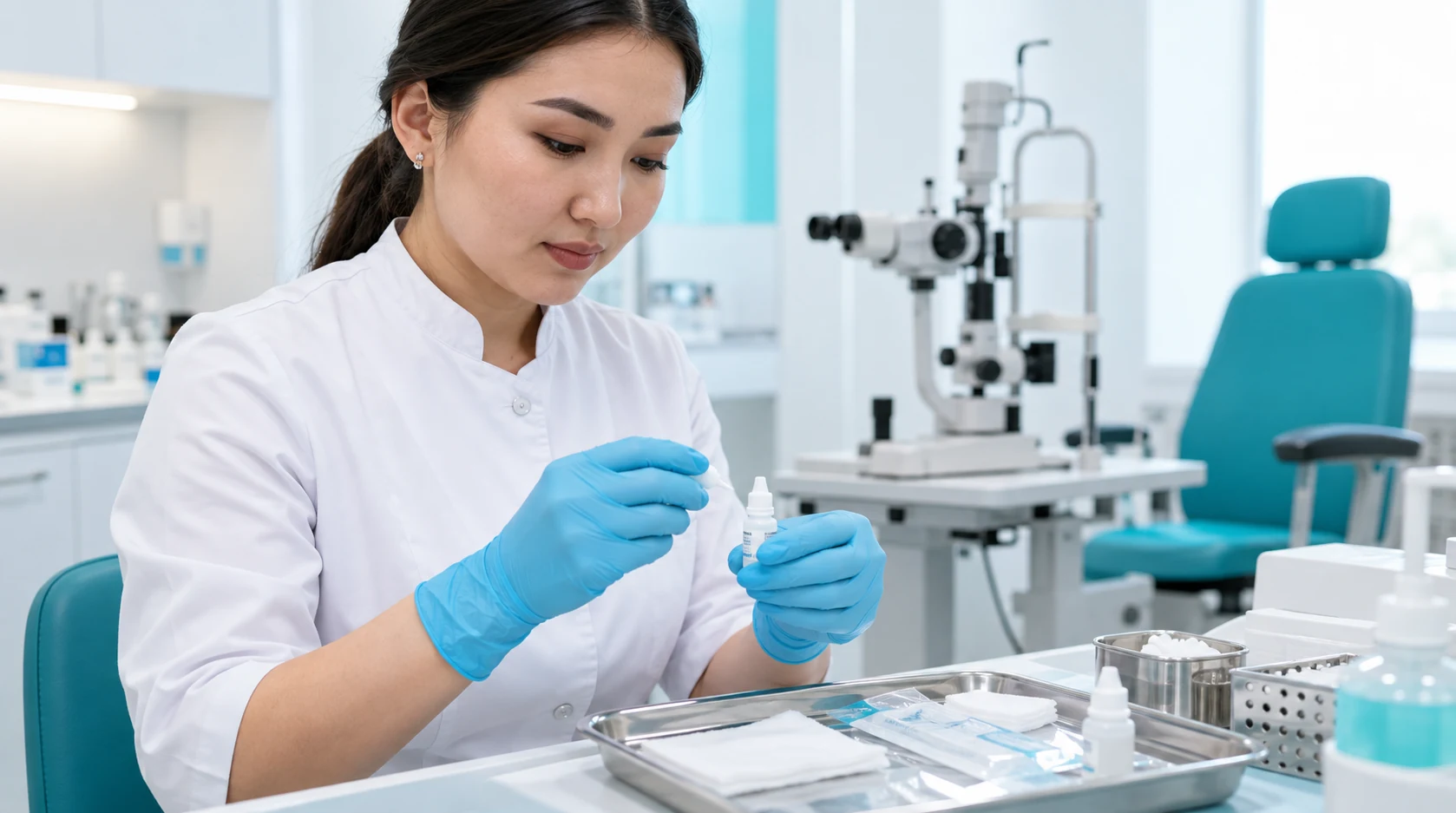
The femtosecond laser creates the programmed corneal flap.
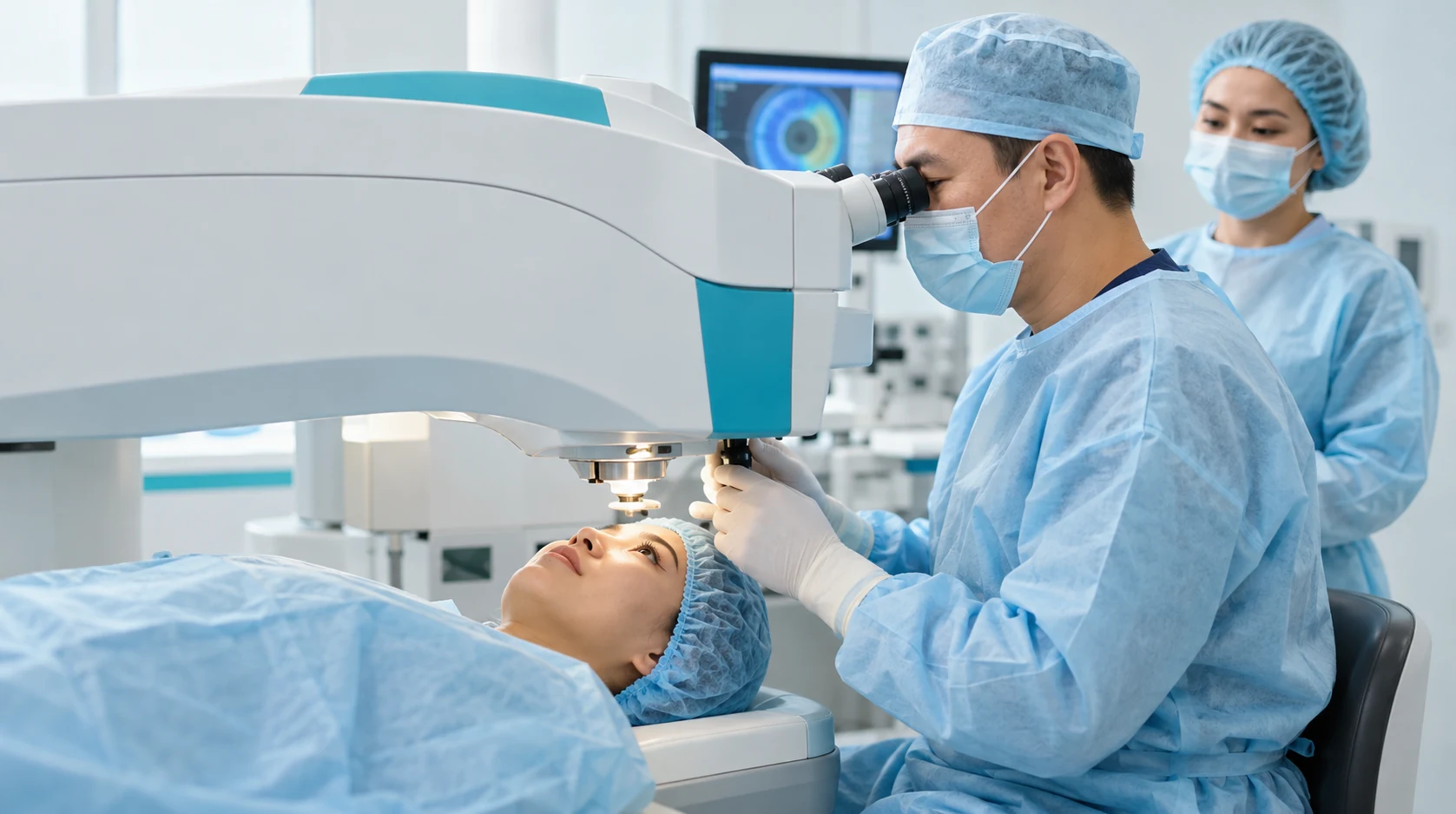
The flap is lifted and the excimer laser reshapes the stroma according to the treatment plan.
The flap is replaced and the surgeon confirms its position and ocular-surface status.
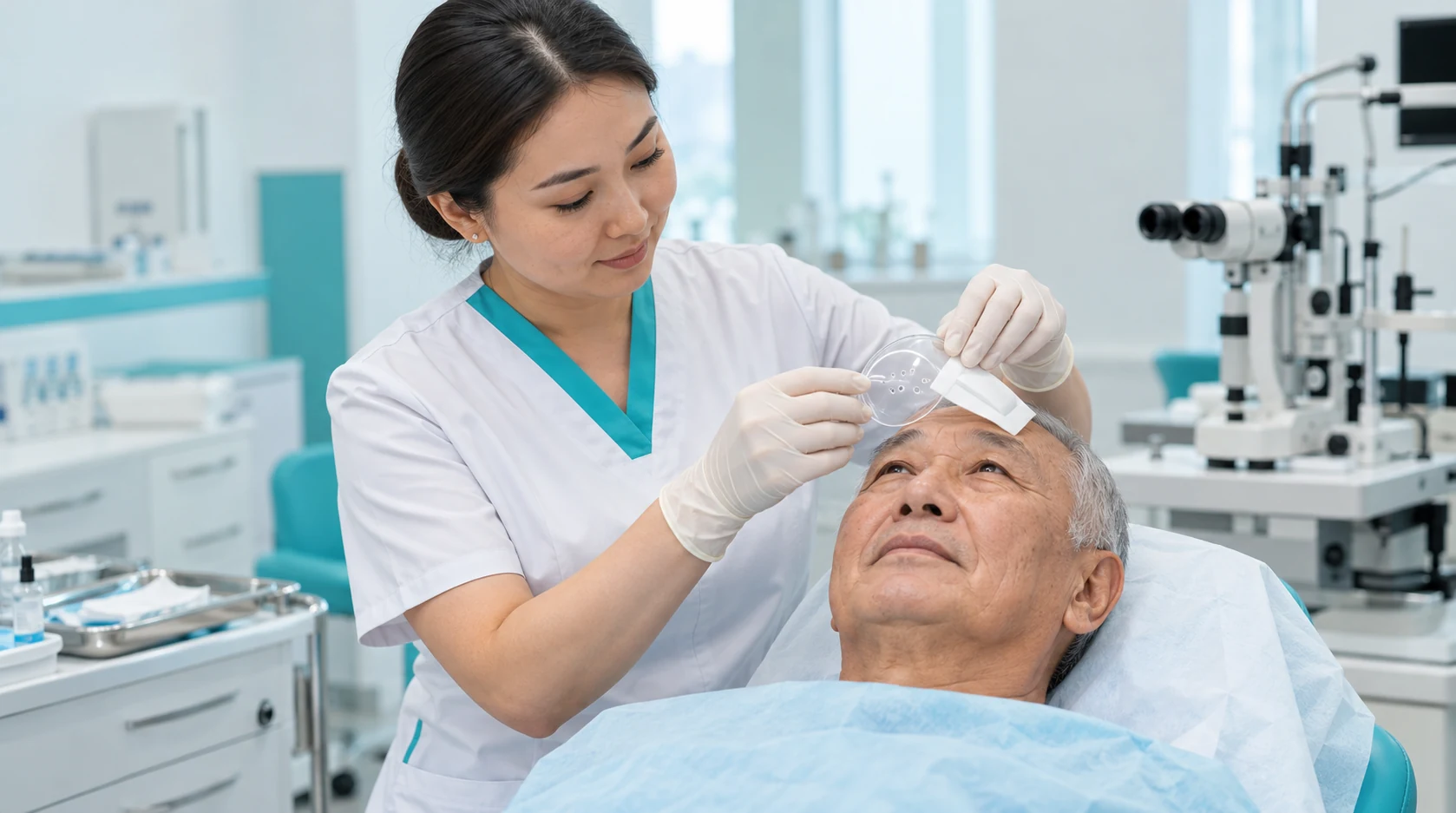
The patient receives eye-drop instructions, restrictions and a follow-up schedule.

A femtosecond laser allows the corneal flap’s thickness and shape to be planned in advance.
After uncomplicated Femto LASIK, vision usually recovers sooner than after surface correction; individual timing varies.
Femto LASIK can address myopia, astigmatism and selected hyperopia cases after clinical assessment.
Laser correction can reduce the need for glasses or contact lenses when clinically appropriate.
After testing, a refractive surgeon can explain whether Femto LASIK is suitable for your eyes, compare alternatives and create an individualized plan.
A team of experienced doctors across specialties.

Candidate of Medical Sciences; Highest-category ophthalmologist

Candidate of Medical Sciences; Highest-category ophthalmologist
Highest-category ophthalmologist

Highest-category ophthalmologist
Femto LASIK is a flap-based method of laser vision correction. The procedure involves two stages using femtosecond and excimer lasers.
Stage one — flap creation. The femtosecond laser creates a tissue separation plane within the cornea, forming a thin flap with an intact hinge. The surgeon lifts the flap to access the stroma.
Stage two — corneal reshaping. The excimer laser performs a calculated stromal ablation, changing the cornea’s optical power. The flap is then returned to its original position. Sutures are usually not required.
Femto LASIK differs from conventional LASIK in how the flap is created: a femtosecond laser is used instead of a mechanical microkeratome.
The choice depends on the safety and appropriateness of the method for the individual eye’s anatomy. The clinician assesses:
The method may be used for myopia, hyperopia, and astigmatism within the limits permitted by the equipment and the individual characteristics of the eye.
KazRIED’s public webpage lists the following ranges:
Final eligibility for correction depends on the examination findings, not on the diopter value alone.
Correction reduces dependence on glasses and contact lenses, but does not stop age-related changes in the eye.
Presbyopia, cataracts, retinal diseases, and other conditions may affect vision later, independently of the surgical outcome.
The patient receives eye-drop instructions, restrictions and a follow-up schedule. Exact timing must be confirmed by KazRIED.
Expected early course: tearing, light sensitivity , foreign-body sensation, dryness and fluctuating clarity may occur during the first hours and should gradually improve.
Follow-up course: the surgeon checks flap position, the corneal surface and visual acuity and provides eye-drop and follow-up instructions.
Persistent dryness: longer ocular-surface treatment or adjustment of lubricating therapy may be required.
Clinically significant residual refractive error: enhancement is considered only after measurements become stable and the eye is reassessed.
Severe pain, sudden visual decline, marked redness, discharge or worsening rather than improvement requires urgent ophthalmic assessment.
Long-term care: routine eye examinations remain necessary because refractive surgery does not replace monitoring of the retina, intraocular pressure, lens or ocular surface.
Femto LASIK is selected after a diagnostic assessment, not by the technology’s name.
For one patient, the rapid recovery associated with a flap-based method may be an advantage. For another, avoiding a corneal flap or preserving more of the anterior stroma may be more important.
The purpose of the preoperative assessment at KazRIED is therefore not simply to confirm eligibility for laser vision correction, but to determine which technique offers an acceptable balance of effectiveness, biomechanical safety, visual quality, and suitability for the individual patient’s lifestyle.
Kazakhstan’s first specialized ophthalmology institute, operating since 1933.
Modern diagnostics and surgery using world-class equipment.
Leading ophthalmologists in Kazakhstan, scientists and experienced surgeons.
More than 30,000 operations and around 270,000 consultations annually.


Kazakhstan’s first specialized ophthalmology institute, operating since 1933.
Modern diagnostics and surgery using world-class equipment.
Leading ophthalmologists in Kazakhstan, scientists and experienced surgeons.
More than 30,000 operations and around 270,000 consultations annually.
Kazakhstan’s first specialized ophthalmology institute, operating since 1933.
Modern diagnostics and surgery using world-class equipment.
Leading ophthalmologists in Kazakhstan, scientists and experienced surgeons.
More than 30,000 operations and around 270,000 consultations annually.


